Heraklion Prefecture
Krasi
What it is
Krasi is a mountain village above the northern approaches to the Lasithi plateau. It doesn’t announce itself. It shows up a piece at a time: stone houses, shade, and a pace that seems slowed down on purpose. Pulling in feels less like reaching a destination and more like stepping out of the day’s traffic, and that is the whole appeal.
Why it matters
What defines Krasi is that it has simply carried on. The village was never remade into something else; its shape still comes from farming, altitude, and habit rather than from reinventing itself for visitors. Coffee is taken slowly, conversations circle back, and nobody hurries. Nothing here is optimized, and I have come to think that is the point.
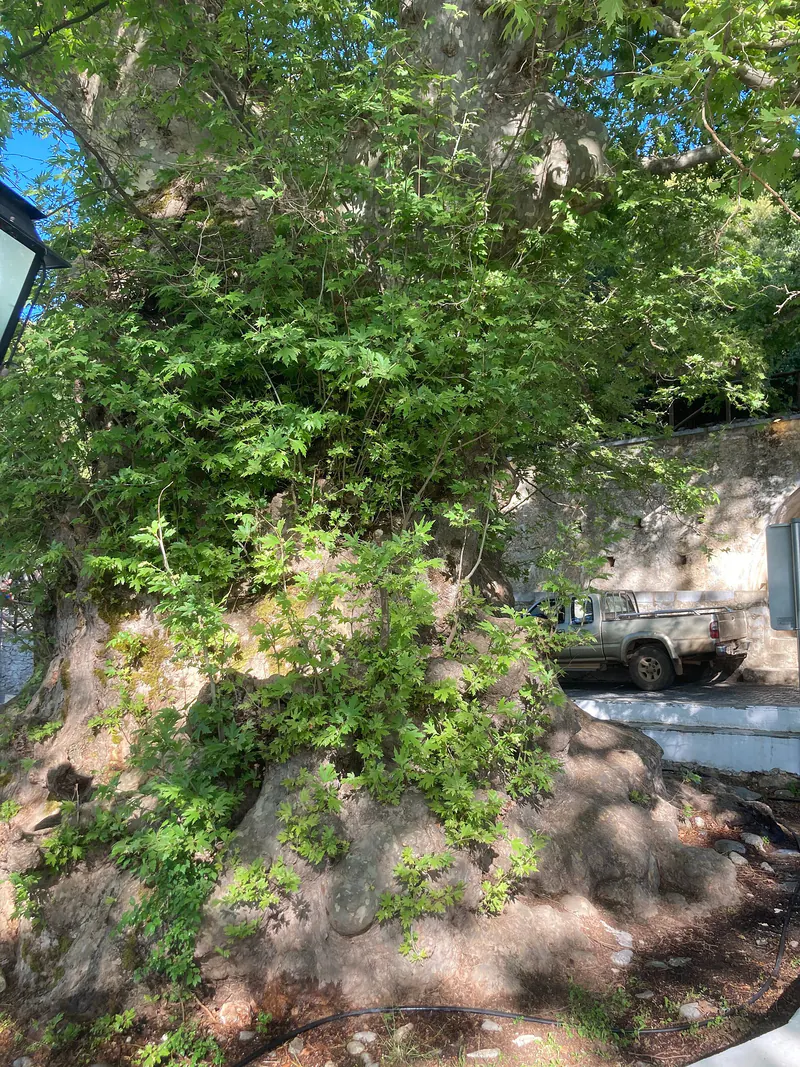
The biggest of the village’s plane trees stands at the center of the square. The village counts it among the oldest plane trees on Crete, the figure people quote for its trunk is well over twenty meters around, and the village treats it as a monument in its own right. It works less as a landmark than as the village’s living room. Shade, time, and company gather under it, and you understand quickly that this place is for sharing before it is for photographing.
The tree comes with a writer’s story, too. As the village tells it, Nikos Kazantzakis spent several summers here between 1910 and 1920, under this same canopy, and took something of Krasi’s stillness and height into his writing. Nobody has turned that into a monument. It is just part of what the village remembers.
Krasi shows a mountain Cretan life that still works, not one kept for show. Traditions are lived, not staged. Meals are simple and seasonal, set by what the land gives rather than by what visitors expect. The village doesn’t cater to outsiders. It keeps going on its own terms.
What to understand before going
You need a car. Krasi is a small mountain village at roughly 600 meters, inland from the north coast on the road that climbs toward the Lasithi Plateau. From Malia or Hersonissos it is about a twenty-minute drive up the winding inland road, and you pass through the village before the road keeps climbing onto the plateau. Without a car or an organized tour, there is no practical way in.
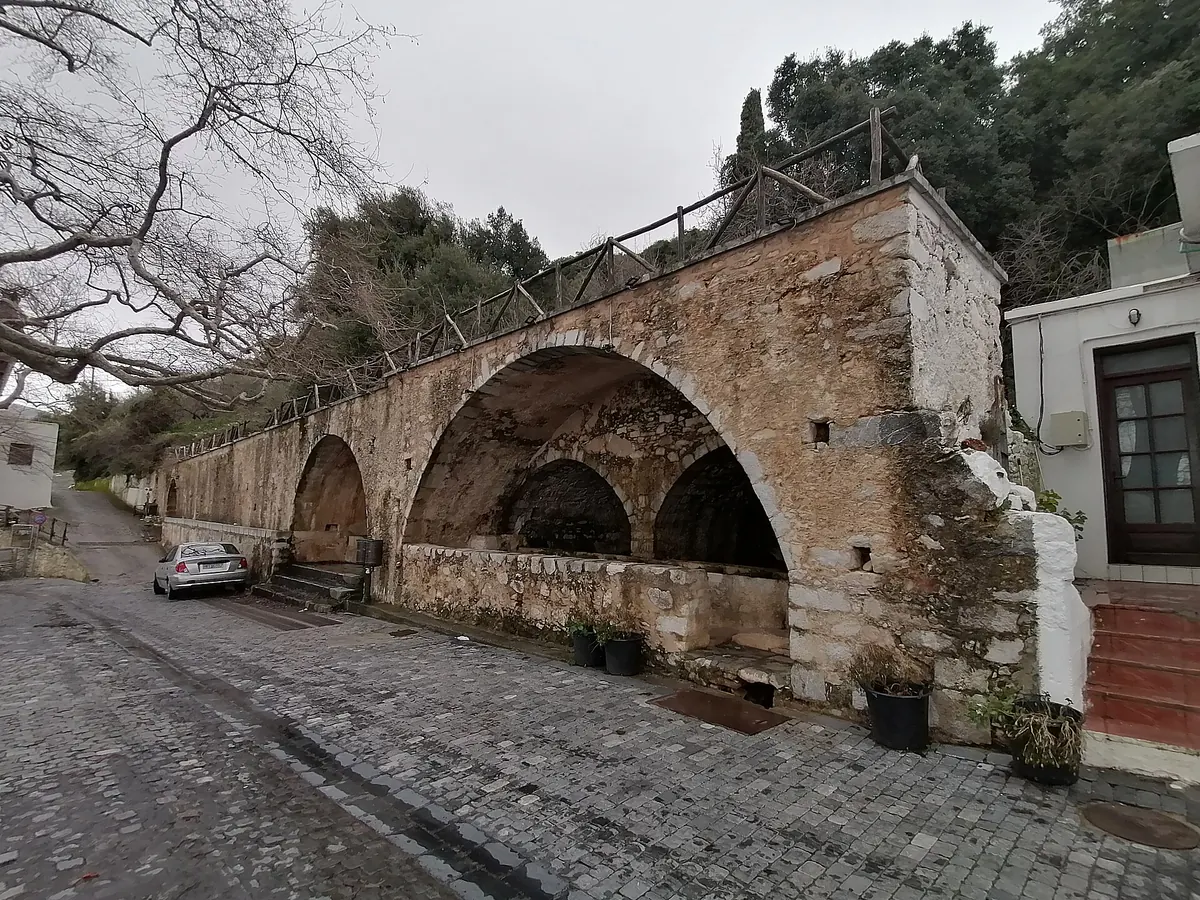
The reason to stop is the cluster of old plane trees in the square beside the village spring, the Megali Vrysi. The largest is the one whose trunk is said to measure well over twenty meters around. Tavernas and kafeneia sit around and under the trees, and the shade and running water are the whole point of the place.
This is a working village, not a resort, so opening hours and days are informal; confirm anything time-sensitive locally rather than trusting a fixed schedule. The village keeps its own calendar, and it has never once asked for mine. Krasi is at its best outside the midday peak of high summer, when the light softens and the square calms down, and it pairs naturally with a Lasithi Plateau day. My advice: stop under the plane trees on the way up, then carry on to the plateau villages and the Dikteon Cave.
What stays with you
What stays with you is how little needed to change. Some villages last by changing carefully; Krasi seems to have lasted by hardly changing at all. After a career spent chasing the next version of everything, I find that oddly comforting.