Planning
Crete 7 Day Itinerary
Seven days is enough for a serious first encounter. It is not enough for the whole island.
Don't plan a week in Crete like a shopping list. The island is too big, the roads are slower than they look, and the best moments need unhurried time. A good seven-day plan picks a side, accepts what it misses, and leaves the days enough room to work.
The best first trip usually uses two bases: one in the west for Chania and the big western landscapes, one in the center for Heraklion, Knossos, food, and a first look toward eastern Crete. The point isn't splitting the week evenly. It's a week that hangs together.
The distances that shape the week run along the north-coast highway (the E75 / VOAK). Typical, approximate driving times with no stops: Heraklion to Chania is around two and a half hours (roughly 140 km); Heraklion to Rethymno is a little over an hour; Heraklion to Agios Nikolaos is about an hour. The western landscapes and the south coast add a lot more, because they leave the highway for slower mountain and coastal roads. Real journeys run longer than these figures once you add fuel, coffee, parking, and summer traffic. The map, I've noticed, never stops for coffee.
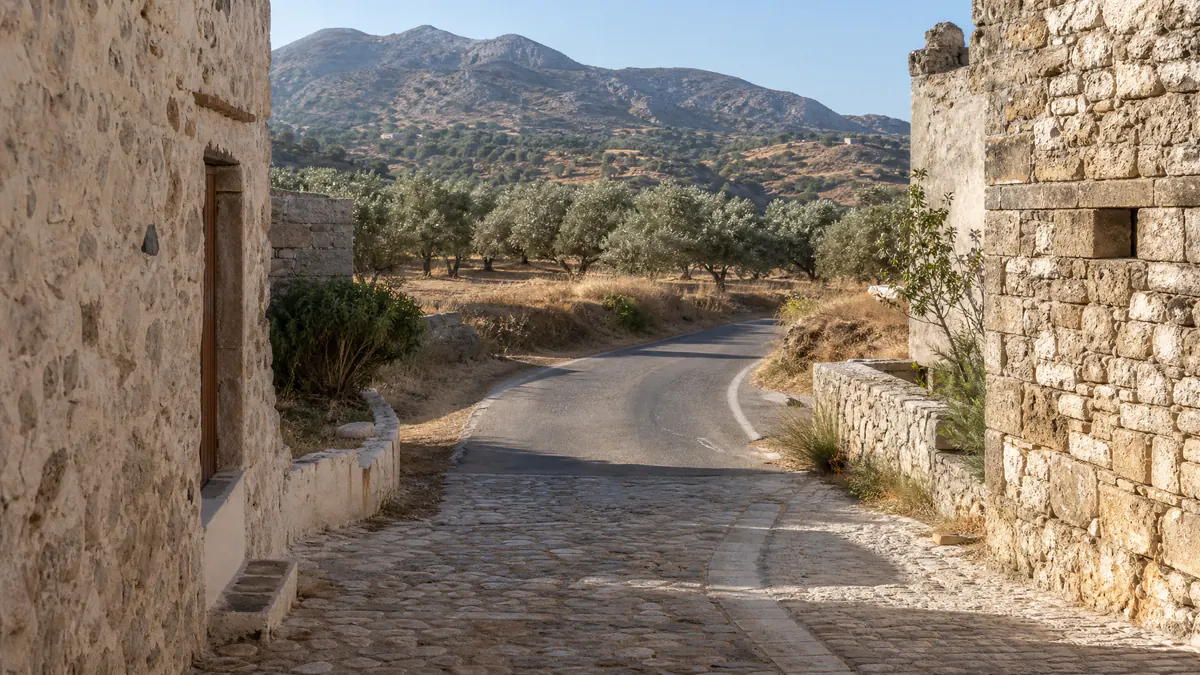
Days 1–3: Chania and the west
Begin in Chania if your arrival allows it. Give the first evening to the old town and harbor, and don't force a schedule onto it. Keep the next day fairly close: market streets, neighborhoods beyond the harbor, a beach if the season calls for one, and dinner somewhere reliable rather than somewhere famous.
The third day can carry one western commitment: Samaria Gorge for walkers, Elafonissi or Falasarna for a beach day, or Akrotiri if you want monasteries, coves, and shorter distances. Don't try to combine them all. That's how a vacation turns into a commute.
The catch is that these are not highway distances. From Chania, the far-western beaches (Elafonissi, Falasarna) and the Samaria trailhead all sit an hour or more away on winding roads, before parking and the walk itself — so each is a full day, not an add-on. Akrotiri is the honest choice when the day needs to stay short. Samaria in particular is one-directional and ends far from where it began, which usually means an organized transfer or bus rather than your own car waiting at the exit.
Day 4: move with purpose
The transfer from Chania toward Heraklion isn't a chore to get through. It's the day that keeps the week from getting stuck in the west. As a typical driving time, the full Chania–Heraklion run is around two and a half hours on the E75, with Rethymno sitting almost exactly in the middle — roughly an hour and a quarter from either city. That midpoint is what makes Rethymno the natural pause: stop there if the timing is clean, walk the old town and harbor for a couple of hours, then continue. If the day is already tight, drive straight through and keep the afternoon intact.
This is where many itineraries go wrong: they turn one change of base into three half-visits. I'd rather arrive with energy than collect another half-seen town.
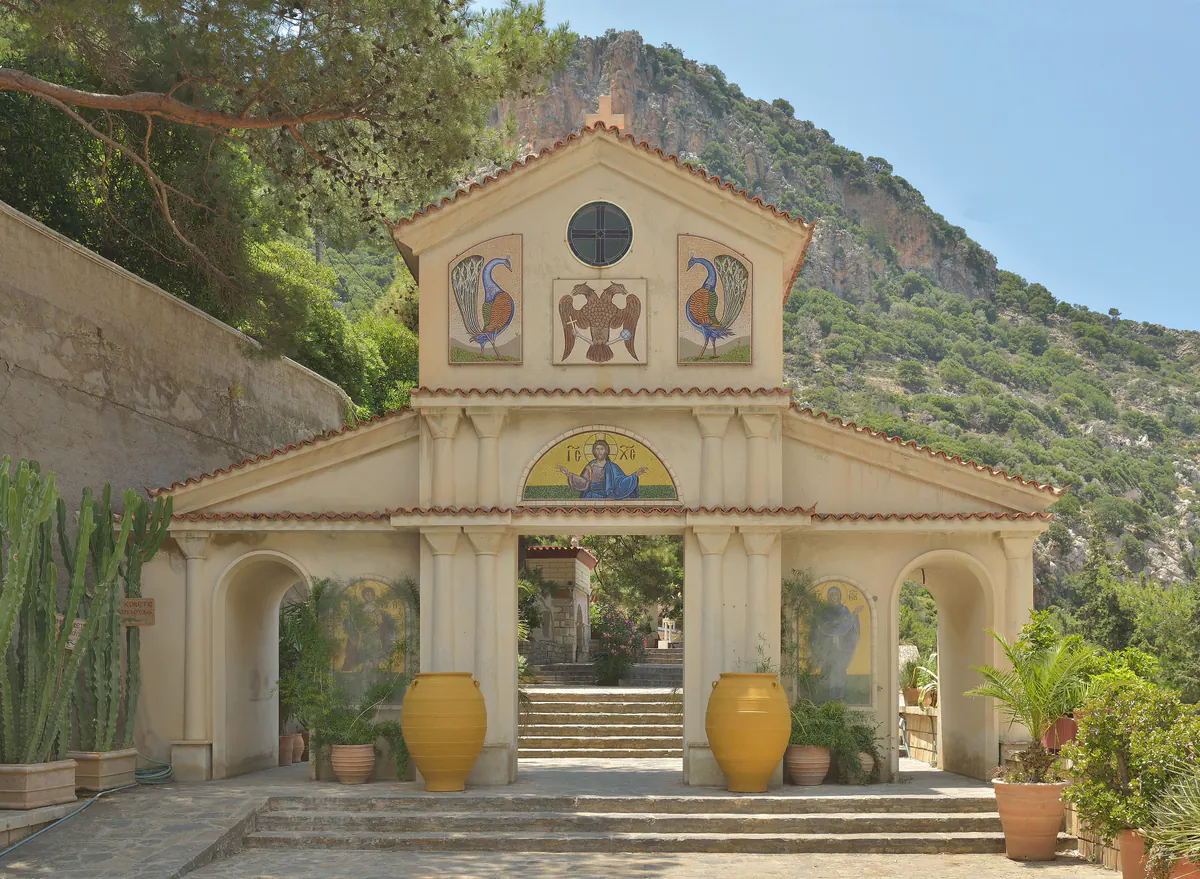
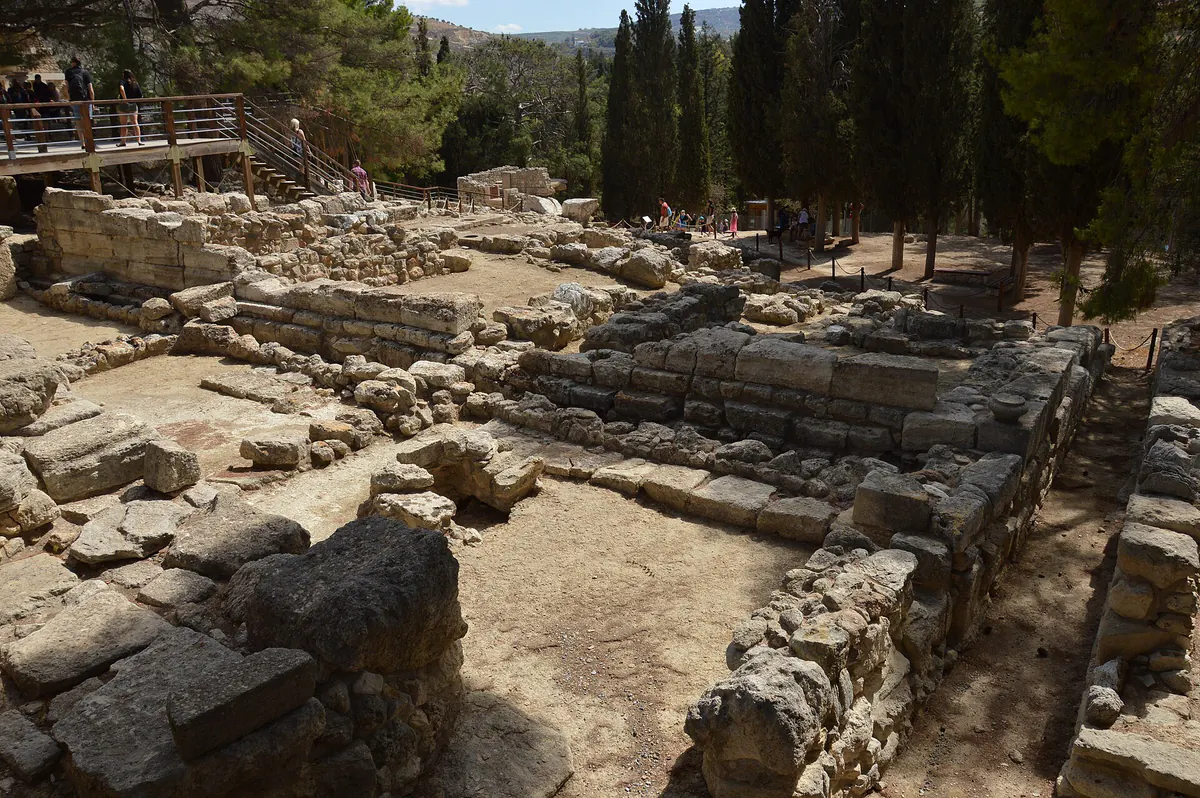
Days 5–6: Heraklion, Knossos, and the center
Heraklion deserves more than a transit night. Pair the Archaeological Museum with Knossos, but don't cram both into one exhausting morning if the heat or crowds are heavy. The city isn't graceful the way Chania is; it's busier and more workaday, and it keeps you close to the Minoan story.
Use the second central day for wine country, Archanes, Phaistos and Matala, or a slower food-centered day in the city, with Peskesi as my pick for a carefully cooked Heraklion meal. The right choice depends on the season and your appetite. The wrong choice is adding the Lasithi Plateau, Spinalonga, and a south-coast beach because the map made them look close.
The catch is that these pull in opposite directions from Heraklion. Phaistos and Matala lie south, across the Messara plain; the Lasithi Plateau climbs inland to the east; Spinalonga sits beyond Agios Nikolaos, itself about an hour east on the highway before the boat. Any one of them makes a good day from a central base. Two in a day means you spend most of it driving, which is exactly what this plan is built to avoid. Pick the direction that matches the second base you've chosen.
Day 7: leave a margin
Don't give the last day the trip's shakiest plan. Choose something near your departure point: a final meal, the museum if you missed it, a beach close enough not to cause stress, or simply time to leave Crete without turning the last hours into logistics.
A week that ends calmly usually feels larger in memory than a week that spends its final day chasing one more place. Ask anyone who has run for a gate with sand still in their shoes.
Practical questions
Is seven days enough for Crete?
Yes for a strong first visit, but not for the whole island. I'd spend the week in western and central Crete rather than trying to fit in every famous beach and region.
How many bases should you use for one week in Crete?
Two is usually ideal for seven days: Chania or Rethymno in the west, then Heraklion or Elounda depending on the second half of the trip. Three can work, but only if you're disciplined and don't mind the extra packing and transfers.
Do you need a car for a 7 day Crete itinerary?
Not strictly, but a car improves the week if it includes beaches, villages, wine country, or getting around the countryside freely. Without one, I'd keep the plan closer to Chania, Rethymno, Heraklion, buses, taxis, and organized excursions.
Editorial note
I combine firsthand observation with research from public and official sources. I check practical details against the sources listed on each guide where they are available, and my recommendations stay independent of paid promotion. For how I approach planning and selection, see my editorial manifesto.
Written by Leo Novak.
Related reads
The Guide 2026
My guide for this year: where to go, how to get around, and what’s worth knowing before you do.
Explore the guide