Dakos
Barley rusk softened with tomato, oil, and xinomizithra
Food in Crete needs several readings: table practice, ingredients, the wider food system, and selected places to eat. Start here before moving into the specific food pages.
Food in Crete makes more sense with a map before the menu. I keep the table, the pantry, herbs, wine, beer, and my chosen tavernas together here in one place, so the subject doesn't fall apart into a random list of dishes or restaurants.
My longer essay on food as a system covers the big picture: how the land and the seasons shape what people eat. The Eating section is about the table itself: pace, ordering, sharing, and what to know before you choose a taverna.
The most useful adjustment I can offer: stop reading Crete as one cuisine and start reading it by altitude. What a place cooks well depends largely on where it sits between the sea and the mountains. On the coast it is fish, and the honest version is small and seasonal rather than the year-round grilled sea bream aimed at visitors. In the foothills and the plains it is vegetables, wild greens, and olive oil doing most of the work. In the high villages of Sfakia, Anogeia, and the Amari it is meat and dairy: the slow-roasted lamb and the sheep's-milk cheeses that make sense where flocks, not gardens, are the wealth. Choosing what to order is mostly a matter of asking what the land around you could plausibly have produced that week.
The second adjustment is seasonal, and the island is unusually strict about it. Snails appear after the first autumn rains, not on demand. Wild greens (horta) change with the season: stamnagathi in the cool months, vlita (amaranth) in summer. Artichokes and broad beans belong to spring, tomatoes to the height of summer. A taverna that offers everything all year is telling you it buys rather than gathers, and the food will follow that logic. The pantry staples (barley rusk, oil, honey, cheese, raki) carry the table through the gaps, which is exactly why they became staples.
The third is about reading the room rather than the menu. The places worth finding often have the shortest lists, sometimes no printed menu at all, and a kitchen cooking a handful of things the household actually eats. A long laminated menu with photographs is not a scandal, but it is information: it tells you the kitchen is set up to take the widest possible order, not to cook the best possible one. It is the office-cafeteria school of cooking, and I ate my way through more than twenty years of it. When in doubt, order what the table beside you is eating, and if you drink, have the house wine and the house raki, which are the items a Cretan host stakes their name on.
Eat with the altitude and the season, trust the short menu, and let the land in front of you decide the order.
Use How to Eat in Crete for behavior at the table, Ingredients & Preparations for the pantry and what households keep in it, Cretan Herbs for botanical status and honest limits on health claims, Indigenous Cretan Wines, Local Wines, and Local Beers for what to drink, and the Selection for chosen tavernas and tables.
Start with the big picture, then move to the table, the pantry, and the rooms where the island still cooks honestly.
Wine And Beer
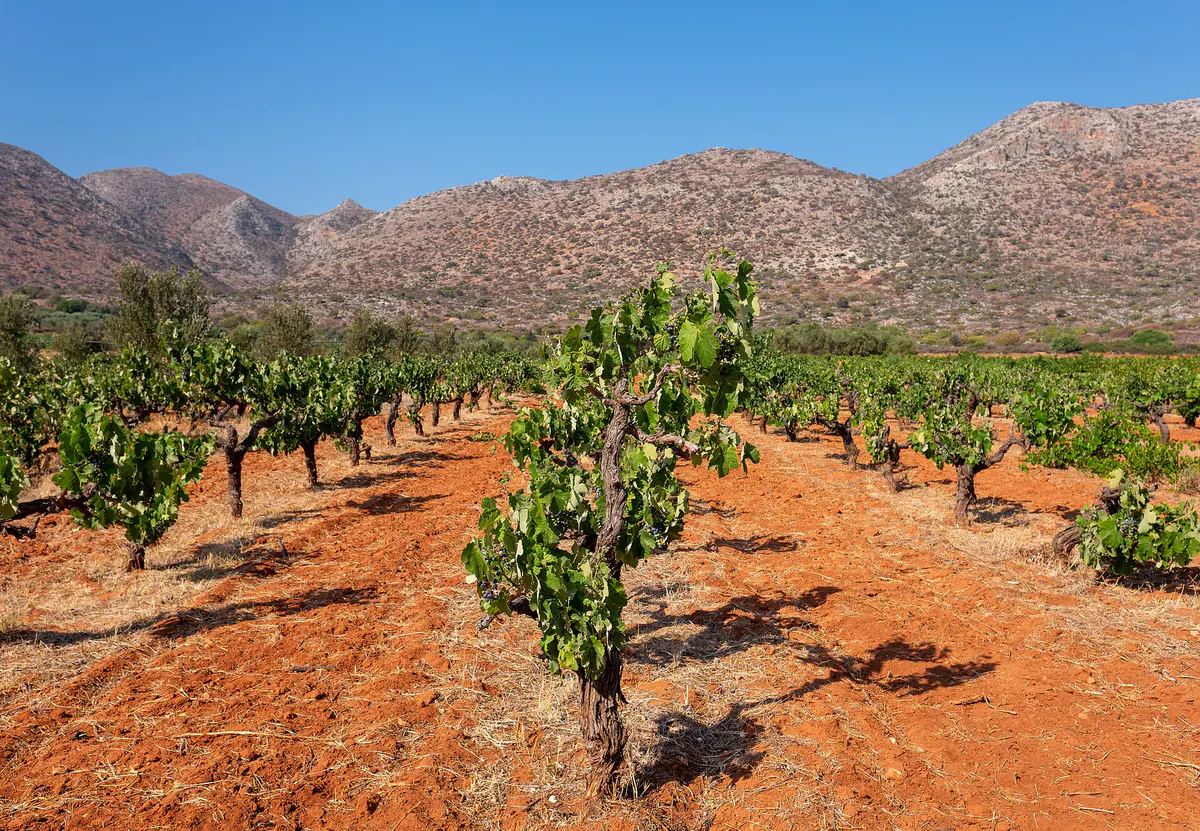
Photo: Jules Verne Times Two, CC BY-SA 4.0, via Wikimedia Commons.
The grapes that make sense of a Cretan wine list: Vidiano, Vilana, Dafni, Kotsifali, Mandilari, Liatiko, and more.
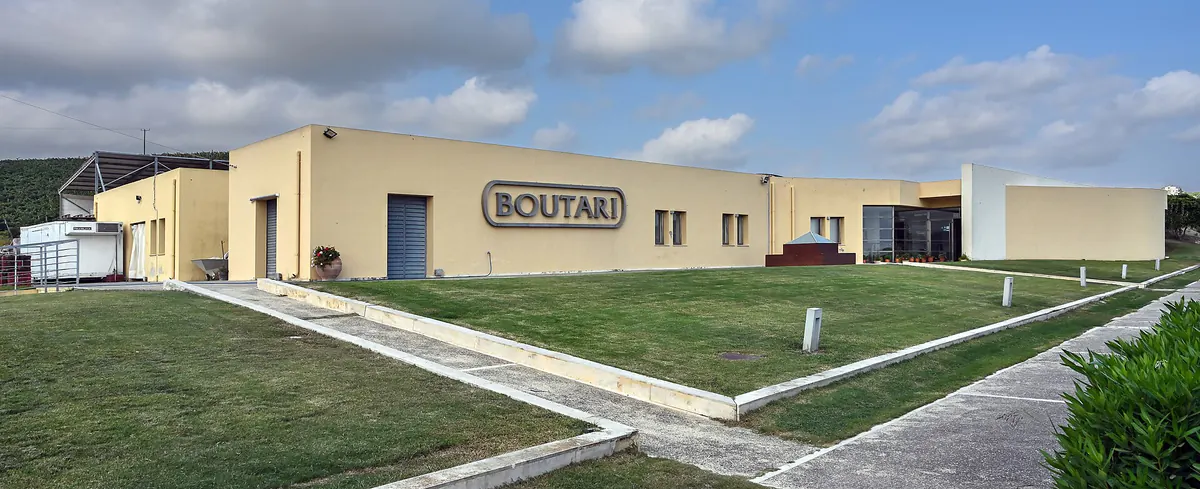
Photo: Cayambe, CC BY-SA 4.0, via Wikimedia Commons.
Heraklion wine country, what the PDO and PGI labels mean, producer visits, and how to plan a winery day.
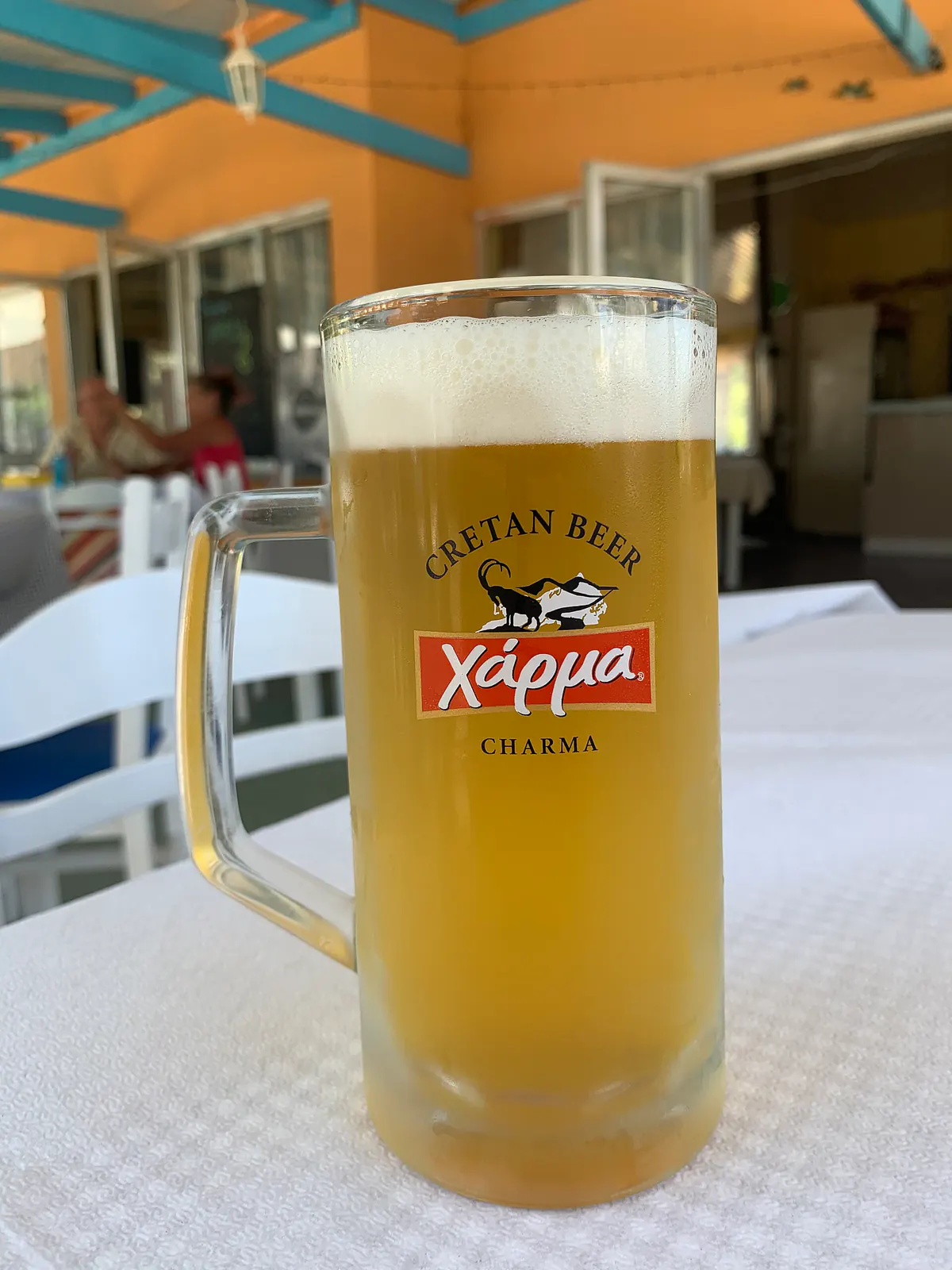
A frosted mug of Charma, the Cretan Brewery beer, on a taverna table.
Charma, Solo, Brink's, smaller local labels, and where beer fits into Cretan hospitality.
Essential Preparations
Dakos
Barley rusk softened with tomato, oil, and xinomizithra
Kalitsounia
Small pastries filled with greens or cheese
Antikristo
Lamb slow-roasted on stakes facing an open fire
Chochlioi boubouristi
Snails fried in olive oil with rosemary
The foundation is still olive oil, wild greens, bread, cheese, honey, wine, raki, local beer, and what households know. This page links those guides rather than repeating them: it is the front door for food in Crete, and its job is to get you to the right page quickly. If you want to cook the food yourself, I gathered more than sixty traditional Greek and Cretan recipes into my cookbook, Out of Office.
I combine firsthand observation with research from public and official sources. I check practical details against the sources listed on each guide where they are available, and my recommendations stay independent of paid promotion. For how I approach planning and selection, see my editorial manifesto.
Written by Leo Novak.