Planning
Where to Stay in Crete
The right base in Crete is not the prettiest place on the map. It's the one that fits the trip you're actually going to take.
Crete is an island in Greece, and it punishes lazy geography. I learned that the slow way. From a distance it looks manageable; on the ground, mountains get in the way and the roads slow every plan down.
There is no single best area in Crete. There is only a good match between your temperament, the season, how you'll get around, and how much hassle you're willing to put up with.
Quick decision
The first decision
Decide first what you're actually planning: a Crete trip, or a west-Crete trip, an east-Crete trip, a resort stay, a food-and-villages stay, or a family trip where logistics come first. Most itineraries that go wrong start by dodging that question. They assume one base can cover the whole island evenly.
A good stay accepts limits and picks depth over coverage. That isn't a style choice; it's plain common sense. Crete gives you more when you don't spend today fixing yesterday's optimistic map.
Regions as bases
Chania
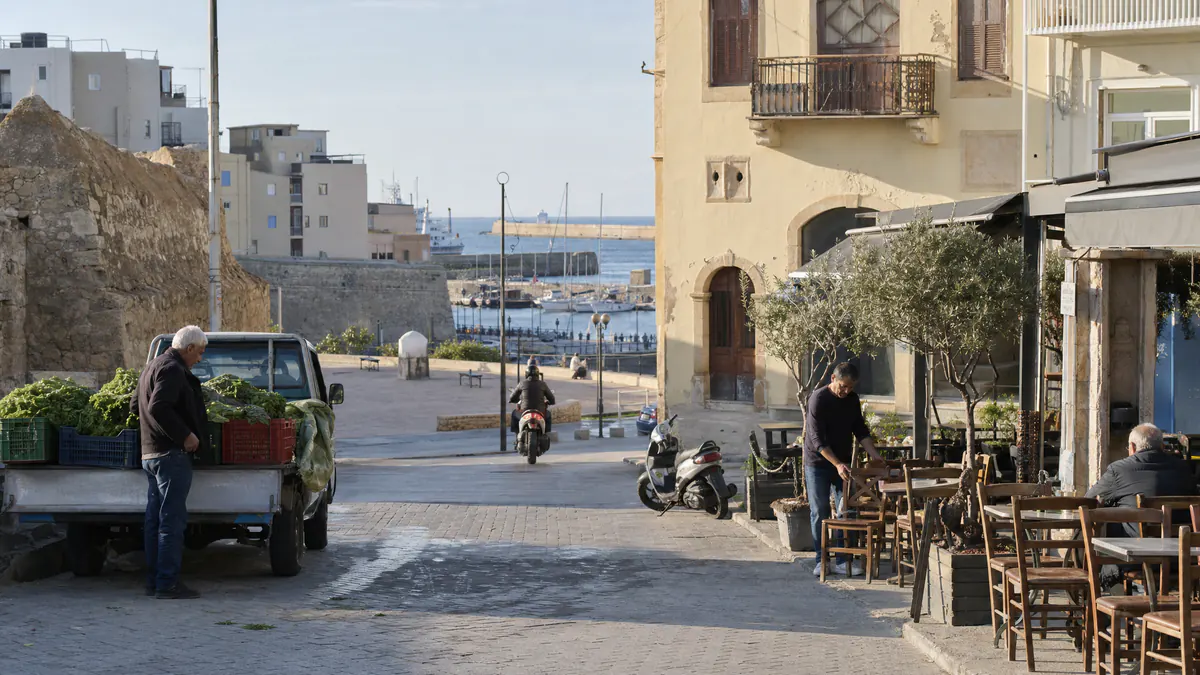
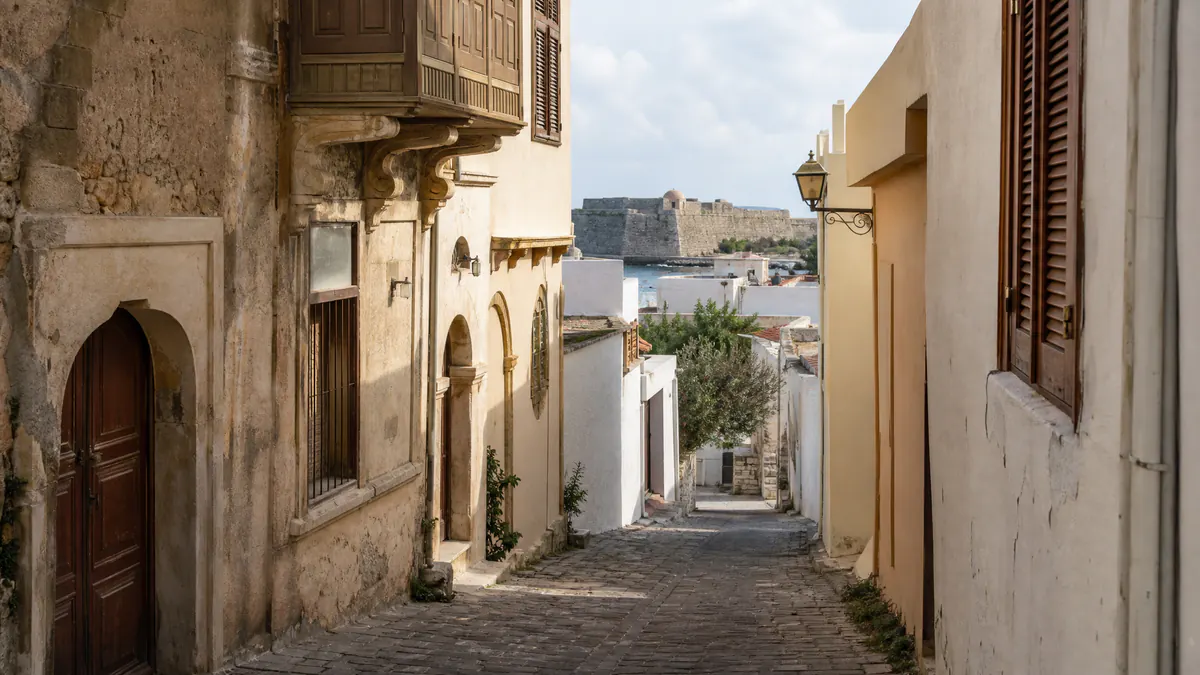
Venetian, photogenic, already claimed.
Best for first visits, old-town atmosphere, western beaches, and travelers who want beauty close at hand.
The romance thins fast in August. I'd stay inside the old town only if you can live with noise, stairs, and awkward access.
Rethymno
Smaller, calmer, often underestimated.
Best for a base halfway between west and central Crete, with a historic town that still feels lived-in in places.
It isn't a shortcut to the whole island. Eastern Crete is still far away, and western Crete still needs days of its own.
Heraklion
Urban, practical, packed with history.
Best for Knossos, museums, wine country, central villages, and travelers who care more about getting around than about pretty views.
Don't expect resort softness. Heraklion rewards curiosity, not lounging.
Elounda and Agios Nikolaos
Clear water, calmer luxury, eastern light.
Best for upscale resort stays, slower days, Lake Voulismeni, Spinalonga, Mirabello Bay, and a more polished version of eastern Crete.
The west becomes a separate trip. If your real itinerary is Balos, Elafonissi, and Chania, don't base here.
South coast
Quieter, drier, more exposed, less polished.
Best for returning visitors, walkers, quiet beaches, and people who accept that distance is part of the deal.
Less convenient. Weather, roads, and fewer places open in the evening matter more than the map suggests.
The type of stay matters
The restored village or estate
Done well, this is Crete at its best: stone, olive groves, quiet, old buildings, and hospitality that doesn't need to put on a show. It suits travelers who want the island to slow them down, which is exactly the kind of stay I look for.
The old-town house
Best in Chania or Rethymno, and best away from the loudest lanes. The reward is atmosphere right outside your door. The cost is parking, hauling luggage, and the chance that the charm has been priced higher than it's worth.
The serious resort
Not every resort is a mistake. A good one makes Crete easier by handling the daily logistics: shade, water, breakfast, good service, and rest. The danger is that you never leave it. I'd choose one that feels connected to the place around it.
The practical apartment
Often the right choice for families, longer stays, and travelers who plan to move around. It won't become a memory on its own. That isn't its job. Its job is to give you a solid base so the island can do the rest.
A better way to choose
My short version: for a first visit, choose Chania or Rethymno if the west is the heart of the trip. Choose Heraklion if archaeology, wine country, food, and central access matter more to you than postcard atmosphere. Choose Elounda or Agios Nikolaos if the trip needs water, service, and calm more than movement. Choose the south only if you understand that quiet is not the same as convenience.
For seven nights, two bases can work: Chania and Heraklion, or Rethymno and Elounda. Three bases usually looks clever on paper and turns the trip into luggage management. One base works only when the trip is clearly about one region.
In high summer, being close beats being ambitious. Heat changes the island. Roads feel longer. Beaches fill earlier. Dinner moves later. A base that leaves the day some slack is worth more than one that puts everything within reach in theory.
What not to do
Don't book a remote villa because the photos are persuasive and then expect village life, beach access, restaurant choice, and easy day trips. Remoteness stops being romantic when every meal turns into a negotiation with the road.
Don't choose the old town in August without knowing what you're signing up for. It may be beautiful. It may also be crowded, loud, and a logistical headache. Beautiful is not the same as restful.
Don't build a whole stay around one famous beach. Beaches depend on weather and crowds, and they're often at their least interesting when you treat them as targets to hit rather than breaks in the day.
My position
I'm the foreigner here, so take this as one outsider's rule. Stay where the morning can start without a production. Stay where the evening doesn't need rescuing. Stay where the island around you still has a life of its own after the visitors have gone to dinner.
The best base in Crete is rarely the one with the longest list of nearby attractions. It's the one that lets you pay attention. After two decades of notifications, I'd rank that above a sea view.
Editorial note
I combine firsthand observation with research from public and official sources. I check practical details against the sources listed on each guide where they are available, and my recommendations stay independent of paid promotion. For how I approach planning and selection, see my editorial manifesto.
Written by Leo Novak.
Related reads
The Guide 2026
My guide for this year: where to go, how to get around, and what’s worth knowing before you do.
Explore the guide