Establishments
Tables, village stops, and selected places where food and craft clarify the island.
Establishments in this guide are not trophies. A table, a kafeneio, a workshop, or a village stop matters to me when it helps you understand how Crete works: what is grown, cooked, repaired, remembered, and repeated.
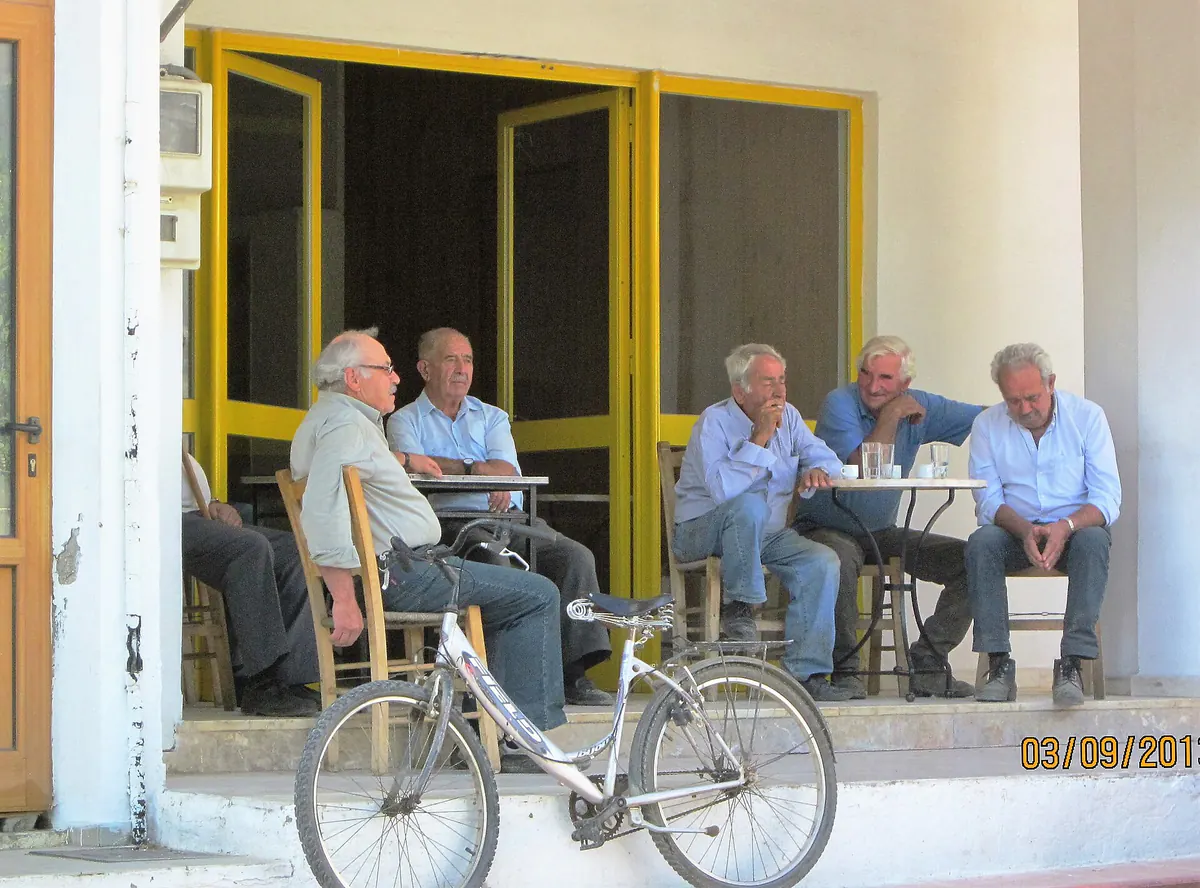
For now, this section starts with the places I have already written up in the Selection, then points back to the food and planning pages that make those choices less random. I can add more entries, but this page should not pretend to be a directory before I have done the writing.
How I choose
The point of an edited list is what it leaves out. A place earns an entry here when it teaches you something about the island, not just when it feeds you well. Three tests decide inclusion, and all three have to hold:
- It expresses something specific about Crete. A menu built on Cretan ingredients, seasons, and technique tells you more than one that could be plated in any Mediterranean resort. I favor the specific over the generically “Greek.”
- It is consistent, not lucky. One good night is an anecdote. An entry has to hold up across visits and across a table of dishes, not rest on a single famous plate.
- It has a reason to exist beyond tourism. The kafeneio locals actually sit in, the taverna that would survive without a single visitor, the workshop tied to a real craft: these outlast the ones built for the season.
Rankings, star counts, and “top ten” lists are deliberately absent. They flatten places into a league table and push readers toward whatever is already crowded. I would rather name a few places carefully than rank many. I have been on both ends of enough performance reviews to distrust a league table.
What to look for yourself
The list will always be shorter than the island. When you are choosing a table I haven’t written up, the same instincts apply. None of these is a guarantee, but together they will steer you well:
- A short menu that changes. A kitchen cooking what the market and the season gave it usually beats one offering four laminated pages of everything, all year.
- Locals eating there, not just visitors. Off the harbor front, a little inland, tables of Cretans at unfashionable hours: a reliable sign the place answers to its neighbors.
- Cretan specifics on the menu. Dakos, antikristo, staka, gamopilafo, snails, wild greens, the local graviera and mizithra: dishes tied to this island, not a pan-Greek greatest-hits list.
- Its own oil, wine, or raki. House olive oil, barrel wine, and raki offered at the end are markers of a place rooted in its own supply, not in reselling.
- Caution on the seafront. Photo menus, a host waving you in from the sidewalk, and a view doing the work the kitchen should: usually a warning, especially in the most beautiful and most touristed spots.
For the tempo, ordering habits, and unwritten codes that make a Cretan meal work once you are seated, the how to eat page carries the practical detail; ingredients explains what the good menus are actually built from. If you want these flavors at home, I put more than sixty traditional Greek and Cretan recipes, written for an ordinary city kitchen, into my cookbook, Out of Office.
Tables
Heraklion
Peskesi
Cretan tradition interpreted with care and consistency.
Table
Koula's Tastes
Direct cooking, generosity, and the pleasure of simplicity.
Rethymno
Avli Rustic Fine Dining
Cretan ingredients, technique, and long-running hospitality.
Sea
Giovanni
Simple seafood cooking with an eye for the day's best.
How to use this section
How to eat in Crete
The tempo, ordering habits, and unwritten codes that make a meal work.
Ingredients
Herbs, greens, cheeses, oil, and the difference between endemic and culturally central plants.
Food as system
Eating as landscape, season, and social habit, not a list of recommendations.
The Selection
My short list of places that have earned a closer look.
The useful question is not where to eat everywhere. It is which tables explain the island best.
Editorial note
I combine firsthand observation with research from public and official sources. I check practical details against the sources listed on each guide where they are available, and my recommendations stay independent of paid promotion. For how I approach planning and selection, see my editorial manifesto.
Written by Leo Novak.