Food as a System
Understanding Cretan eating as practice rather than cuisine
Cretan food isn't a cuisine in the French sense, a codified set of techniques and presentations. It's something more basic: a way of eating that grows out of the land, the season, and the people around the table. To understand it, look past the individual dishes to the logic that connects them.
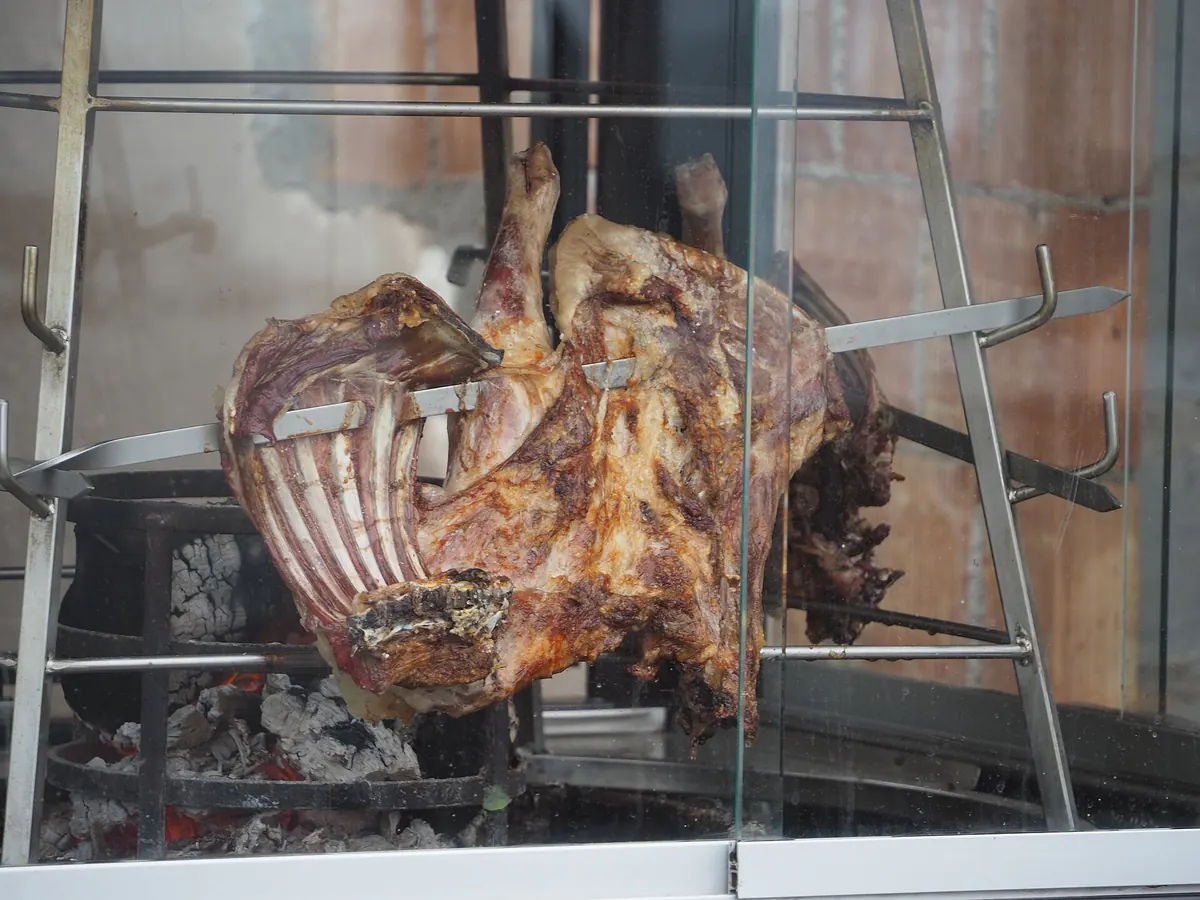
The foundation is simplicity, much of it learned in poor years and kept by choice. Cretan cooking takes very good ingredients and does as little to them as possible. Vegetables are often eaten raw or simply boiled, dressed with olive oil and lemon. Meat is grilled or slow-cooked. Fish comes from the sea that day and is cooked to keep its flavor, not to cover it up. I come from a world of food with ingredient lists longer than this paragraph, so that simplicity still surprises me.
The Centrality of Olive Oil
No ingredient matters more than olive oil. When the Rockefeller Foundation surveyed Crete in 1948, one account put it at about 30.5 kilos per person a year, an amount that's hard to picture. It isn't a condiment but a staple, the main source of fat in the diet, poured in quantities that can shock visitors used to more careful habits. For more on the ingredients, see my guide to Cretan ingredients.
And not just any olive oil: local oil, pressed nearby and used fresh, often from Koroneiki, a variety widely grown on Crete. The difference between this and the industrial oils common elsewhere isn't subtle. Good Koroneiki oil is green and peppery, with layers of flavor that reward paying attention.
Olive oil decides how things get cooked. Vegetables are often cooked slowly in it (ladera dishes, from ladi, Greek for olive oil) until soft and silky. Salads are dressed generously. Even pastries may use olive oil rather than butter. The health findings linked to this way of eating helped make the "Cretan diet" famous in nutrition research.
Wild Greens
Second only to olive oil are horta, the wild greens gathered from the hillsides and fields. Crete has a remarkable range of edible plants: chicory, dandelion, nettles, amaranth, purslane, mallow, and dozens of others without common English names.
Gathering horta is a skill, not just a way to fill the pot. It takes knowledge handed down through generations: which plants are edible, where to find them, when they're at their best, how to tell look-alikes apart. That knowledge is fading as younger people move to cities, but it's still alive among older Cretans. This is one area where I, the foreigner, defer completely. Places like Koula's Tastes and Peskesi cook them with that knowledge.
The greens are usually boiled and served with olive oil and lemon, sometimes as a main dish, sometimes on the side. Their slight bitterness isn't a flaw to fix but something people value, part of what makes Cretan food taste Cretan.
The Rhythm of Eating
How Cretans eat matters as much as what they eat. Meals are social, rarely solitary. The table is where people gather, and the conversation counts as much as the food. Eating fast, or while doing something else, misses the point. Anyone who has eaten a sad lunch over a keyboard will feel the difference.
The day is shaped differently from northern European or American habits, too. Breakfast is usually light: coffee and perhaps a piece of bread with oil or honey. Lunch, the main meal, comes in the early afternoon and can be substantial. Dinner is late and often informal, sometimes just mezedes, small dishes shared among friends.
Fasting shapes eating too. The Orthodox calendar sets many fasting periods, when meat and often dairy are avoided. Those rules shaped traditional cooking and produced a whole repertoire of vegan dishes long before plant-based eating became a trend.
Living Inside the System
For people who live on the island, the system isn't an idea; it's a weekly routine, and you can join it. The easiest way in is the laiki agora, the open-air producers' market that most Cretan towns hold on a fixed weekday morning, roughly from early morning until early afternoon. Growers bring fruit, vegetables, greens, eggs, honey, cheese, and herbs straight from their own land, and both prices and quality reward showing up early. Market days differ from town to town and sometimes shift, so check your own town's day and location locally rather than assuming a fixed schedule.
What's worth buying changes with the season, and learning that calendar is most of what it means to eat the way the island does. The market stalls tell you what's in season better than any list. In a typical year, spring brings wild greens and foraged shoots, artichokes, fava beans, peas, and fennel; summer is the long season of sun-ripened tomatoes, cucumbers, zucchini, eggplants, peppers, and okra, with figs, grapes, and melons; autumn overlaps the grape and olive harvests and brings pomegranates and quinces; winter is citrus season (oranges, mandarins, and lemons) and root vegetables. The new season's olive oil generally appears from around November, when the harvest begins.
A few everyday things are worth asking for by name. Horta, boiled wild greens dressed with oil and lemon, are on almost every taverna's table; stamnagathi, a slightly bitter wild chicory, is the most prized of them and worth ordering when you see it. Dakos, the barley rusk topped with grated tomato, soft cheese (ideally xinomizithra), and oil, is the standard summer starter and a good test of a kitchen. And the single purchase that most changes your cooking is a tin of local extra-virgin olive oil, ideally the current season's, bought direct from a producer or at the market. The guide to Cretan ingredients goes deeper on what to look for.
The Decline and Persistence
Traditional Cretan eating is under pressure. Supermarkets stock industrial food. Fast food has arrived. Younger Cretans often eat more like other Europeans than like their grandparents. The knowledge of wild foods, seasonal cooking, and home preserving isn't being fully passed on. The rest of us exported our worst eating habits here faster than we took the good ones home.
Yet a lot survives. Even Cretans in the cities often keep gardens or get food from relatives who farm. Olive oil is still central. Sunday meals in the village still matter. The system is weaker, but not broken.
If you're visiting, this changes how you eat in Crete. A taverna meal isn't just a restaurant meal; for an evening, you're part of a food system that runs from the hillside where the oregano grows, to the field where the tomatoes ripen, to the kitchen where someone's grandmother taught someone's mother how to cook. I learned this system the slow way, at my in-laws' table, and carried what I learned into my cookbook, Out of Office: more than sixty traditional Greek and Cretan recipes for an ordinary city kitchen.
Editorial note
I combine firsthand observation with research from public and official sources. I check practical details against the sources listed on each guide where they are available, and my recommendations stay independent of paid promotion. For how I approach planning and selection, see my editorial manifesto.
Written by Leo Novak.