How to Eat in Crete
On pace, company, and the unwritten rules of the Cretan table
I know the impulse well: list the dishes, photograph the plates, hunt down the "best" of everything. That habit is exactly what hides how Crete eats. A meal here isn't a job to finish efficiently. It's time, spent in a particular way, and the time is part of the meal.
So drop the logic of restaurant reviews and food tourism for a moment. The question isn't where to eat but how, and the how changes everything about the where.
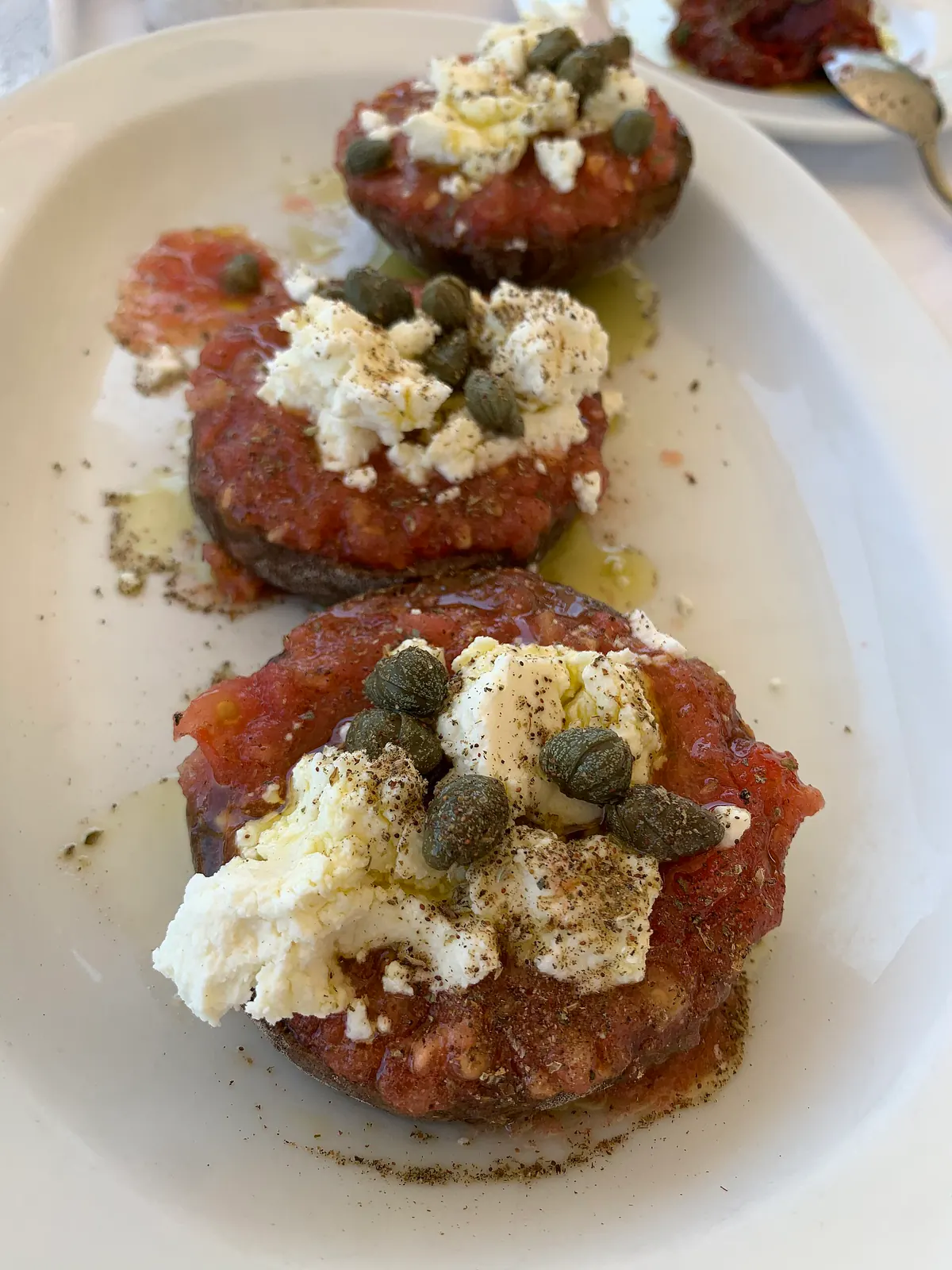
The Rhythm of the Table
Forget courses, at least in any formal sense. Food comes when it's ready, often in waves that follow the kitchen rather than a plan. Salads and bread come first, then perhaps cheese, then cooked dishes, then meat, but treat that order as a suggestion, not a schedule.
The table is shared. Dishes go in the middle, not onto individual plates. Eating Cretan food properly means reaching, offering, and passing, all evening, a running negotiation between appetite and generosity. Ordering "your own" dish marks you at once as new to the custom. I'm the foreigner here, so I say that with sympathy.
The pace is slow on purpose. Conversation interrupts eating; eating starts again when the conversation allows. A meal that would take forty minutes elsewhere stretches to two hours here, not because more food is eaten but because more time is spent sharing it.
Olive Oil as Foundation
Nothing in Cretan cooking makes sense until you understand olive oil. It isn't a condiment, or just a cooking fat the way other kitchens use fat. It's the foundation, poured in amounts that would look excessive elsewhere and are simply correct here.
A proper salad swims in it. Vegetables aren't sautéed; they're drowned. Bread is there partly to mop up what's left on the plate. If you catch yourself asking for "less oil," try it their way first. The oil isn't added to the dish; the dish is built around the oil.
Quality matters. The gap between good Cretan oil and the industrial stuff isn't subtle. The first is green, peppery, almost aggressive. The second is just fat. Places that care about their food use local oil. Places that don't, don't.
Bread and Its Obligations
Bread arrives without being ordered. It isn't a freebie in the commercial sense; it's an obligation in the cultural one. A table without bread isn't properly set.
The bread itself varies: sometimes paximadi, the twice-baked barley rusk that softens with oil and tomato; sometimes fresh loaves from village bakeries; sometimes the ubiquitous sliced white, modern life sneaking in through the kitchen door. I treat the bread as an early warning: its quality often predicts the quality of everything else.
The Unwritten Menu
In the best places there's no menu, or the menu is a formality, printed for visitors and only loosely related to what the kitchen actually has. Ask what's good today, what's fresh, what the kitchen recommends.
That takes trust, and trust takes a little nerve. Saying "bring us what you think we should eat" means handing over control and accepting that the kitchen knows better than you what's worth eating today. For a recovering optimizer like me, that's harder than it sounds. It's also the surest way to eat what the island eats rather than what's been picked out for visitors.
Wine and Raki
Wine comes in carafes, often from the barrel, often from the owner's own production or a neighbor's. It isn't fine wine by any international standard, but it's local wine, made from local grapes, drunk where it was made. For the practical side of drinking here, including local grapes, raki, and beer, use the Wine And Beer In Crete page and the dedicated indigenous Cretan wines, local wines, and local beers guides. The question isn't whether it would score well in a blind tasting but whether it belongs with this table, this food, this evening.
Raki often appears at the end, unasked, with fruit or a sweet. That small glass of clear spirit is how the meal signs off, and it's a gesture being offered, not a product being sold, so don't try to pay for it. If you drink, a sip is the polite answer. If you don't, thank them and leave the glass; nothing on this island, or in my book, is a reason to start.
The Question of Payment
The bill arrives slowly, if at all. Rushing to pay signals that you want to leave, which suggests the meal wasn't good, which can give offense. Wait. Let the evening end on its own, and only then settle up. If you're used to asking for the check with the last bite still in your mouth, this takes practice.
Splitting the bill isn't really the custom. Someone pays; the others return the favor another time. The account balances out over months, not minutes, through the friendship itself. Among strangers this is awkward. Among people who know each other, it's part of what keeps them in touch.
Time as Ingredient
This may be the main point: time isn't outside the meal; it's part of it. A Cretan dinner takes the time it takes, not because Cretans are inefficient but because hurrying would take something essential away. The meal is not only the food but the hours, not only the dishes but the pauses between them. I spent years eating lunch in the gaps between meetings, treating time as something to save. At this table, it's an ingredient.
Once you get this, recommendations matter less than you expected. Almost any taverna gets better when you approach it this way; almost any dish satisfies when you're actually there for it. What matters isn't finding the best but showing up for what's offered. And that habit travels. I put more than sixty traditional Greek and Cretan recipes into my cookbook, Out of Office, because you don't have to move to Greece to eat this way.
Editorial note
I combine firsthand observation with research from public and official sources. I check practical details against the sources listed on each guide where they are available, and my recommendations stay independent of paid promotion. For how I approach planning and selection, see my editorial manifesto.
Written by Leo Novak.