Food
Indigenous Cretan Wines
The grapes that explain Crete in a glass: Vidiano, Vilana, Dafni, Plyto, Kotsifali, Mandilari, Liatiko, Romeiko, and the old names behind the island's wine.
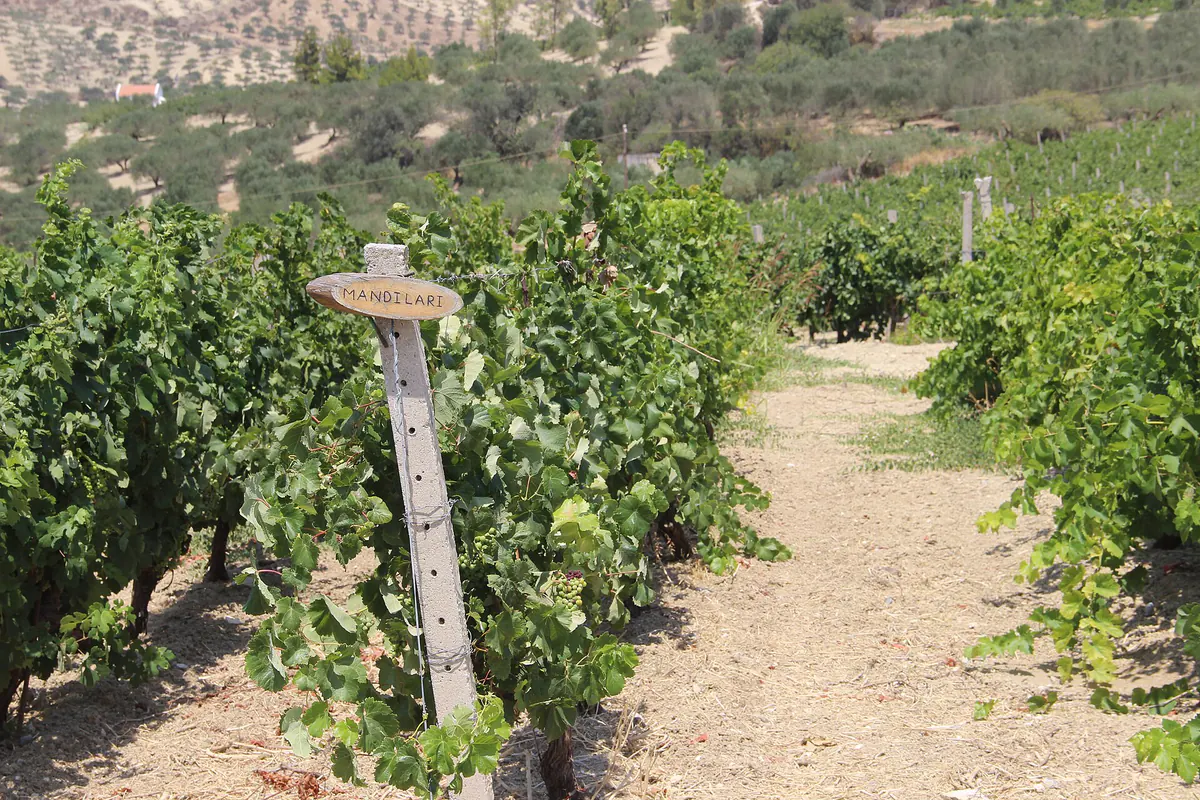
Image note: photograph of Mandilari vines at the Boutari estate, Skalani, by Vadim Indeikin, CC BY-SA 3.0, via Wikimedia Commons.
I find Crete's wine easiest to understand through its grapes. The island has winery routes, tasting rooms, modern producers, and bottles made for export, but the deeper story starts with the local varieties, and they're the reason Cretan wine doesn't need to imitate anywhere else.
You don't need to memorize everything. Learn a handful of names, then use them at the table: Vidiano when you want to understand modern Cretan white wine, Vilana for the older whites of eastern Crete, Dafni when you want something rare and herbal, Kotsifali and Mandilari when a red blend appears, and Liatiko when the conversation turns older, warmer, and more distinctive.
Vidiano, The Modern White To Start With
Vidiano is now the grape many producers use to introduce Cretan wine to outsiders. It was once far less visible; modern wineries revived it and moved it to the center of the island's white wines.
At the table, Vidiano is flexible. It works with fish, greens, oil-rich vegetable dishes, white meat, and food that needs more body than a very sharp white can give. If a wine list offers one local white to start with, I'd ask about Vidiano first.
Vilana, Dafni, Plyto, And Thrapsathiri
Vilana is one of Crete's important older white grapes, especially associated with the Sitia area in eastern Crete, though it grows elsewhere on the island too. It leans toward freshness, citrus, and green apple, and it's simply useful with the food on a Cretan table: greens, cheese, fish, salads, beans, and olive oil.
Dafni is rarer and more memorable. Its name connects to laurel, and good examples can carry a hint of bay leaf or herbs without turning into a gimmick. Plyto is another old, rarer white, usually described as fresh and citrusy. Thrapsathiri can bring more body, honeyed fruit, and a rounder feel in the mouth.
Kotsifali, Mandilari, Liatiko, And Romeiko
Kotsifali and Mandilari are the red pair to notice first. Kotsifali brings warmth, softness, fruit, and alcohol. Mandilari brings color, tannin, and grip. Together they explain much of the traditional red blending around Heraklion, including the PDO wines of Peza and Archanes.
Liatiko is one of Crete's great old red grapes. It can be dry or sweet, lighter in color than visitors expect, with warm fruit, spice, dried herbs, and a sense of age that doesn't need heavy oak. Dafnes and Sitia are the names that matter most around Liatiko.
Romeiko belongs especially to western Crete, particularly the Chania and Kissamos side of the island. It turns up in rustic reds and in Marouvas, the traditional oxidized wine that visitors sometimes compare loosely to sherry. Treat that comparison as a pointer, not a definition.
My Position
I don't present indigenous Cretan wine as a novelty shelf. These grapes belong to real places: some revived, some grown without a break for a very long time, some still rare enough to need explaining. Learn the names, ask locally, and let the food lead.
For winery visits, regions, producers, and how PDO and PGI labels work, continue to Local Wines And Wineries In Crete.
Editorial note
I combine firsthand observation with research from public and official sources. I check practical details against the sources listed on each guide where they are available, and my recommendations stay independent of paid promotion. For how I approach planning and selection, see my editorial manifesto.
Written by Leo Novak.