Landscape, Herbs & Biology
The island as a living system of endemic species and wild growth
Crete is an island in the biological sense as well as the geographic one: cut off by the sea, and different in what lives on it. Its separation from the mainland, its mountains, and its position between three continents have produced an unusual number of endemic species, plants and animals found nowhere else on earth.
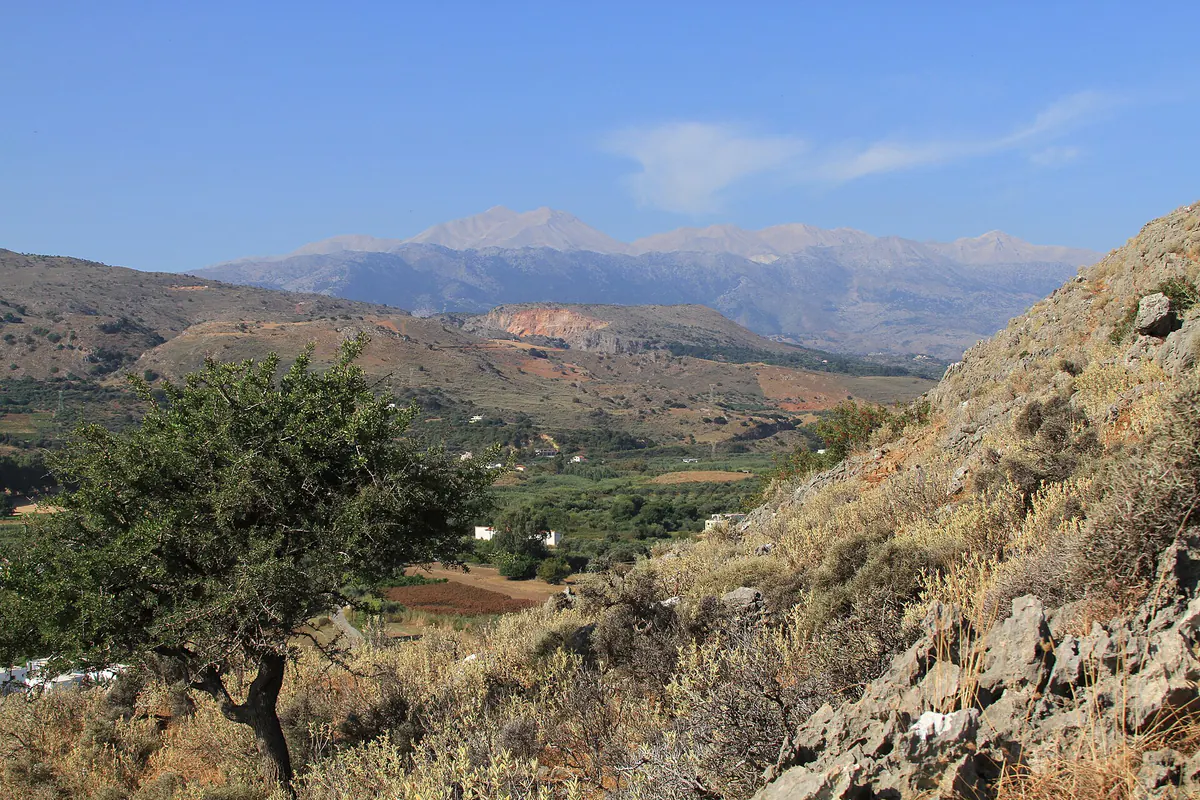
You don't need to be a specialist to notice. The island's natural richness shows up in daily life right away: in the herbs that flavor the food, the wildflowers that color the hillsides, the birds that live in the gorges, and the long relationship between the land and the people who have worked it for thousands of years.
The Herbal Landscape
Walk any hillside in Crete, especially in spring, and the air itself smells of herbs. No scented candle comes close. This essay is about that part of the landscape: why dry slopes, gorges, olive country, phrygana (the low, aromatic scrub), and altitude make herbs feel inseparable from the island's food and home life. It isn't the plant catalog.
I keep the detailed sorting of endemic plants, local forms, and everyday kitchen herbs in the dedicated Cretan herbs guide. The kitchen side continues in the ingredients guide and in the essay on food as a system.
The herbs also connect to old healing traditions. Cretan folk medicine is fading, but it still exists alongside modern healthcare. I read it as inherited practice, not a substitute for medical care: plants are prepared for comfort, digestion, a sore throat, wounds, and seasonal illness, but I won't turn the old language into modern health claims.
If you want plant-by-plant status labels, images, captions, and the limits on what can honestly be claimed, use the Cretan herbs guide; this page stays with the landscape around those plants.
Endemic Species
Crete's isolation has made it biologically unusual. A good share of the island's plant species are endemic, found nowhere else. The Cretan wild goat, the kri-kri, survives in the White Mountains and on offshore islands. The bearded vulture still nests in remote gorges, including the ones along the Samaria Gorge walk.
This goes back a long way. During the Pleistocene, Crete was home to dwarf elephants, dwarf hippopotamuses, and giant rodents, species that island isolation shaped into forms unlike their mainland ancestors. Their fossils turn up in caves all over the island. Dwarf elephants, on an island: no slide deck I have ever sat through opened with a better fact.
Today's wildlife is less dramatic but still distinctive. Cretan spiny mice, Cretan shrews, and many endemic invertebrates live on the island. The butterflies, especially in spring, can be extraordinary.
Olive Ecology
No plant defines Crete more than the olive. The island has millions of olive trees, some of them centuries old. They're not just farm trees. Each one is a small ecosystem, home to insects, birds, and the plants that grow beneath it.
The ancient olives, the ones with massive, twisted trunks and hollow centers, are especially important. Some are believed to be more than a thousand years old, possibly among the oldest living things in Europe. Some are said to still bear fruit, though their main value now is cultural and symbolic rather than commercial.
The olive groves also shape how the land looks. Their silver-green leaves, their gnarled trunks, their rows on terraced hillsides: these are the signature sights of rural Crete, as familiar as the white churches or the blue sea.
Gorges and Refugia
Crete's gorges (there are hundreds) work as biological refuges, sheltering species from both climate change and human disturbance. Samaria is the most famous, but others matter just as much biologically: Imbros, Aradena, Zakros, and countless unnamed cuts through the mountains.
The gorges stay cooler and damper than the land around them, so species survive there that would otherwise be limited to higher ground or wetter climates. They are corridors from the mountains to the coast, letting animals move with the seasons and plants spread.
If you're visiting, a gorge is the most direct way into Cretan wilderness. Walking through one is walking through geological time, past rock layers that record millions of years, and through plant and animal communities that were here before people reached the island.
Reaching the Gorges
What matters for planning isn't the scenery but the season. The Samaria Gorge, in the White Mountains south of Chania, is a managed national park and opens only for part of the year: the official season runs 10 April to 31 October, but the exact opening is set each spring once snowmelt and trail damage are cleared (the 2026 season opened on May 19). It's a full, committing day: a one-way descent of roughly 13 km inside the park, around 16 km in all to the coast at Agia Roumeli, usually five to seven hours downhill, and there's no road out; you leave Agia Roumeli by boat. Outside those months the gorge is simply closed. (West Crete travel guide, checked July 2026; Greek City Times for the 2026 date.)
For the shoulder seasons, or for anyone not ready for Samaria, the nearby Imbros Gorge above Chora Sfakion is the practical answer: about 8 km, roughly two and a half hours, easy enough underfoot for children, and, unlike Samaria, open all year, which is why it fills the gap in early spring when the high park is still shut. Imbros, Aradena, and the Sfakia gorges cluster in the same southwest corner, so a base near Chania or the south coast puts several within a short drive of each other. Check current access, the small park entry fee, and the Agia Roumeli boat timetable on the official listings before you commit a day to it. (West Crete travel guide, checked July 2026.)
Editorial note
I combine firsthand observation with research from public and official sources. I check practical details against the sources listed on each guide where they are available, and my recommendations stay independent of paid promotion. For how I approach planning and selection, see my editorial manifesto.
Written by Leo Novak.