Why Distance in Crete Is Deceptive
On terrain, road time, and why traveling slower works better here.
Distance in Crete rarely behaves the way you expect.
On a map, the island looks easy to read. Roads connect the towns neatly, the coastlines run parallel, and the distances look modest by continental standards. It's easy, almost inevitable, to assume that getting around will work the way it does at home. It doesn't. For most of my working life I trusted the plan over the ground; Crete is where that habit took early retirement.
Crete does not fold up neatly.
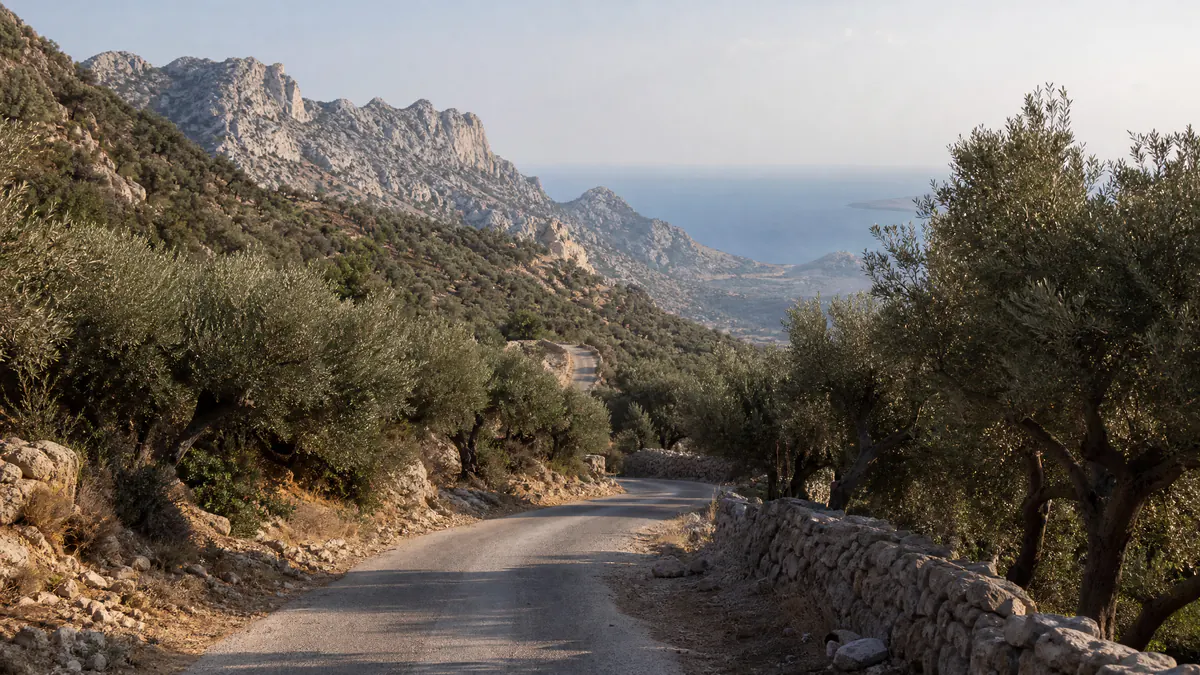
The first misunderstanding is scale. The island is long rather than wide, but its interior is full of interruptions. Mountain ranges cut across it and rise through it, breaking a journey into climbs, descents, and narrow passes. A short line on a map often hides changes in altitude, exposure to wind, and road conditions that change both your speed and your effort. Thirty kilometers can feel trivial or exhausting, depending entirely on the terrain. The landform behind all this (a mountain spine reaching 2,456 m at Psiloritis, an island 260 km long and rarely 60 km deep, a south coast dropping steeply to the Libyan Sea) is set out in the geography of Crete.
Roads explain part of it. Many are built to get through rather than to be fast, shaped by geography more than by design. They follow contours, avoid cliffs, and keep to valleys people traveled for centuries before cars. Getting there comes first; speed comes second. Progress is steady but rarely fast.
Weather adds to it. Wind, especially along the south coast and through mountain passes, changes how a distance feels in your body. Heat squeezes the day, so midday driving feels heavier than its length suggests. Light goes early in winter and late in summer, quietly changing what counts as a "reasonable" trip. Travel time in Crete stretches and shrinks because the conditions keep changing.
The difference between north and south makes it stronger. The north coast, long turned toward trade and access, makes moving around easy. The south, shaped by exposure and isolation, pushes back. A drive that looks symmetrical on a map can feel completely different in practice. One side waves you through; the other asks for commitment.
Village life follows the same map. Villages grew up on the understanding that people would travel rarely, by season, and for a reason. Daily life was built around what was close, not around range. Meals, work, and friendships assume a small radius. Traveling far was once a decision, not a default, and that habit quietly lives on.
For a visitor, the most common mistake isn't underestimating distance but overestimating how much you can do. Trying to squeeze the island into a string of short stays usually leaves you tired rather than wiser. Crete opens up not when you tick off more places but when you go back to the same one at different hours and watch the light, the wind, and the quiet change it.
It helps to hold a few real numbers. The figures below are approximate road distances and typical driving times between the main bases, along the north-coast E75 national road wherever possible. Round them generously and add time for traffic, roadworks, and stops.
| Route | Approx. distance | Approx. driving time |
|---|---|---|
| Heraklion ↔ Chania | ~140 km | ~2h20–2h45 (E75) |
| Heraklion ↔ Rethymno | ~80 km | ~1h15 (E75) |
| Heraklion ↔ Agios Nikolaos | ~65 km | ~1h (E75) |
| Rethymno ↔ Chania | ~60 km | ~1h (E75) |
These are the easy routes. The north-coast E75 is the island's fast spine, and trips along it behave much as the table suggests. The moment you leave it, turning south toward the Libyan Sea or climbing into the mountains toward a gorge or a plateau, the math changes. Narrow, winding, and often single-lane, the south-coast and mountain roads are far slower than the map implies, and a modest distance can eat an afternoon. Plan the north coast by the clock; plan everything else by the terrain.
Distance here isn't measured only in kilometers. It's measured in effort, attention, and interruptions. A short drive can break a day into pieces; a longer one can make the day, if you go at it on purpose.
Once you see this, it changes how you plan. It argues for fewer bases, longer stays, and letting the geography set the pace. Crete doesn't reward efficiency. It rewards people who adjust.
People who accept the island's version of distance often find that they travel less and see more. I'm still learning that one.
Sources & references
Editorial note
I combine firsthand observation with research from public and official sources. I check practical details against the sources listed on each guide where they are available, and my recommendations stay independent of paid promotion. For how I approach planning and selection, see my editorial manifesto.
Written by Leo Novak.