Skip to content

    West Chania

    Falasarna Beach

    What it is

    Falasarna is a broad west-facing beach near Kissamos, set inside the wider Gramvousa-Falasarna protected coastal landscape and close to the remains of ancient Phalasarna's harbour.

    Why it matters

    The scale of the bay, open western exposure, dune habitats, deep water, and ancient harbour make this more than a swim stop. Wind, shade, transport, and sunset timing decide how the day works.
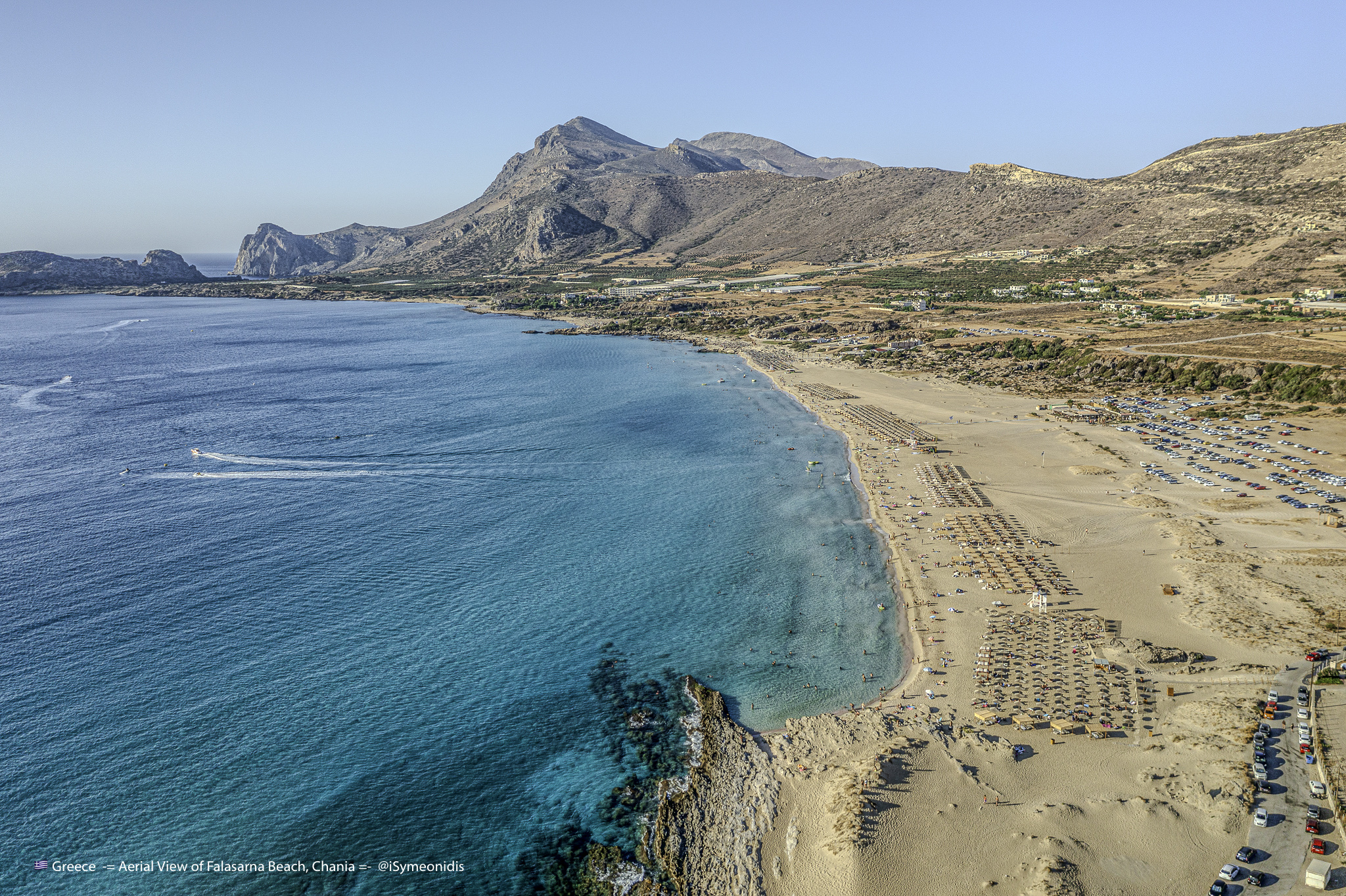
    Aerial view of Falasarna Beach, broad sand, clear water, and the west coast of Chania, Crete
    Falasarna Beach on Crete's west coast. Photo: Isymeoni, CC BY-SA 4.0, via Wikimedia Commons.

    What to understand before going

    Choose the shape of the day before arrival: an early beach visit, a sunset visit with a secure return, or a beach-and-archaeology pairing whose site information has been checked.

    What stays with you

    What stays is the open horizon: broad sand, western light, visible weather, and an old harbour beside a coast still used as a public landscape.

    What Falasarna Is

    Falasarna is a long public beach landscape on the west coast of Chania Prefecture, near Kissamos. Region of Crete records access by car, bus, and foot, together with white sand, deep water, seasonal lifeguard and organized sections, and no natural shade.

    The surrounding coast forms part of Natura 2000 site GR4340001. EUNIS records marine, dune, reef, Posidonia, and Mediterranean coastal habitats across the wider Gramvousa-Falasarna area. Use established access and treat the dunes as habitat.

    Beach And Ancient Harbour

    The shore is wide and exposed, with open sections and seasonal organized sections. That space is Falasarna's strength on a calm day and its warning on a windy one: surf and blowing sand can change the experience quickly.

    Ancient Phalasarna gives the coast a second register. The archaeological site preserves the harbour-town context at Crete's western edge. Check current Ministry or culture-office information before building the day around site access.

    From Chania And Kissamos

    Plan Falasarna as a west-Chania or Kissamos day. From Chania, a car gives control over morning arrival and sunset return. The Chania Airport guide explains when an airport pickup serves a western first day.

    KTEL Chania-Rethymno currently lists Chania, Kasteli/Kissamos, Platanos, and Falasarna service on its popular-destinations page. Check the live table and the return before travel; seasonal routes and possible changes at Kissamos cannot be assumed.

    Hours, Fees, And Access

    The beach is an open public coastal landscape with no single gate, official daily schedule, or universal entry fee. Seasonal facilities, parking arrangements, and paid beach services operate separately.

    VisitCrete's archaeological-site listing records seasonal hours and free entry, but also says its data was last updated in 2017. Treat it as a published listing to verify, not a guaranteed current schedule. Accessibility also varies along the long bay, so confirm the exact access point when step-free movement matters.

    Wind, Season, And Sunset

    Morning gives the simplest arrival in high summer, before parking, heat, and pressure build. Late afternoon gives Falasarna its western light and sunset, but the return drive or last bus must be settled before staying late.

    July and August need carried shade, water, and a wind check. Shoulder season often gives more room for the landscape and ancient harbour, with current bus and service coverage verified. Winter is primarily a coast-and-archaeology visit shaped by weather and site access. Use Crete Beaches By Month for the wider seasonal decision.

    Western Beach Choices

    Falasarna suits a broad beach and sunset day with ancient-harbour context. Balos Lagoon is a lagoon-and-access decision, explained by the Balos Boat Or Road guide. Elafonissi is the southwest protected-islet day.

    Give each western headline its own weather and transport logic. The Crete 7 Day Itinerary shows why one clear western commitment usually makes the stronger week.

    Practical Questions

    Is Falasarna worth it from Chania?

    Yes, if you want a broad west-facing beach day and can give the return journey enough margin. It works especially well with a car or with a carefully checked KTEL schedule.

    Can you visit Falasarna by bus?

    Yes, KTEL Chania-Rethymno lists Falasarna among its popular Chania destinations. Check the current e-ktel timetable before travel, because seasonal beach routes and returns change.

    Is Falasarna good for sunset?

    Yes. Falasarna faces west, so late afternoon and sunset are central to the visit. Plan the drive or bus return before staying late.

    Does Falasarna have shade?

    Do not count on natural shade. Region of Crete marks natural shade as no, so bring sun protection or use seasonal organized areas.

    Is the ancient site at Falasarna free?

    VisitCrete's archaeological-site listing records free entrance and published seasonal hours, but the page is old. Verify current Ministry or culture-office information before relying on it.

    Editorial note

    This public-landscape entry uses Region of Crete, EUNIS/European Environment Agency Natura 2000 data, KTEL Chania-Rethymno, Ministry/Odysseus and VisitCrete archaeology listings, and a real CC BY-SA Commons photograph. Transport, weather, service coverage, accessibility, and archaeological-site access should be checked again before travel.

    Written by Kostis Kornaros.

    Sources and Current Checks - 2026-07-22