Skip to content

    Gramvousa, Chania

    Balos Lagoon

    What it is

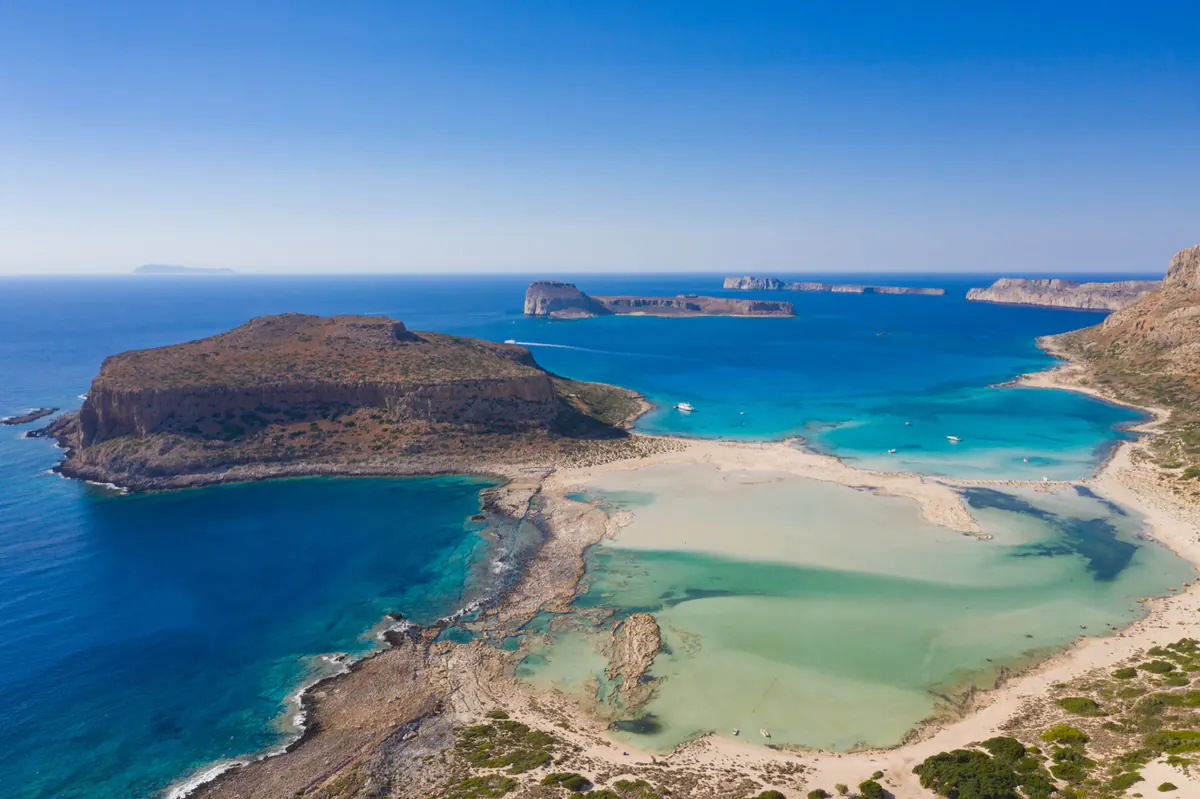
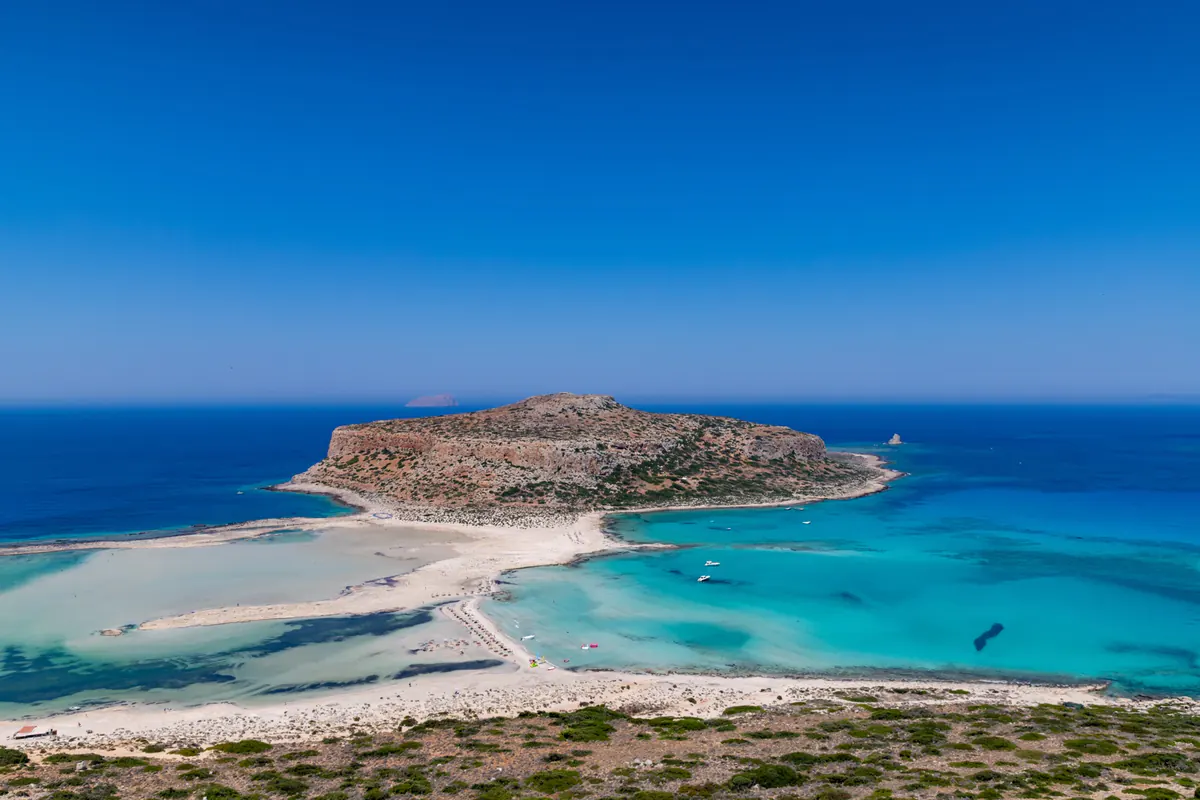
    Balos Lagoon is the shallow, pale-water landscape at the northwestern edge of Crete, on the Gramvousa peninsula in the Municipality of Kissamos. The view gathers the lagoon, Cape Tigani, pale sand, and the Gramvousa islets into one frame; many boat trips also stop at Imeri Gramvousa, where a Venetian fortress stands above the landing.

    Why it matters

    Balos matters because it is one of Crete's most photographed landscapes and also one of its easiest days to mis-plan. The image is simple; the visit is shaped by access. From Kissamos, seasonal boats make the lagoon part of a sea day with Gramvousa. From the landward approach, an unsurfaced road and exposed descent turn the view into a more physical outing. The right choice depends on season, wind, heat, rental-car terms, and tolerance for crowds.

    Aerial view of Balos Lagoon, Cape Tigani, and pale sand on northwestern Crete
    Balos Lagoon and Cape Tigani seen from above on the Gramvousa peninsula
    Balos Lagoon, Cape Tigani, and the Gramvousa peninsula in northwestern Crete. Photos by dronepicr, CC BY 2.0 via Wikimedia Commons.

    What to understand before going

    Published access information checked on 2026-06-25 points to scheduled Kissamos boat service from April to October, with a standard Balos-and-Gramvousa cruise of about seven hours and shorter Balos-only departures in high season. Cretan Daily Cruises lists 2026 adult fares from EUR40 to EUR45 for the full cruise, depending on date band, plus an operator-disclosed EUR1 Municipality of Kissamos administrative fee for passengers over 13 visiting Balos Lagoon.

    Balos is a natural landscape rather than a fenced site with fixed opening hours. Conditions decide more than the clock: wind, sea state, heat, road condition, daylight, and the return climb from the landward approach. July and August bring the hardest crowd and heat equation. May, early June, late September, and October usually give a better planning balance.

    What stays with you

    What stays is the geometry: shallow water, sand, rock, and islands arranged with unusual clarity. Balos rewards the visitor who treats that beauty as a landscape with limits and plans the day around those limits.

    What to Look For

    • The lagoon itself: shallow water, sand bars, and the changing line between lagoon and open sea.
    • Cape Tigani, the rocky form that defines the lagoon's shape.
    • Imeri Gramvousa and Agria Gramvousa across the water.
    • On boat itineraries, the Venetian fortress above Imeri Gramvousa and the swim stop below it.
    • Wind and light changes through the day; conditions can alter the place quickly.

    Practical Visit

    • Re-check the Kissamos boat schedule, price band, check-in time, and municipal fee before reserving a place.
    • If driving, verify rental-car terms and current road condition before taking the unsurfaced-road approach.
    • Carry water, sun protection, and footwear suitable for hot ground and a return climb.
    • Treat the last boat, late-afternoon drive, sea state, road traffic, and darkness as real constraints.
    • Use Chania or Kissamos as the natural planning base; Heraklion and Rethymno make the day much longer.

    Best Time

    May, early June, late September, and October are the most defensible recommendations for most travelers: scheduled boat access is usually active, the light is strong, and heat and crowd pressure are easier to manage than in high summer.

    July and August can still work, but the tradeoff is plain: more boats, more people, higher operator fares, stronger sun, and a less forgiving road and walk option. Check marine weather before committing by boat or road.

    Boat Or Road

    Boat from Kissamos is the simplest frame for most visitors because it removes the unsurfaced road and packages Gramvousa into the day. The landward route gives the famous elevated view before the descent, but it adds road-condition risk, rental-car uncertainty, heat exposure, and a return climb.

    A private boat can solve some schedule pressure. Treat it as optional logistics, separate from the public-frame day that most readers will plan around. For the boat-or-road decision from Chania and Kissamos, use the Balos logistics guide.

    Practical Questions

    How do you get to Balos Lagoon?

    The main public-frame options are seasonal boat service from Kissamos Port or the landward route via tarmac road, unsurfaced road, and an exposed walk down to the lagoon. Private boats and organized excursions are separate logistics choices.

    Is Balos better by boat or by road?

    Boat is simpler for most visitors and usually includes Gramvousa. Road access gives the elevated view, but asks more from the car, the driver, the weather, and the return walk.

    When is the best time to visit Balos?

    May, early June, late September, and October usually give the best balance of boat access, light, heat, and crowd pressure. July and August require earlier starts, more water, and less improvisation.

    Are there fees for Balos Lagoon?

    No fixed public beach-entry fee was verified from an authority during this update. For boat passengers, Cretan Daily Cruises lists 2026 fare bands and states that the Municipality of Kissamos collects a EUR1 administrative fee from passengers over 13 visiting Balos Lagoon.

    Tickets & tours

    Balos is reached by boat cruise from Kissamos or by a rough unpaved drive; guided boat trips from Kissamos and Chania can be booked in advance through GetYourGuide.

    See Balos boat trips

    Some links here earn the guide a commission when you book through them, at no extra cost to you. They point only where our judgment already pointed—see our ethics.

    Editorial note

    This public landscape entry uses Municipality of Kissamos context, Region of Crete Natura 2000 material, Visit Greece background, 2026 operator schedule and price checks, and real Commons photographs. Boat schedules, fares, municipal fees, weather, access controls, and road condition should be verified again before travel.

    Written by Kostis Kornaros.

    Sources and Current Checks