Heraklion Prefecture
Heraklion Archaeological Museum
What it is
The Heraklion Archaeological Museum is where much of ancient Crete starts to make sense. Go for the objects that make Knossos, Phaistos, Malia, Zakros, and the island's long prehistoric story easier to read once you're standing outside in the ruins.
Why it matters
In my view, this is the best indoor stop on Crete for Minoan material. Its permanent exhibition carries the island from the Neolithic period through Roman times, with the densest public collection of objects from the palace world: fresco fragments, ritual vessels, seals, tablets, jewelry, pottery, stone vessels, sarcophagi, and small objects that explain administration, craft, worship, storage, movement, and display.
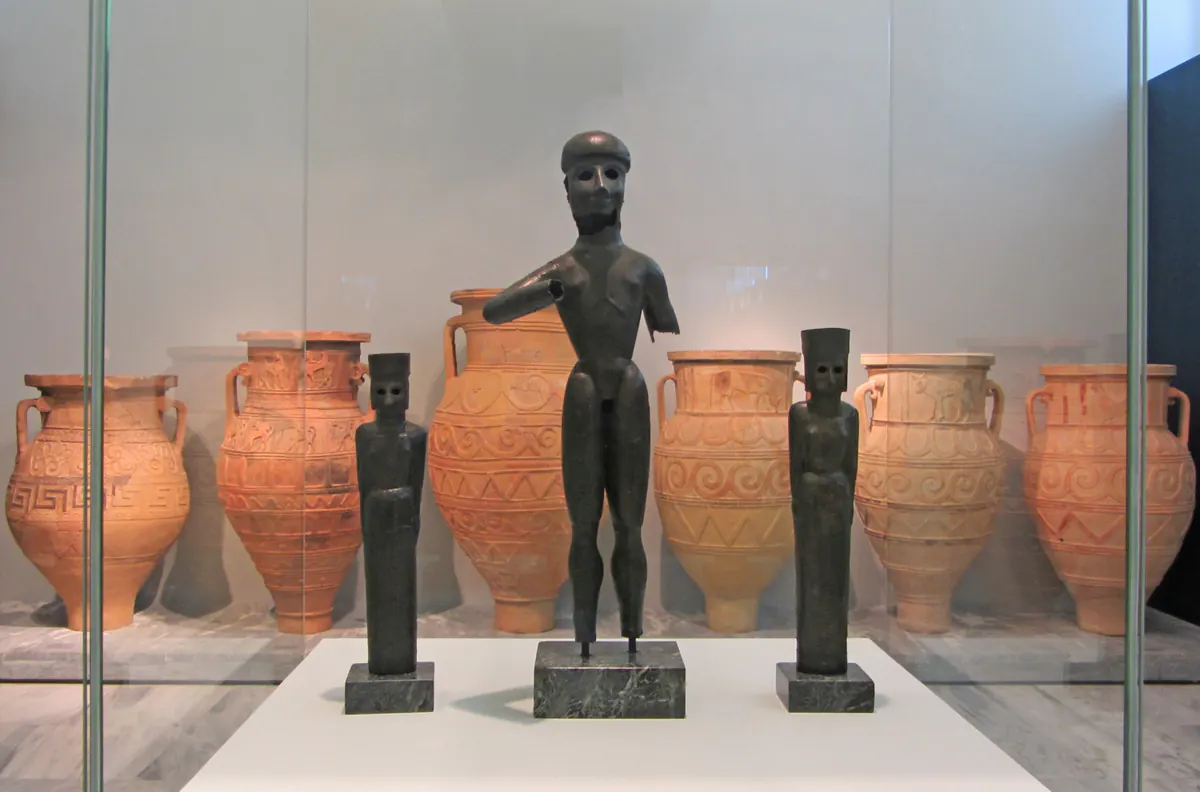
What you actually see
The permanent exhibition is arranged across 27 rooms, chronologically and thematically, and runs from the Neolithic period to Roman times. Plan for that: this is a serious museum visit, not a quick display case near the harbor. Two hours covers a focused first pass; if you want to read the Minoan material closely, give it longer.
The prehistoric rooms are the heart of it. Look for the palace material from Knossos, Phaistos, Malia, and Zakros; the fresco fragments that have become visual shorthand for Minoan Crete; the Phaistos Disc; seals and tablets; ritual vessels; and the objects that show trade, storage, ceremony, and workshop skill.
What to understand before going
If your plan allows it, do the museum before Knossos. The palace site gives you walls, courts, thresholds, reconstruction, and scale; the museum gives you what survived of the life inside them. The Phaistos Disc, the Malia pendant, the Snake Goddess figurines, the Hagia Triada Sarcophagus, the palace frescoes, tablets, and ritual pieces change how the ruins read, because they put human hands back into the stone floor plan.
What stays with you
What stays with you is how much evidence there is: room after room of objects that pull the palace sites back from myth into administration, craft, worship, and human scale. Somebody was always doing the paperwork, even then.