Heraklion Prefecture
Phaistos
What it is
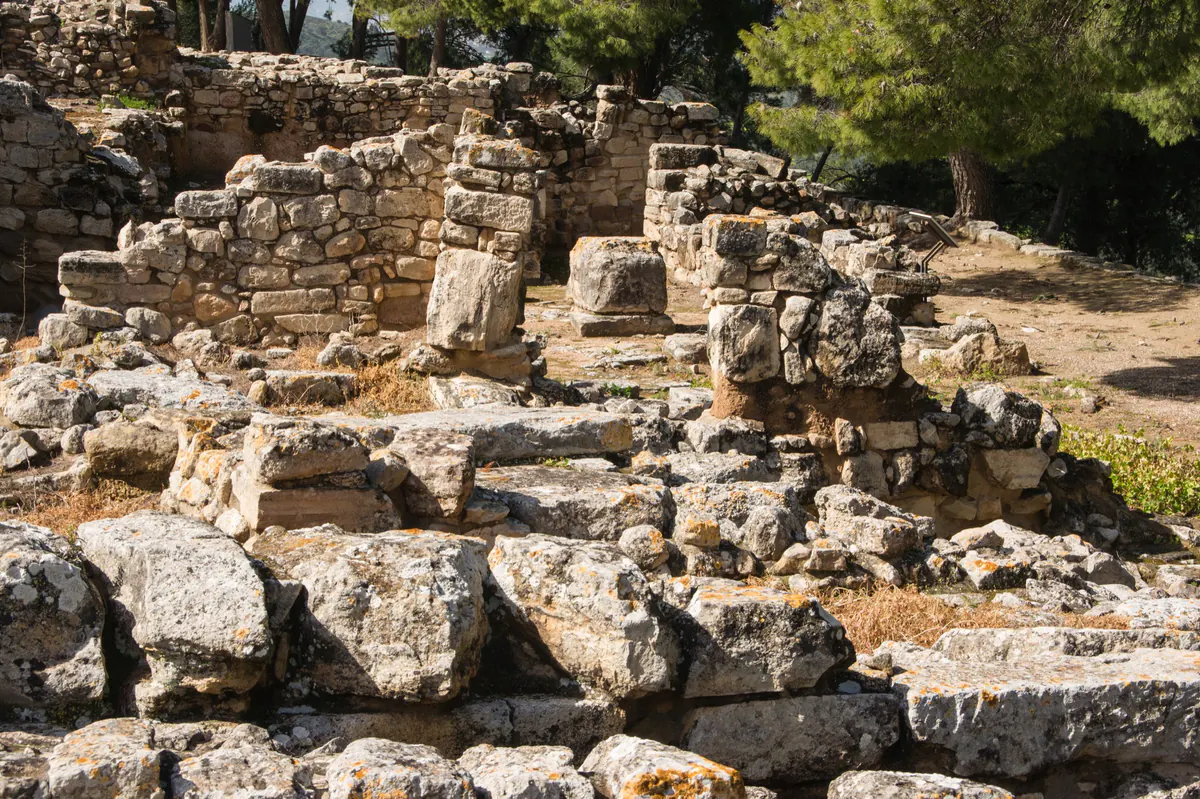
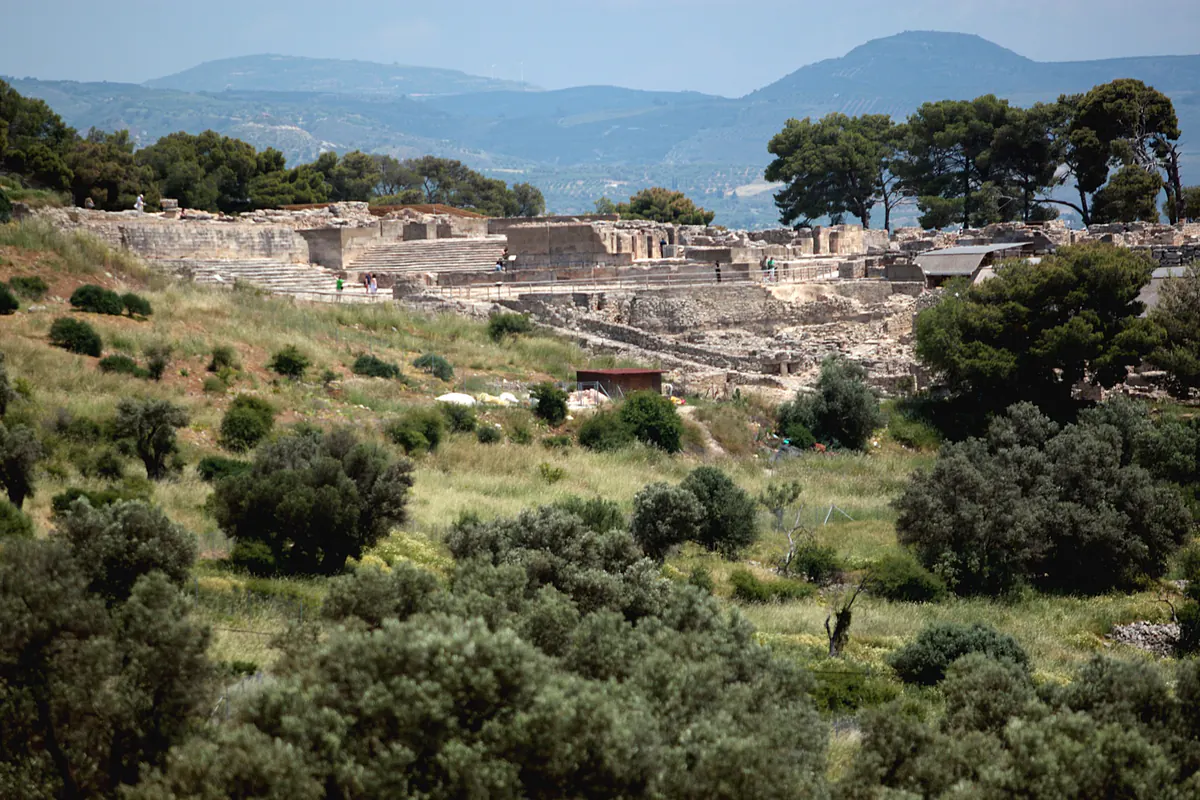
Phaistos is a Minoan palace site on a hill above the Messara plain in south-central Crete. What survives are courts, stairways, corridors, storage and ritual spaces, and the north and west wings of a Bronze Age complex whose older and later palace phases date to the second millennium BCE.
Why it matters
Phaistos matters because it shows Minoan power in a different key from Knossos. Here you can still read the landscape: the palace looks across the Messara, toward routes, fields, and the south coast. UNESCO now includes Phaistos as one of the six Minoan Palatial Centres of Crete, a serial World Heritage property inscribed in 2025.
The site also does less of the work for you, and I like it for that. You read its courts and rooms through stone, level changes, and open air, with far less rebuilding than you meet at Knossos. The result is quieter and, for many travelers, easier to trust. Put the Heraklion Archaeological Museum on the same mental map: the famous Phaistos Disc belongs to the site's story, but the object itself is in the museum, not on the hill.
Planning your visit
Phaistos opens daily, with hours set seasonally by the Hellenic Ministry of Culture. The Odysseus listing, re-read on 2026-10-10, gives summer from 1 April as 08:00-20:00 with last admission at 19:45, then steps the closing back through the autumn: 08:00-19:30 from 1 September, 08:00-19:00 from 16 September, 08:00-18:30 from 1 October, and 08:00-18:00 from 16 October. Winter, from 1 November, is 08:30-15:30 with last admission at 15:15. Admission is EUR15 full and EUR8 reduced, the same figures given for the site's special ticket package. Last admission runs fifteen minutes before closing in every band, so the step-downs matter more than they look: an arrival that works in August is half an hour late in October.
Getting there means a drive south from Heraklion across the island into the Messara plain, roughly 60 km and about an hour by car. In practice this is a car-or-tour site; the bus network won't carry the day. From the south coast it pairs naturally with Matala or Gortyna if you keep the day realistic. The hill is open and largely unshaded, so heat is the real constraint: come early or late in summer, carry water and sun cover, and stay off the plain in the midday hours. Crowds are far lighter than at Knossos, so here you are planning around the sun more than the coach traffic.
Who should skip it: if you expect reconstructed, vividly painted palace rooms, know that Phaistos is read almost entirely through bare stone and level changes. It rewards patience and offers little spectacle; think of it as a meeting without the slides, where you actually have to listen. And remember that the famous Phaistos Disc is not on the hill but in the Heraklion Archaeological Museum, so plan the two together if the Disc is what you came for.
What to understand before going
I'd treat Phaistos as a south-central archaeology stop that needs time and a sensible plan for the heat. From Heraklion, the drive crosses into the Messara plain; from the south coast, it pairs naturally with Matala or Gortyna, as long as you keep the day realistic.
Hours step down through the autumn, and the Ministry's own listing (re-read on 2026-10-10, in Planning your visit below) has winter at 08:30-15:30 from 1 November. Don't arrive close to last admission, and check official ticketing before relying on any fee.
What stays with you
What stays is how wide the place feels: stone underfoot, wind over the plain, and a palace whose importance you can still read without anyone rebuilding it for you. Phaistos gives the Minoan story room to breathe.