Heraklion Prefecture
Malia Palace
What it is
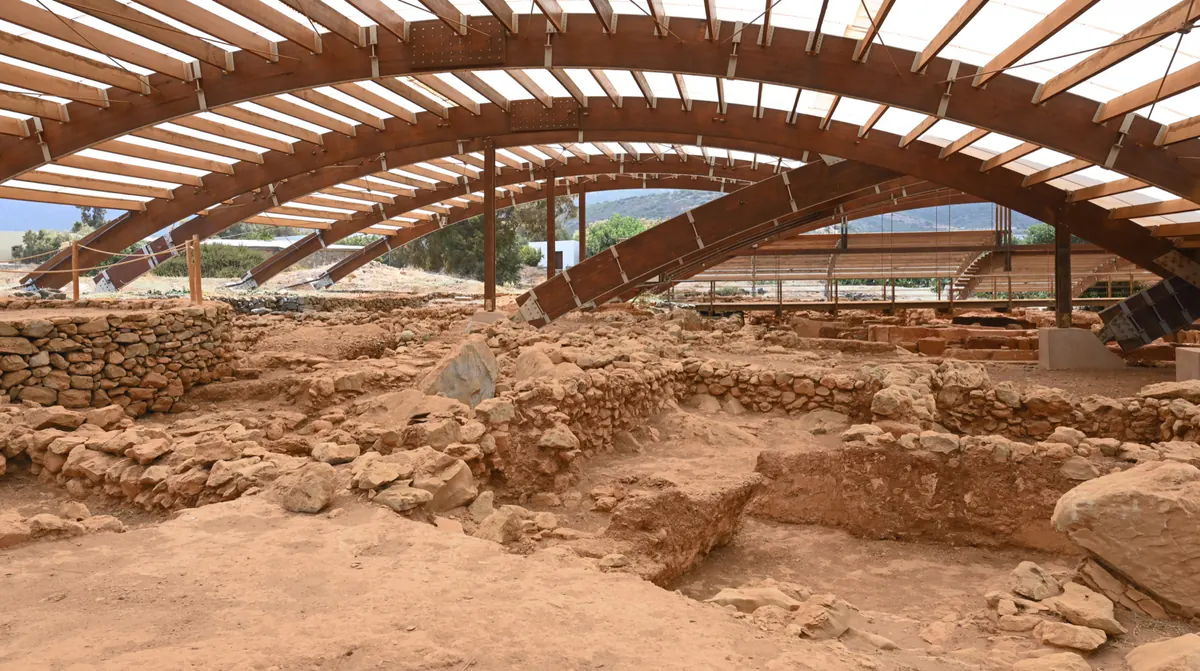
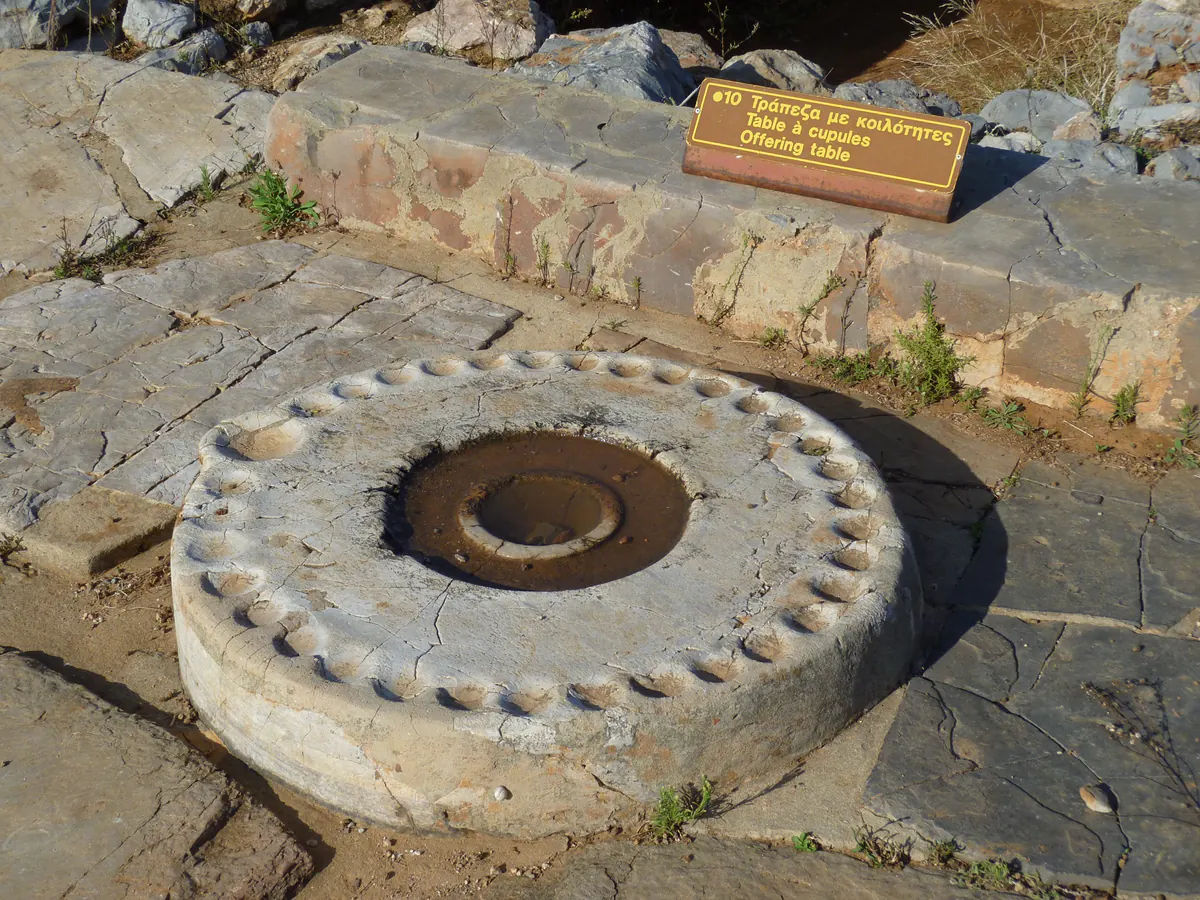
Malia Palace is a Minoan palace site on Crete's north coast, east of Heraklion and close to the modern resort town of Malia. You read the palace through courts, corridors, storage magazines, workshop areas, stairways, traces of the town around it, and the circular kernos, one of the site's sharpest details.
Why it matters
Malia matters because it widens the Minoan map beyond Knossos and Phaistos. UNESCO now includes it as one of the six Minoan Palatial Centres of Crete, a serial World Heritage property inscribed in 2025. Its spot on the coast changes the story too: administration, storage, craft, and movement sit beside the north-shore route that still carries much of eastern Crete's traffic. Some commutes are older than others.
Planning your visit
The Minoan palace of Malia sits on the north coast about 3 km east of Malia town, roughly 35 km east of Heraklion, just off the main north-coast road. It opens most of the year with hours set seasonally by the Hellenic Ministry of Culture, and current listings show a regular weekday closure. Seasonal hours and the fee both change, so I would rather you confirm the current hours and the full and reduced ticket price on the official Odysseus listing (odysseus.culture.gr, Malia) before you go than trust a number printed here. As a rule of thumb, expect last admission a short while before closing.
Winter is the one timetable I will print, because both official sources agree on it. The Odysseus listing, re-read on 2026-10-10, gives winter hours from 1 November as 08:30-15:30, closed on Tuesdays, and the Hellenic Heritage page for Malia, read the same day, gives the same. The Ministry listing still carries a notice that the site was closed from 15 October 2025 to 31 March 2026 for works on the monument, so before a winter drive out I'd make sure it is open this year.
Getting there by car is straightforward: the site is on the coastal road east of Malia town, about a 40 to 45 minute drive from Heraklion, with parking on site. Without a car, you can reach it on the KTEL coastal bus line that runs Heraklion to Agios Nikolaos and Lasithi along the north shore; most services drop you in Malia town rather than at the ruins, so plan the last stretch to the palace as a walk or a short taxi from town. Check the current KTEL timetable and stop before your day depends on it: arriving in town and arriving at the site are two different decisions. In summer the coast is hot and largely open, so come early or late with water and sun cover.
Who should skip it: if you expect reconstructed, painted palace rooms, know that Malia is read almost entirely through low stone, the sequence of courts, and the circular kernos. It rewards a slow look, not a hunger for spectacle. It pairs well with the north-coast route east - Krasi, Selinari, Sisi, Agios Nikolaos, or Elounda - but only when you keep the day compact.
What to understand before going
I'd treat Malia as a compact archaeological stop that rewards good timing and a bit of attention. It works especially well on a Heraklion-to-Lasithi day, or from bases around Hersonissos, Malia, Sisi, Agios Nikolaos, and Elounda. The Ministry/Odysseus listing I re-checked on 2026-10-10 showed seasonal hours, a Tuesday closure, and full and reduced tickets, but check official ticketing and the KTEL timetable before your day depends on them.
What stays with you
What stays is how open the place feels: low stone, coastal light, one court leading to the next, the round kernos, and the sense that Minoan power was a network of palaces, bigger than any single famous ruin.