Heraklion Prefecture
Knossos
What it is
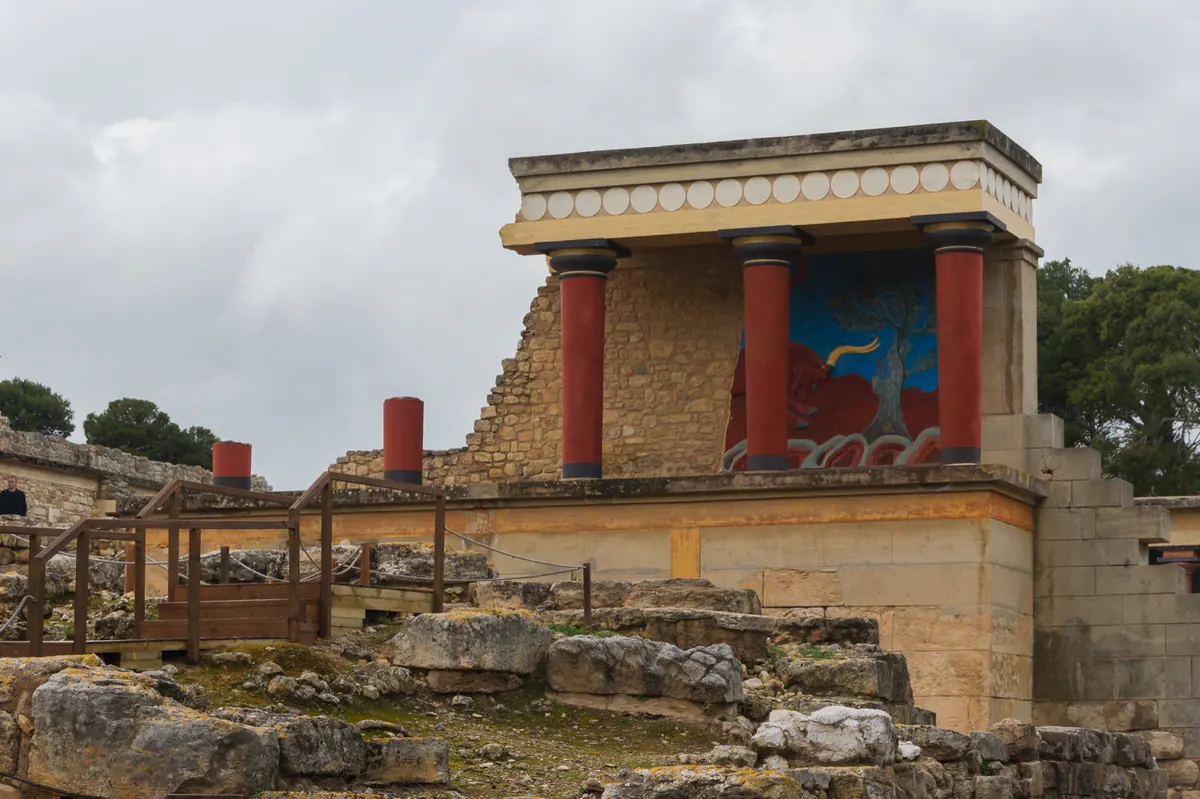
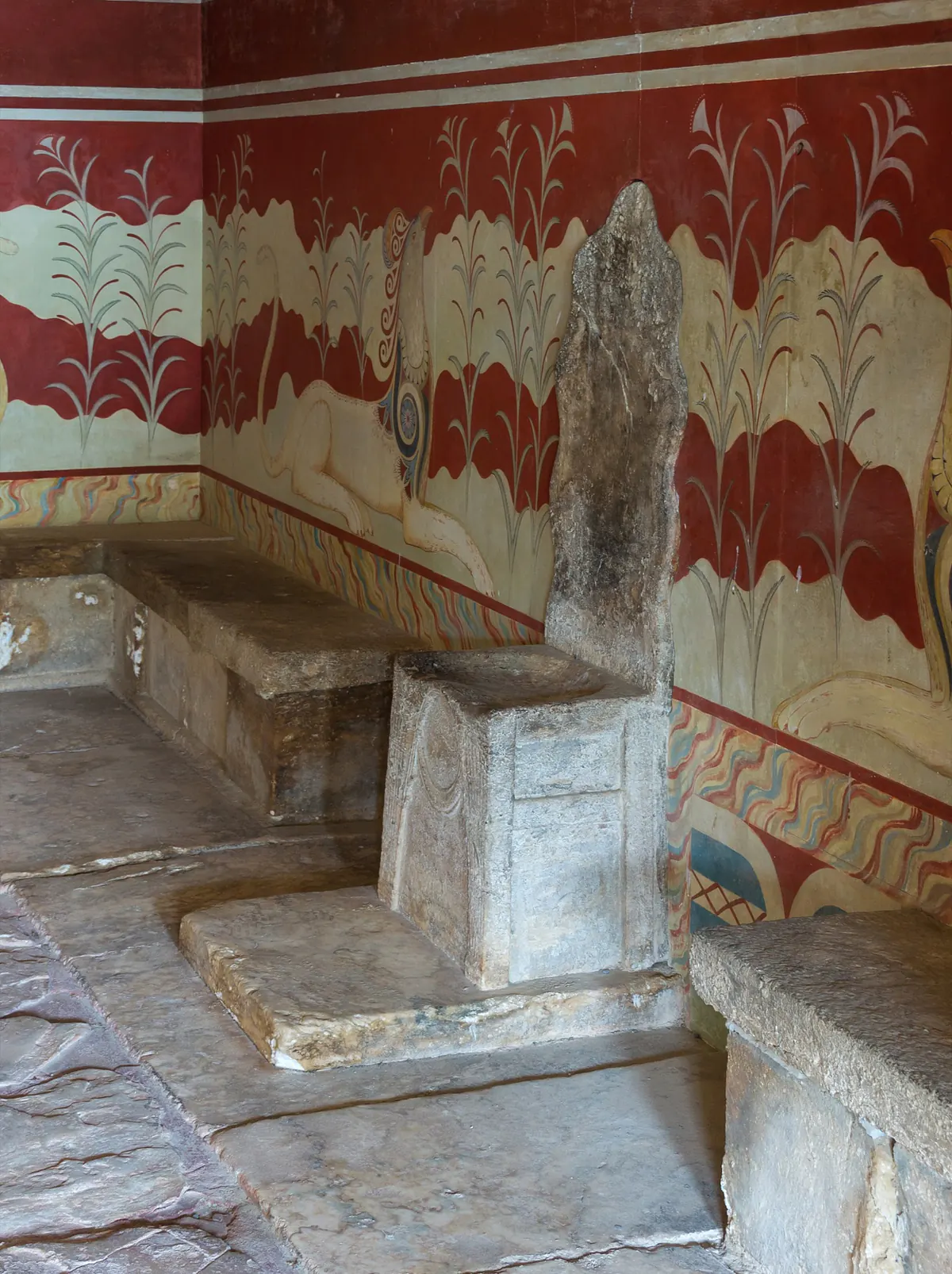
Knossos is the best-known Minoan palace site on Crete, just south of Heraklion. The route takes you through courts, corridors, storage magazines, stairways, rebuilt porticoes, fresco settings, and the palace rooms that made Knossos the island's main Bronze Age landmark.
Why it matters
Knossos matters because it shows Minoan power as organization: storage, movement, ritual, writing, water management, and town planning, all packed into one dense site. I have worked in office buildings with fewer corridors and a worse sense of direction; the Minoans ran this one without a single email. UNESCO now includes Knossos as one of the six Minoan Palatial Centres of Crete, a serial World Heritage property inscribed in 2025. The palace also carries the island's most famous myths, from Minos and Ariadne to the Labyrinth and the Minotaur. Enjoy them; I do. Just keep them next to the archaeology, not in place of it.
World Heritage status
Knossos was inscribed on the UNESCO World Heritage List in July 2025, at the World Heritage Committee's 47th session, as one part of a single serial property, the Minoan Palatial Centres. The listing covers six sites: Knossos, Phaistos, Malia, Zakros, Zominthos on the slopes of Psiloritis, and Kydonia beneath the Kastelli hill in modern Chania.
At the gate, the listing changes nothing. Hours, admission, and the timed-entry rule are still set by the Hellenic Ministry of Culture, and the inscription comes with no separate ticket. What it changes is how you see the place. The serial listing treats the palaces as one administrative system, and that is my practical argument for seeing a second one: Phaistos on the Messara plain and Zakros on the far eastern coast feel very different from the reconstruction here.
Planning your visit
The Ministry's Odysseus listing for Knossos, re-read on 2026-10-10, gives the full ticket as EUR20 and the reduced ticket as EUR10, with the same figures for the listed special package. Opening is 08:00 daily. The summer day runs to 20:00 from 1 April, then steps down through the autumn: 19:30 from 1 September, 19:00 from 16 September, 18:30 from 1 October and 18:00 from 16 October. From 1 November the winter day is 08:30-17:00. Last admission is fifteen minutes before closing in every one of those bands. Hellenic Heritage, the official ticket store, gives the same closing times on its Knossos page, read the same day, but lists the winter day as 08:00-17:00 and puts last entry at twenty minutes before closing. For a winter visit I'd plan on the later opening and the earlier last entry. Knossos also sells timed-entry tickets, so book a slot in advance in high season, and check the Ministry listing again before your plan depends on the closing time: these are figures I checked, and they have a shelf life. They are not a guarantee.
Getting there from Heraklion is easy. The site sits about 5 km south of the city. By car it is a 15-20 minute drive, with paid parking near the entrance, and city bus line 2 runs from the central Heraklion stops out to Knossos at regular intervals, which makes this one of the few major Minoan sites you can really reach without a car. My advice: come at opening or in the last two hours of the day. Knossos is the island's most visited site, and cruise and coach groups move through it in the middle of the day, when the reconstructed corridors get tight and hot with little shade. At noon it has all the charm of a packed airport gate. Bring water, a hat, and sun cover in summer.
Who should skip it: if you want quiet ruins in open landscape rather than Evans's concrete-and-color reconstruction, Phaistos or Zakros will suit you better. And if you have limited mobility, know that the route involves stairs, uneven stone, and level changes that are hard to avoid.
What to understand before going
You can't separate what you see today from modern reconstruction. Sir Arthur Evans's work in the early twentieth century made parts of the palace easier to read with concrete, color, and his own ideas about how it looked, so at Knossos you are looking at ancient remains and modern choices at the same time. Go early if you can, check your current Hellenic Heritage ticket slot and the opening hours before you leave, and pair the site with the Heraklion Archaeological Museum if the day has room.
What stays with you
What stays is how much is packed in: red columns, storerooms, stairs, stone drains, scraps of image and myth, and the feeling that paperwork, ceremony, engineering, and storytelling once shared the same ground.