Skip to content

    Sfakia, Chania Prefecture

    Loutro

    What it is

    Loutro is a small roadless south-coast village in Sfakia, set in a sheltered Libyan Sea cove where arrival depends on the ANENDYK ferry network or the E4 coastal path.

    Why it matters

    Loutro is one of the cleanest tests of whether a Crete itinerary understands the island. The village sits between the water and the lower mountain walls, with the road stopping before the place itself. That practical limit gives the visit its quiet rhythm, and it also makes the ferry table part of the place.
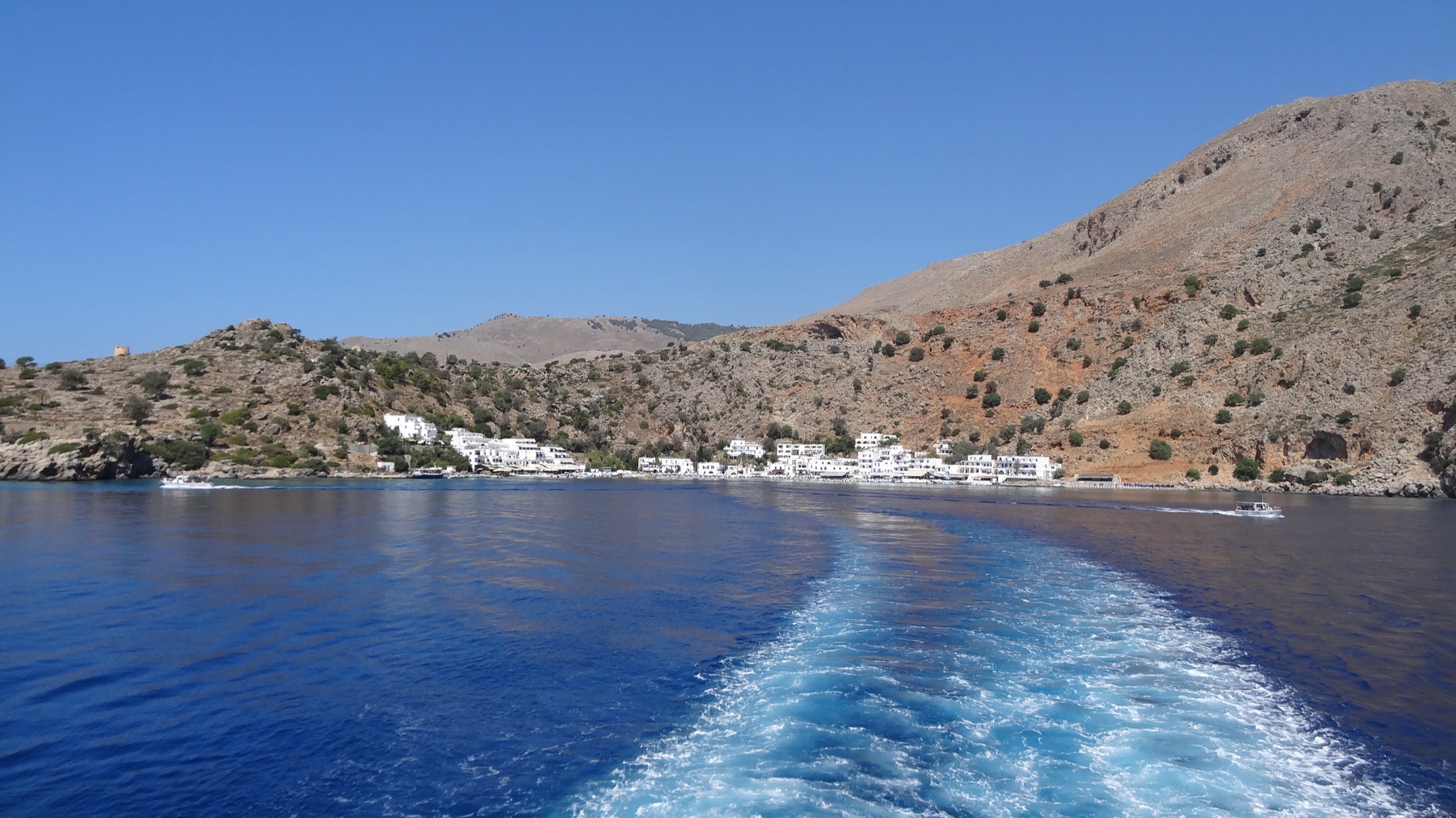
    Loutro village seen from the ferry on Crete's south coast
    Loutro seen from the ferry. Photo: Rockhopper2, CC BY-SA 3.0, via Wikimedia Commons.

    What you actually see

    Come for the cove first: a compact waterfront village, harbor, beach edge, white buildings, and mountain backdrop held in one public scene.

    The visit is strongest when it stays simple. Arrive by boat, swim, walk the waterfront, look back at the curve of the bay, and leave enough margin for the return. The E4 path opens the village toward nearby walking and boat-linked beaches when heat, footwear, water, and daylight make that plan sensible.

    What to understand before going

    Treat Loutro as a public village and coastal landscape first. The useful visit is compact: harbor, beach edge, whitewashed waterfront, uphill landmarks, and the boat timing that frames the day. ANENDYK identifies the ruined Venetian Castle of Loutro and the Church of Agia Ekaterini above the village; CretanBeaches places the settlement at Cape Mouri and links the area with ancient Phoenix as background context.

    What stays with you

    What stays is the way the island changes when the car disappears: the cove narrows attention, the sea becomes the route, and the return ferry keeps the day honest.

    How To Get There

    Most visitors reach Loutro through Chora Sfakion. Drive or use the KTEL Chania-Rethymno bus toward Chora Sfakion, then take the ANENDYK ferry for the short sea leg.

    ANENDYK also connects Loutro with Agia Roumeli, Sougia, and Paleochora in the south-coast ferry network. Use Inter-Crete ferries and south-coast boats before committing to a date, direction, or same-day return.

    The walking alternative is the E4. Treat it as a planned coastal walk with heat, footwear, water, and daylight in the decision.

    Time And Season

    The easiest Loutro day is built around a morning or midday arrival and a confirmed afternoon return. If public transport from Chania is involved, match three moving parts: Chania to Chora Sfakion bus, ferry to Loutro, and ferry or bus return.

    May, June, September, and October are the easiest months when walking comfort matters. Discover Greece describes mid-May through late October as the comfortable swimming window for Sfakia, with spring and autumn especially useful for outdoor activity. July and August bring stronger summer certainty and more day-trip pressure.

    What To Do With A Day

    A measured day starts at Chora Sfakion, crosses by ferry, and spends its attention inside the village and bay. Swim from the public waterfront, sit near the harbor, and walk a short stretch of the coastal path if heat and timing allow.

    If the day becomes a larger south-coast move, use Loutro as one stop inside the ANENDYK chain. Agia Roumeli, Sougia, Paleochora, and Gavdos add timing risk when the return is assumed instead of checked.

    Where It Fits

    Loutro fits a western or south-coast itinerary best. From Chania, it is a deliberate day with a road or bus transfer to Chora Sfakion. From Paleochora or Sougia, it becomes part of a more specialized south-coast movement.

    Pair it with South Coast Crete Bases before choosing a base, and with Samaria Gorge Day Logistics only when the Agia Roumeli ferry return is already central to the plan.

    Practical Questions

    Can you drive to Loutro?

    No. ANENDYK states that Loutro has no road network. The usual access is by ferry from Chora Sfakion, Agia Roumeli, Sougia, or Paleochora, or on foot by the E4 path.

    What is the easiest way to visit Loutro?

    The simplest plan is Chora Sfakion to Loutro by ferry, with the return ferry checked before departure. From Chania, use a car or the KTEL Chania-Rethymno bus to reach Chora Sfakion first.

    Is Loutro a day trip or an overnight?

    It can be either. A day trip works when the ferry and bus return are confirmed; an overnight gives more margin, but this page should not make accommodation recommendations.

    When is the best time to visit Loutro?

    May, June, September, and October are the cleanest months if you want swimming and walking with less heat pressure. July and August bring stronger summer certainty and more day-trip demand.

    Does Loutro have an entry fee or opening hours?

    No. The village waterfront and harbor have no site gate, entry ticket, or fixed opening hours. Ferries, boat hire, food, rooms, and private services are separate paid decisions.

    Sources and Current Checks

    Checked on 2026-07-19. Loutro is handled here as an open public village and waterfront. Ferry date bands, bus departures, and private services can change; verify the live operator pages before travel.

    Editorial note

    This public-village entry uses ANENDYK, KTEL Chania-Rethymno, Discover Greece, CretanBeaches background, and a real CC BY-SA Commons photograph of Loutro. The village waterfront has no site gate, ticket, or fixed opening-hour table.

    Written by Kostis Kornaros.