Safety & Fitness
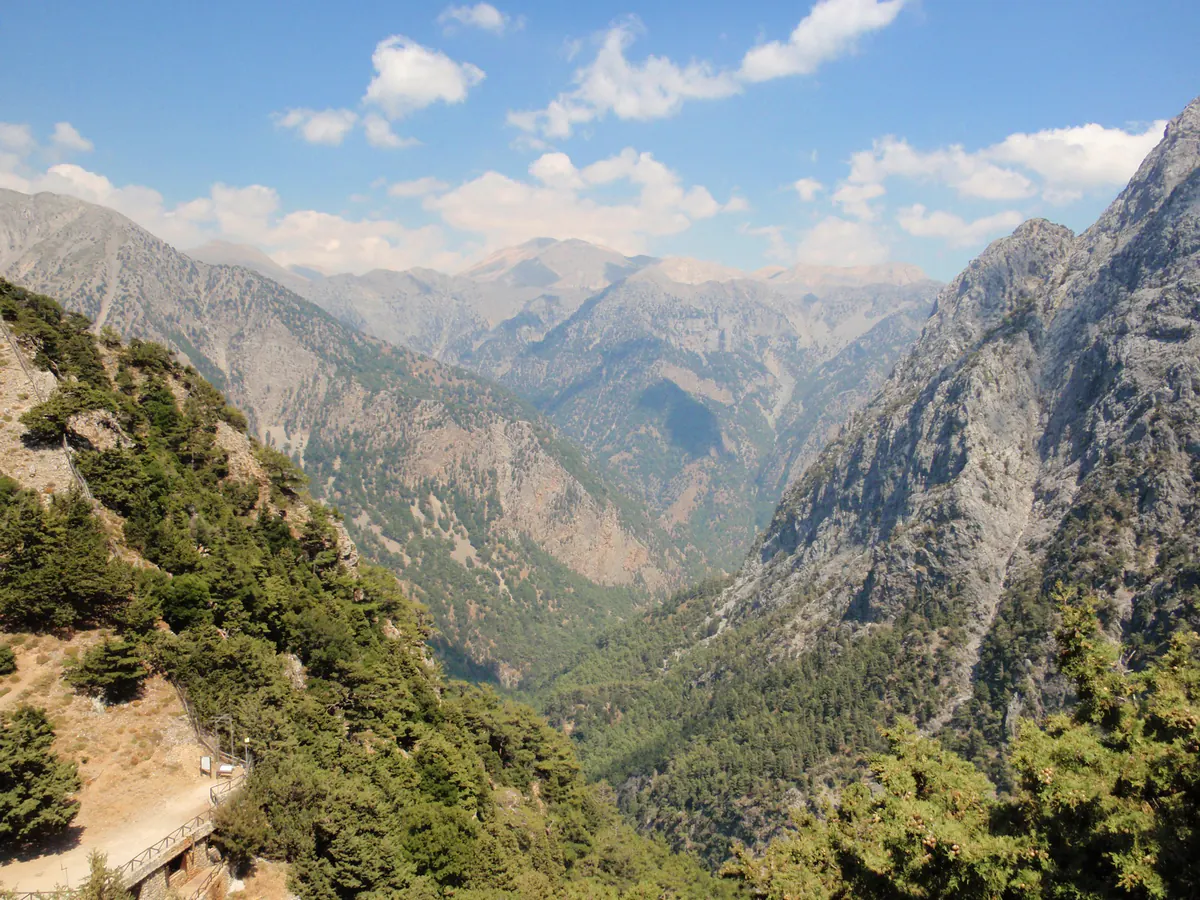
I'll be plain about this: Samaria is a serious mountain day. The route is about 16 km and commonly takes five to seven hours one way, a near-continuous descent from about 1,230 m at Xyloskalo down to the sea, much of it over loose, uneven rock. It is a strenuous walk that asks for real fitness and steady footing, and the direction is fixed: once you start down, the only way out is forward to Agia Roumeli.
Honestly assess before you commit
- The descent is hard on knees and joints; it is not suitable for anyone with knee, heart, or mobility problems, for the very unfit, or for small children.
- There is no vehicle rescue inside the gorge and no shortcut out. Wardens and pack animals help, but the park expects you to look after yourself.
- If the full crossing is too much, walk only the lower gorge from Agia Roumeli toward the Iron Gates and turn back when you choose.
What the day requires
- Wear sturdy, broken-in shoes or boots with grip, not sandals or fashion sneakers.
- Carry plenty of water and sun protection: a hat, sunscreen, and cover for the exposed lower sections. There are springs and taps along the route, but carry your own supply rather than rely on them.
- Be at the gate early. Entry for the crossing closes at 13:00, and an early start also buys you the cooler hours and the margin to reach Agia Roumeli before the ferry.
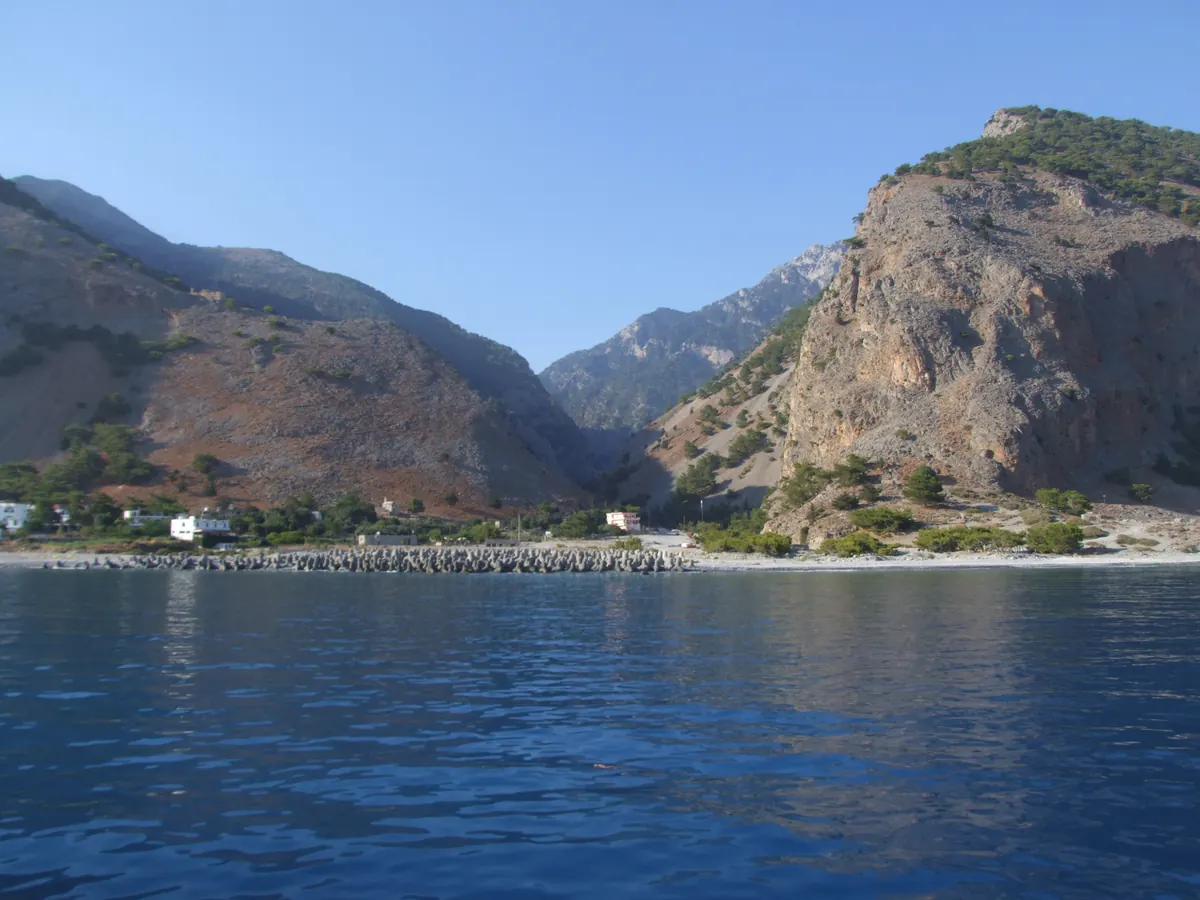
- The only exit from Agia Roumeli is by boat to Sougia or Chora Sfakion, and then by bus; miss the last ferry and you are staying the night.
The park's own Rules and Regulation allow the main path to be open from 10 April to 31 October, with the exact opening date set each year by a decision of the competent NECCA body. It can still close at short notice for high water, extreme heat, fire risk, or storm damage, so check the day's official status before you travel. Never enter a closed gorge.
Checked on 2026-10-10: NECCA's ticketing site says the gorge remains closed from both entrances, Xyloskalo and Agia Roumeli, until further notice, so the short lower-gorge walk from Agia Roumeli is closed too. It will reopen once the required inspections are done, and NECCA says it will announce the date. The season ends on 31 October, so there may be little or none of this year's left. For a walk from November onwards, plan on next spring, when NECCA sets the new opening date.
Entry is permitted only at Xyloskalo and Agia Roumeli, and the hours are the part most day plans get wrong. Between 07:00 and 13:00 you may walk the full crossing or any part of it. After 13:00 the park admits only short there-and-back visits: 13:00 to 15:00 for the first two kilometers from Xyloskalo as far as the Neroutsiko rest area, and 13:00 to 16:00 for the first two kilometers from Agia Roumeli as far as the Christos rest area. Every visitor must be out of the National Park by 18:00.
A ticket is EUR10 for an individual, EUR6 per person on the family rate covering parents and minor children, EUR8 per member for organized club groups of more than ten, and EUR25 for an annual pass. The price is the same whether you walk the whole way or the first two kilometers. Entry is free for children under 18 and adults over 65, for students of EU higher-education institutions, for people with disabilities and their companions, and for permanent residents of the municipalities of Sfakia, Platanias, Chania and Kantanos-Selino, among other categories set out in the park's exemption list; and it is free for everyone on 21 March, 21 May and 5 June. Hours, fares and exemptions re-read from NECCA's official ticketing system on 2026-10-10.
For the bus-and-ferry mechanics from Chania, read my Samaria Gorge day logistics page before you lock in a public-transport day.
For the wider boat network beyond the gorge exit, see Inter-Crete ferries and south-coast boats.
Editorial note
For this page I used official park, protected-area, ferry, and Commons source checks, with the hours, ticket prices and exemptions taken from NECCA's official ticketing system on 2026-10-10 and image credits below. Check opening decisions, ticket rules, bus timing, ferry departures, heat, wind, and rockfall risk again before your day depends on them.
Written by Leo Novak.