South coast bases
South Coast Crete Bases: Paleochora, Plakias, Or Matala
Compare access, beaches, season, car needs, ferry links, and the kind of trip each south-coast base suits.
Paleochora, Plakias, and Matala can each anchor a south-coast trip. Which one is right depends on your airport, whether you have a car, how much beach, walking, or ferry time you want, and how far you're willing to travel.
Crete's airports, main road, and busiest towns are mostly on the north coast. Every south-coast base starts with a drive over the mountains, and the mountains set the pace. I'd start with Where to Stay in Crete for the island-wide decision, and use the Matala place guide for the full story of that bay.
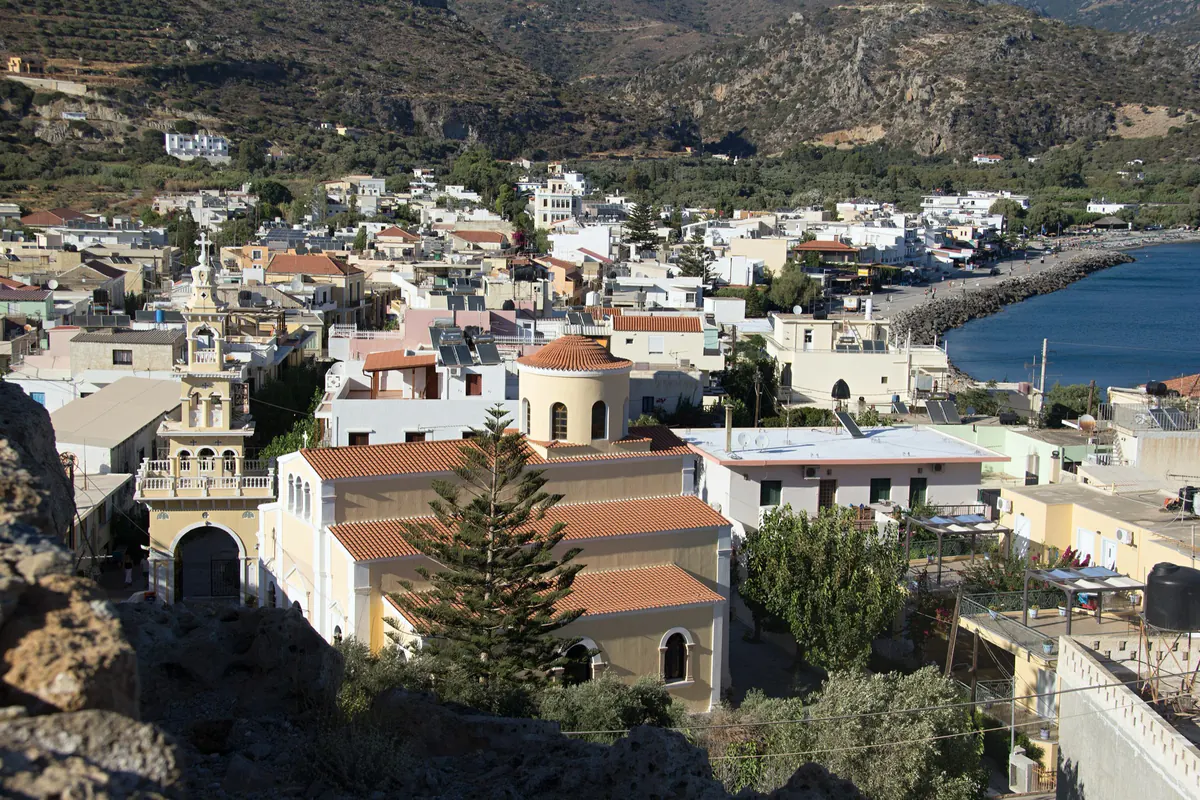
Quick answer
Choose Paleochora for walking on the western south coast, seasonal ferry links, and a longer stay on the Chania side. Choose Plakias for the Rethymno side's mix of beaches, gorges, and day drives.
Choose Matala for easy access from Heraklion, the Messara plain, Phaistos, Gortyna, and a small beach village. If it's your first visit and you have no car, I'd only pick one of the three for a specific reason.
The three choices in one view
Paleochora is the south-coast base on the Chania side. It suits walkers, returning visitors, and anyone who wants the western Libyan Sea with enough of a town around them for several nights.
Plakias is the outdoors base on the Rethymno side. It suits beach-and-gorge people who want Damnoni, Skinaria, Preveli, Kourtaliotiko, Kotsifou, and the south Rethymno coast within reach.
Matala is the Heraklion and Messara choice. It suits a shorter stay built around the Roman cemetery caves, Red Beach, Phaistos, Gortyna, Komos, and a Heraklion arrival.
Paleochora
Paleochora is at its best when the whole trip is about southwest Crete. There are beaches on both sides of its peninsula, and Sougia, Agia Roumeli, and the coast you walk or take the ferry along join the plan when the seasonal boats run.
From Chania, the road crosses the island to the southwest. Public travel depends on KTEL Chania-Rethymno's live table; onward coastal movement depends on current boat and ferry operation. Read Inter-Crete ferries and south-coast boats before you build a Paleochora, Sougia, Agia Roumeli, or Loutro day around a timetable. The town and public beaches have no entry gate, but transport and beach services depend on the operator and the season.
Best for returning visitors, walkers, people using the ferries, and anyone starting on the Chania side. Day trips back to Chania get long, and in winter or early spring you need to check carefully what's running. It's a place for staying put, which is the whole point.
Plakias
Plakias is the most flexible choice for a stay built around beaches and gorges. Within reach are Damnoni, Ammoudi and Ammoudaki, Skinaria, Preveli Beach, Kourtaliotiko, Kotsifou, and the road back toward Rethymno.
A car makes the nearby coves and gorge days much easier. KTEL lists Plakias among its destinations, but check the live Rethymno-Plakias table before you count on buses at useful times. The town and beach have no entry gate; nearby activities and beach services vary by operator and season.
May, June, September, and October suit the mix of walking, swimming, and easy driving. July and August still work; the wind and the heat just get a vote on how the day goes.
Matala
Matala is the south-coast base for the Heraklion side. It's a compact place: the bay and the Roman cemetery caves are right there, with the Messara plain, Phaistos, Gortyna, and Komos around it.
KTEL Heraklio-Lasithi publishes seasonal routes toward Mires, Tympaki, and Matala. The village and public beach have no gate; the cemetery caves are an archaeological site with published Ministry hours, so check the official listing before you fold them into a beach day.
Matala works well for a short Messara stay inside a trip centered on Heraklion. Check the June festival dates, allow for August heat and crowds, and use the live bus table if you're traveling without a car.
Airport logic
From Chania Airport, Paleochora is the natural way to head south, and Plakias can fit a plan built around Rethymno. Matala belongs in a bigger cross-island itinerary.
From Heraklion Airport, Matala is the clearest fit. Plakias is less direct, and Paleochora belongs to a western trip. If your flight lands late, keep the first night simple; nobody makes their best decisions on a mountain road at midnight.
Car, season, and distance
A car opens up all three bases: the western roads from Paleochora, the nearby beaches and gorges from Plakias, and the archaeology across Messara from Matala. Car-free stays can work when the current KTEL and ferry schedules match your exact dates.
Late May, June, September, and early October usually give the best balance of swimming, walking, easy driving, and open services. July and August need earlier starts, fewer transfers, and more respect for the heat. In winter and early spring, check transport and services before you commit.
Read Crete without a car, Car rental in Crete, and Why distance is deceptive before you lock in a base.
Practical questions
Is the south coast a good base for a first trip to Crete?
Usually only if you have a clear south-coast reason. If it's your first trip and you want to see a lot, I'd base in Chania, Rethymno, or Heraklion and add one south-coast day or overnight.
Is Paleochora or Plakias better?
Paleochora for southwest Chania, walking, ferry links, and a longer west-coast stay. Plakias for the Rethymno-side beaches, gorges, and easy access by car to several nearby coves.
Is Matala a good base?
Yes, for a short stay on the Heraklion side if you want the bay, the Roman cemetery caves, Phaistos, Gortyna, Komos, and the Messara plain. It's a poor base for seeing western Crete.
Do you need a car on Crete's south coast?
For Plakias, I'd say yes, and a car helps at all three bases. Car-free trips can work from Paleochora or Matala when the current KTEL and ferry/bus schedules match your exact dates.
When is the best time to stay on the south coast?
Late May, June, September, and early October usually give the best balance of swimming, walking, easy driving, and open services. July and August take some discipline about heat and crowds.
Sources checked
I checked these on 2026-07-12. Timetables, ferries, archaeological-site hours, and seasonal services can change; check the live operator or official page before you travel.
Editorial note
I combine firsthand observation with research from public and official sources. I check practical details against the sources listed on each guide where they are available, and my recommendations stay independent of paid promotion. For how I approach planning and selection, see my editorial manifesto.
Written by Leo Novak.
Related reads
The Guide 2026
My guide for this year: where to go, how to get around, and what’s worth knowing before you do.
Explore the guide