Skip to content

    Heraklion Prefecture

    Matala

    What it is

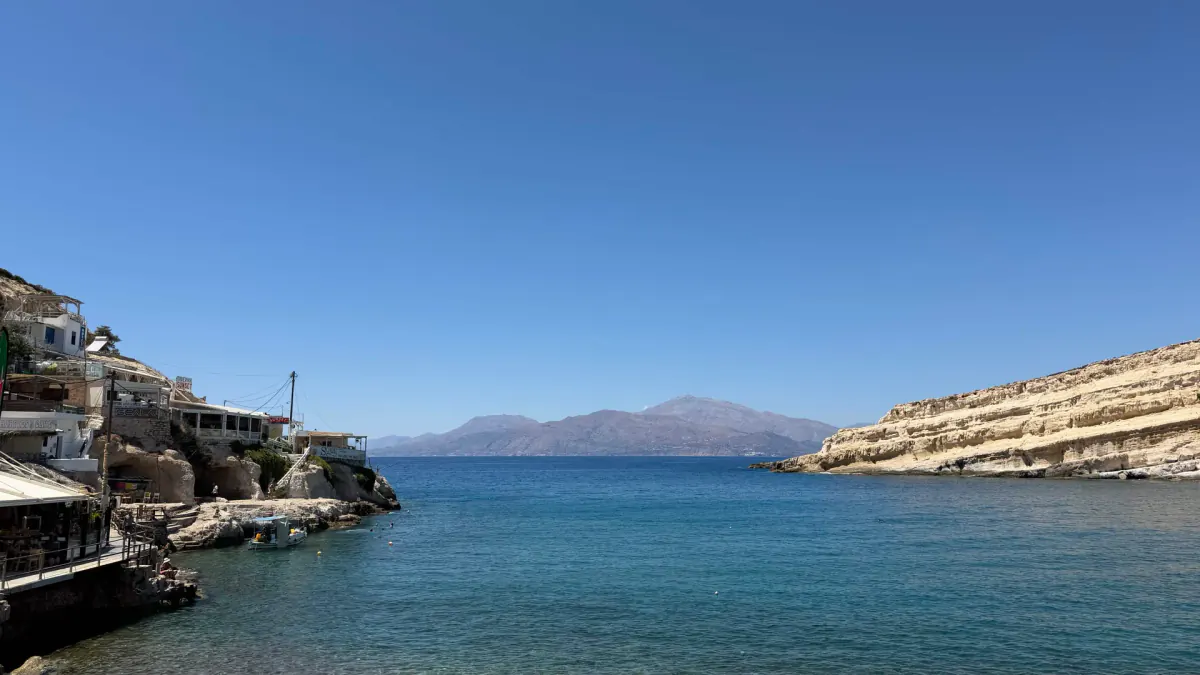
    Matala is defined as much by what remains as by what has faded. The village sits on the southern coast with an openness that feels deliberate, exposed to light, wind, and memory in equal measure. Its bay curves gently, the cliffs rise softly, and the sea arrives without insistence. Nothing here presses itself forward. That, historically, was its invitation.

    Why it matters

    Above the beach, the caves carved into the rock form Matala’s most enduring layer. Long before they became symbols of retreat, these openings served practical and ceremonial purposes. They were used as tombs in Roman times and later by early Christian communities, embedded quietly into the landscape rather than distinguished from it. Their original function was functional and ritual, not expressive.

    In the late 1960s and early 1970s, the caves acquired a different meaning. They became a refuge for free spirits and travelers seeking peace, community, and distance from structure. The hippie presence did not alter the caves themselves, but it reshaped how Matala was perceived beyond Crete. A place once defined by geography briefly became defined by ideology. That period passed, but its outline remains.

    What matters now is not the mythology alone, but how lightly it is carried. The caves are visible, accessible, and unmistakable, yet they are no longer inhabited or curated as relics of rebellion. They exist as layers rather than statements, absorbing history without foregrounding it. Matala does not attempt to recreate its moment of cultural prominence, nor does it erase it.

    Geographically, the village feels open in a way much of Crete does not. The south-facing coast, the wide beach, and the absence of enclosure create a sense of release after the island’s interior pressure. Time loosens here. Movement slows. Decisions feel less urgent.

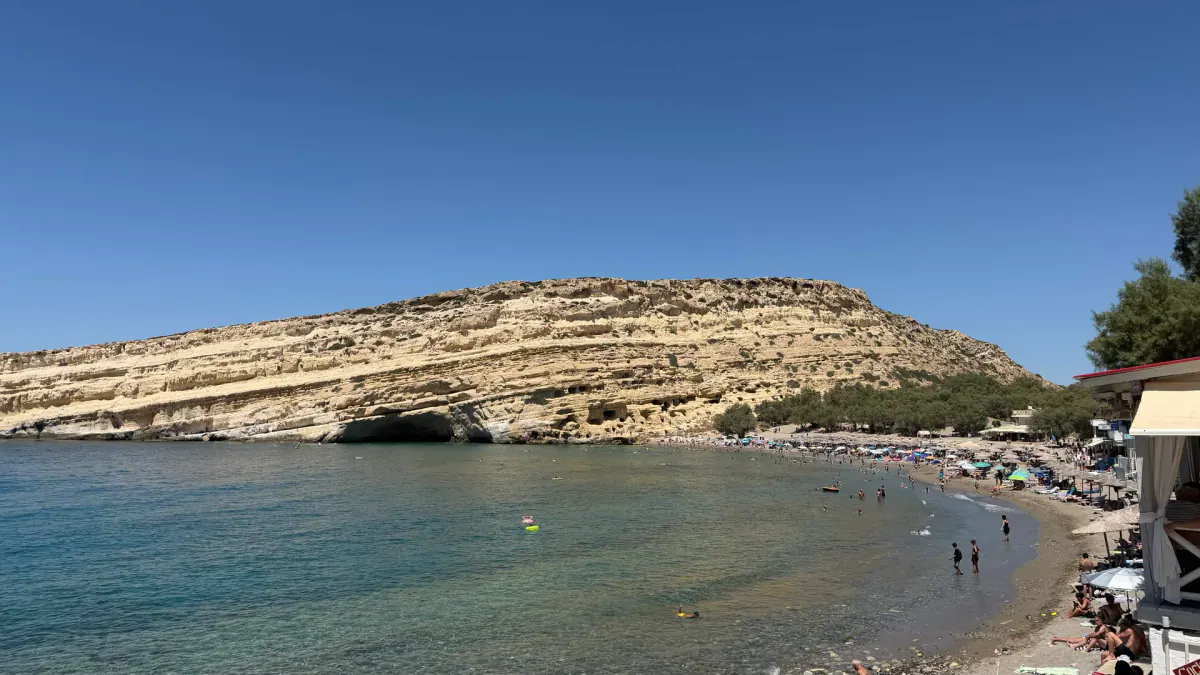
    The sandstone cliff at Matala on Crete's south coast, pocked with the ancient carved caves, above the beach and sea
    Matala's south-coast cliff and beach, with the carved caves visible in the sandstone rock face.

    What stays with you

    What stays with you is not a single era, but the coexistence of uses and meanings—a place that has been tomb, refuge, and pause, and that continues quietly to allow it.

    Getting There

    • Matala sits on the south coast, roughly 70 km and about an hour's drive south-west of Heraklion.
    • By bus, KTEL runs the service from Heraklion's central bus station, with several departures a day in season; check the current timetable before travelling.
    • Driving gives the most freedom, since the village is a natural gateway to the wider Messara plain and nearby beaches.
    • Treat published distances and times as approximate; the last stretch is ordinary road rather than fast highway.

    When to Go

    • Midsummer is the busiest and hottest window; the bay and its few streets fill quickly in July and August.
    • The annual Matala Beach Festival, usually held in June, draws large crowds for a few days; plan around it either way.
    • Late spring and early autumn are quieter, with softer light and easier parking and swimming.
    • The south-facing beach holds warmth late into the season, which makes the shoulder months especially rewarding.

    What's There

    The centrepiece is the honeycomb of caves cut into the sandstone cliff above the beach, carved out in Roman and early-Christian times and used as tombs and shelters. The cave face is now a fenced archaeological area with a set opening schedule, and a small entry fee applies to walk among the caves; confirm the current amount on site, as it varies by season.

    Below the caves lies the wide, sheltered main beach, the reason many people come. From the southern end of the village a marked footpath climbs the headland to Red Beach, a cove reachable on foot in roughly twenty to thirty minutes; wear proper shoes and carry water, as the path is rocky and exposed. Everything at Matala stays within easy walking distance, so the day can be as slow as you like.

    Editorial note

    This entry pairs the site's cultural history with practical access notes checked against reputable Crete travel sources. Bus timetables, cave opening hours and fees, festival dates, and road conditions should be confirmed locally before the day depends on them.

    Written by Kostis Kornaros.

    Sources and Current Checks