Heraklion Prefecture
Gortyna
What it is
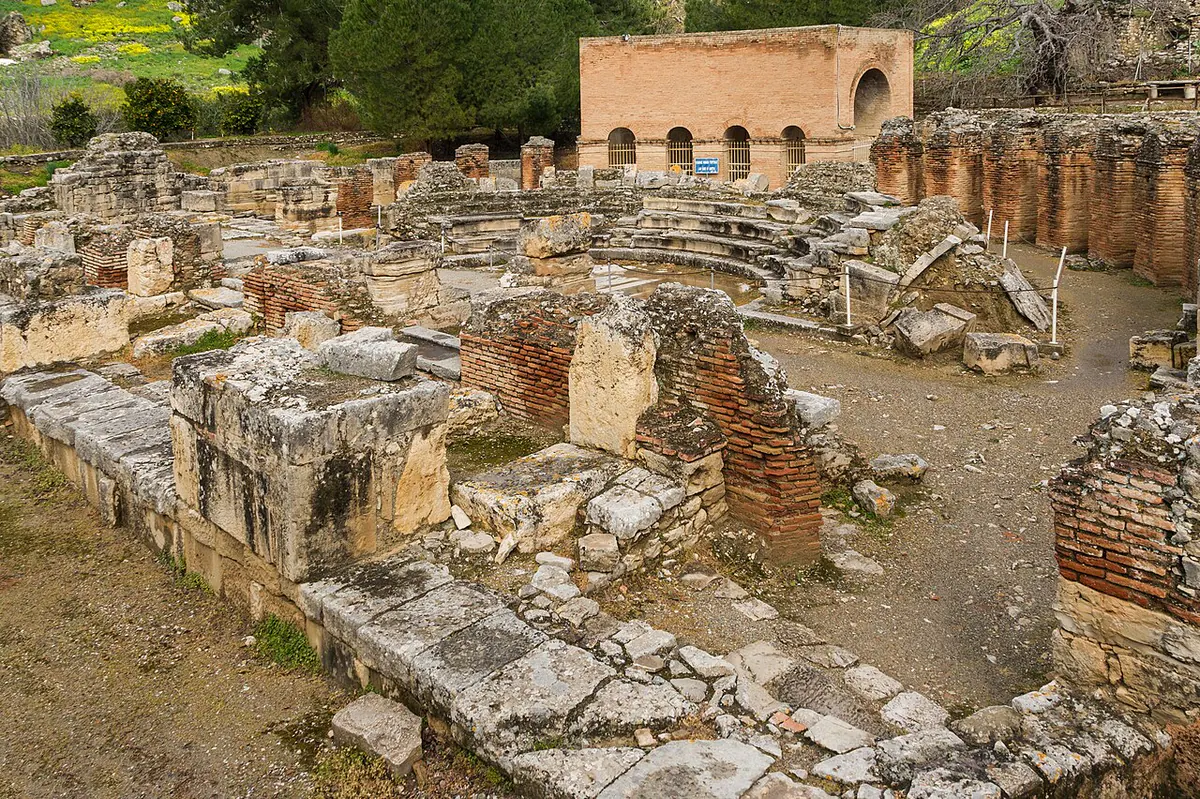
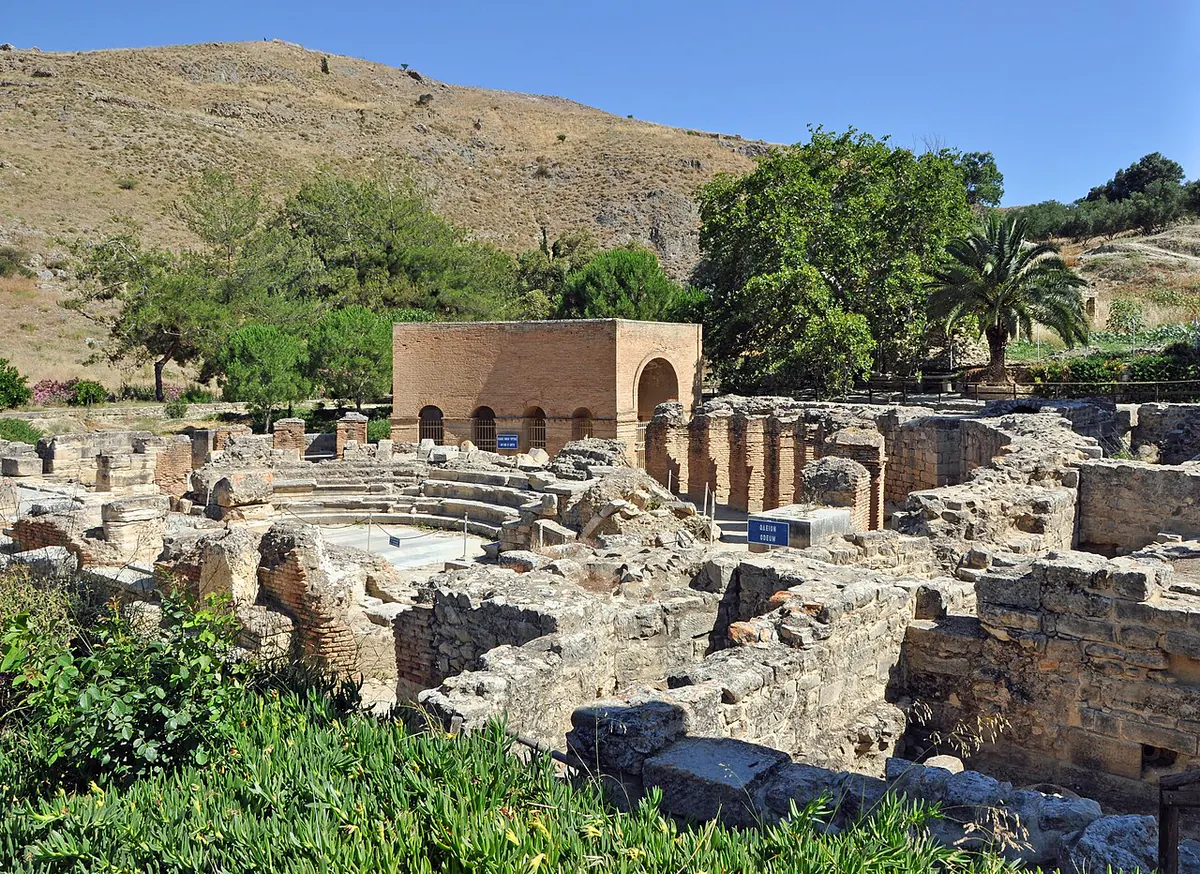
Gortyna is an archaeological site at Agioi Deka on the Messara plain, south of Heraklion. The heart of the visit is the Roman Odeion and the Gortyn Law Code built into its north round wall. Nearby you'll find the Apollo temple or Pythion, the sanctuary of the Egyptian Divinities, the Praetorium, and the large cruciform church of St. Titus.
Why it matters
Gortyna carries Crete's ancient story well past the Minoan palaces most visitors come for. The Ministry of Culture records habitation from the end of the Neolithic period, Late Minoan development, Archaic remains around the Acropolis, and the 5th-century BCE Law Code as evidence of civic prosperity. Under Rome, Gortyna reached its peak as capital of Crete and Cyrene. To my mind, that makes it the clearest place on the island to see Roman Crete in stone.
What to understand before going
The official Ministry information I read on 2026-08-13 lists full admission at EUR10 and reduced admission at EUR5. Summer opening begins on 1 April at 08:00-20:00, last admission 19:45, then steps down to 08:00-19:30 from 1 September, 08:00-19:00 from 16 September, 08:00-18:30 from 1 October, and 08:00-18:00 from 16 October. Winter is daily 08:30-15:30 from 1 November, last admission 15:15. Check the official page before you drive, especially around holidays and the heat notices the Ephorate posts on the day. Ancient stone is patient; a winter gate that shuts at 15:30 is not.
What stays with you
What stays is the law written in stone: not a lone object in a museum case, but part of a city that later became a Roman provincial capital and an early Christian memory site. Most of the rules in my working life live in binders nobody opens; I like a law you can walk up to and stand in front of. Gortyna is at its best paired, without rushing, with Phaistos or Matala, so the Messara plain gets more than one chapter of history.