Rethymno Prefecture
Rethymno Fortezza
What it is
The Fortezza is Rethymno's Venetian hill fortress above the old town: gates, ramparts, surviving buildings, sea views, and a public-history visit best handled with heat and hours in mind.
Why it matters
Rethymno is often read through lanes, balconies, harbour photographs, and evening softness. The Fortezza gives the town its harder grammar. Built by the Venetians between 1573 and 1580 after the city had proved vulnerable, the fortress was meant to hold public danger at the edge of the old town.
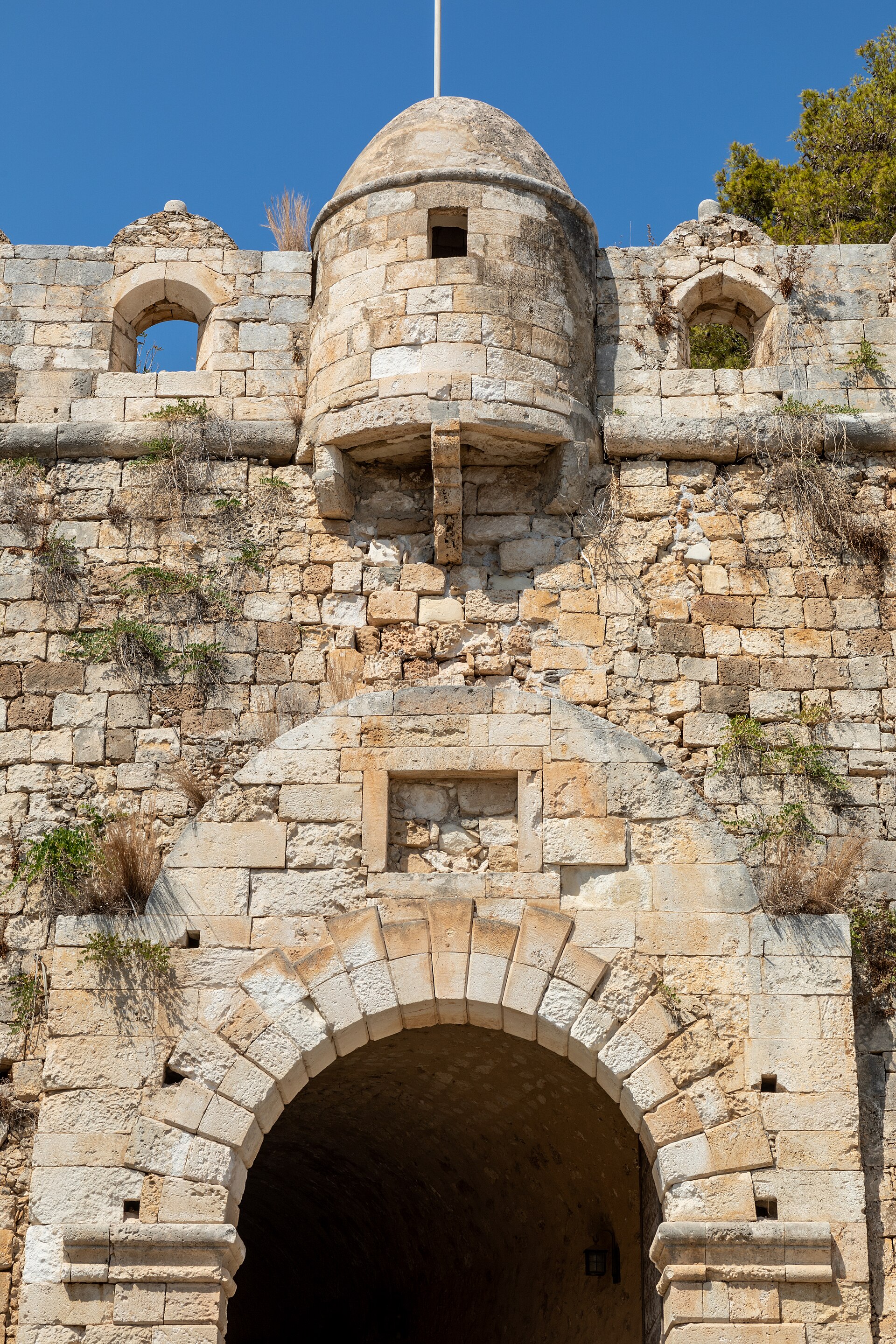
What you actually see
Expect scale first. The fortress is a walled circuit above the city, with gates, ramparts, bastion lines, surviving buildings, open ground, and wide views over Rethymno and the sea. The municipal account describes a star-shaped fortress with three gates and six ramparts; that geometry matters more when you walk the edge rather than cutting straight to the viewpoint.
Inside, look for the former Saint Nicholas temple, later converted into the mosque of Sultan Ibrahim Han, and the remaining structures that show how the citadel worked as more than a scenic wall.
What to understand before going
The site keeps several layers in view. The Municipality of Rethymno places it on Paleokastro hill, where ancient Rithymna had its acropolis and a sanctuary of Artemis. Later, the Venetian Saint Nicholas temple became the mosque of Sultan Ibrahim Han.
What stays with you
What stays is the view back down into Rethymno: old town, harbour, sea, and the visible proof that the city's charm sits below a defensive hill.