Season
Crete in October
Late-season warmth, fewer services, better walking, and a month that offers chances, not promises.
October can be one of Crete's loveliest months if you don't need the island to behave like August. The sea can still be warm, the air is kinder, the old towns feel their normal size again, and archaeological sites stop feeling like endurance tests. And the slower pace I describe in how time works in Crete is easier to see now than any weather table suggests.
It's also the month when assumptions get expensive. The weather does what it likes. Boats and excursions depend more obviously on demand and sea conditions. Seasonal businesses start to close, especially in beach villages built for summer rather than for year-round life. October rewards flexibility, not wishful thinking. I say that as someone who spent years using wishful thinking as a project plan.
October decision map
Weather and the sea
Typical October norms put north-coast daytime highs around 23°C, a clear step down from September, with Chania and Heraklion running almost level by day and overnight lows near 16–19°C. That's the real character of the month: warm afternoons rather than hot ones, and evenings that finally ask for a light layer. Inland and the exposed south vary from these coastal means, and the first proper rain of autumn can arrive on any given day.
The sea is the reason October still tempts swimmers. After a whole summer of sun, average north-coast water temperature holds around 23°C, barely below September and still comfortably swimmable, even as the air begins to cool. The water cools more slowly than the land, so a calm spell in early October can still feel like summer once you're in.
Climate norms are approximate and drawn from long-term station data for Heraklion and Chania (Wikipedia climate tables, citing WMO / Hellenic National Meteorological Service records; sea-temperature averages cross-checked against seatemperature.org). Treat them as typical, not guaranteed.
The sea is often still swimmable in October, especially early in the month and after a calm spell. That doesn't make October a guaranteed beach month. Wind, rain, and exposed coasts matter more than in September, and a famous beach can be the wrong choice on the wrong day.
Plan for beach chances, not beach rights. Keep a sheltered local beach, a museum, a town walk, and a good lunch within reach. Elafonissi and Balos can still be beautiful on calm days, but October is a poor month to treat famous beaches as must-dos. The best October days feel like borrowed summer; the grayer ones are still good if your plan doesn't depend on sunshine.
Crete Beaches By Month shows how October's pick-your-day beach choices compare with the steadier summer months.
Where to base in October
In October, I'd choose real towns over resort strips that are winding down. Chania is still atmospheric and handy for the west. Rethymno suits late season well: lively enough, pretty enough, and simple to run. Heraklion gets stronger because museums, Knossos, food, wine country, and central access don't need perfect weather.
Eastern Crete can work very well if you choose the base carefully. Agios Nikolaos and Elounda keep enough open for many October trips, while Sitia and the far east suit you if you're happy with quiet and longer drives. The south coast can be beautiful in this light, but it's the worst place to discover that your favorite taverna, boat, or bus has already stopped for the season.
Cars, buses, ferries, and excursions
A car is more useful in October, not because everyone needs one, but because being able to change plans matters more. Public transport still connects the main towns, but it may run less often and less conveniently than summer visitors expect; my Crete without a car guide is the stricter test for a car-free plan. A car keeps village lunches, site visits, wine country, and last-minute weather changes within reach.
Treat ferries, boat trips, and beach excursions as a bonus if they run, not as the backbone of the trip. Don't hang the whole week on one late-season boat unless the operator, the date, and how much weather it will sail in are clear. If a crossing or excursion matters, check it close to the date and keep a plan B on land.
Walking, archaeology, and the interior
October is often excellent for archaeology and walking. Knossos, the Rethymno Fortezza, monasteries, old-town loops, and village roads are all easier to enjoy when heat is no longer the main topic. Gorges and trails can be good, including Samaria Gorge and the shorter Mili Gorge near Rethymno, but autumn rain changes conditions fast; check access instead of assuming a trail is open because it was open last week.
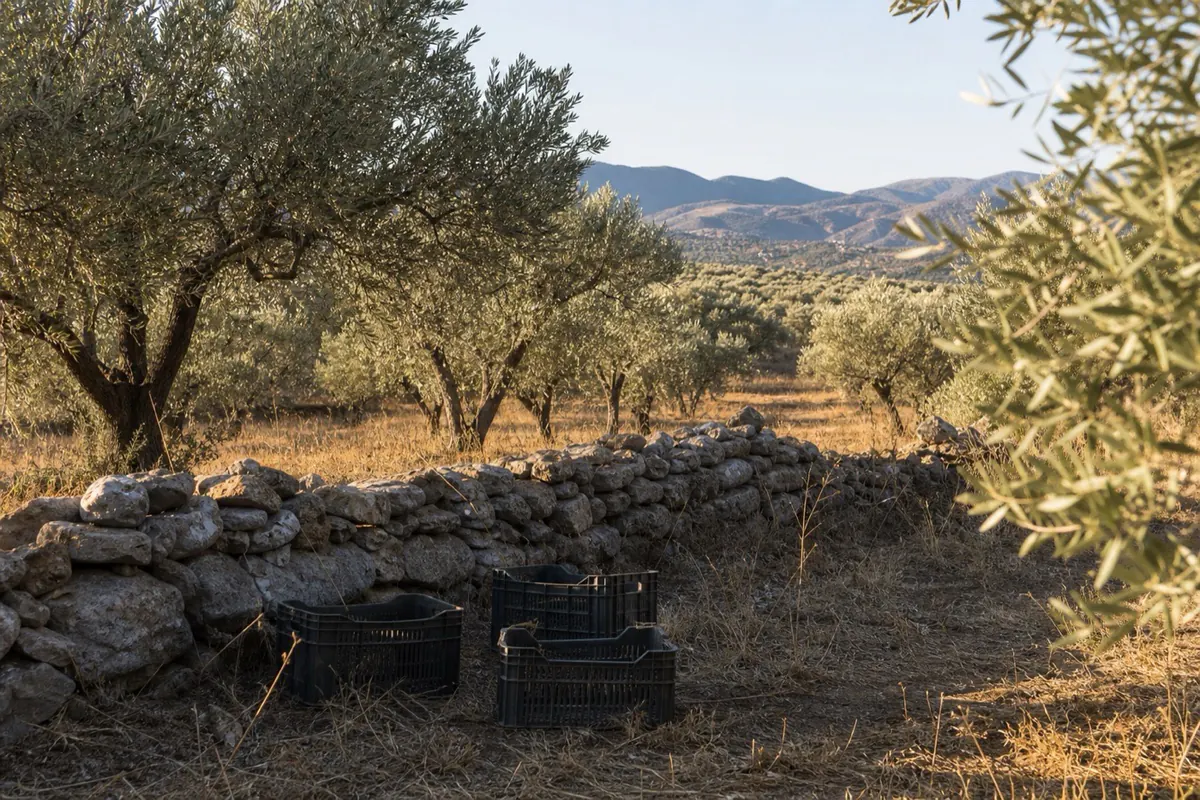
The interior gets more interesting, too. The olive groves start to matter again, the first signs of the harvest appear, and villages stop feeling like pretty stops between beaches. October is a strong month if you want the island where people farm and work, not only its coastline; the plants and ecology are in the landscape and herbs essay and the Cretan herbs guide.
What October is good for, and bad for
Good for
- Archaeological sites, museums, old towns, monasteries, and long lunches without summer exhaustion.
- Repeat visitors who want Crete once the peak-season rush has eased.
- Walks, gorges when open, wine country, olive-country drives, and village days.
- Travelers happy to trade a few unsettled days for fewer crowds and an easier pace.
Bad for
- A beach-only holiday that needs seven guaranteed hot, still days.
- Travelers depending on every beach club, seasonal taverna, boat trip, or resort service staying open.
- Tight car-free plans built on frequent summer schedules.
- Anyone who will feel cheated if one or two days turn cloudy, windy, or wet.
How to spend an October week
A good October week is built to survive a bad-weather day: three nights in Chania or Rethymno for old-town life and the west, two nights in Heraklion for Knossos, museums, food, and the middle of the island, and one or two nights in the east or in a village only if you like quiet. Resist the urge to add one more stop.
Save the clearest days for beaches, gorges, or long drives, and give the unsettled ones to archaeological sites, museums, village lunches, and towns. Shuffle the week around the forecast; a fixed list of postcard stops won't survive October.
My position
October is not failed summer. It's a different deal. You get better walking, a calmer island, and enough warm sea to keep hope alive. In return, the island asks you to check ahead, adapt, and stop expecting the summer setup to run on autopilot.
Come for variety, not certainty, and October gives back plenty.
Practical questions
Is October a good time to visit Crete?
Yes, if you plan it as a late-season trip: towns, archaeology, food, walking, villages, and beach days when the weather allows. It's less reliable for a pure beach vacation.
Can you swim in Crete in October?
Often, yes, especially in early October, but it depends on the weather. The sea may still be warm while wind, rain, or exposure makes a particular beach unappealing.
Is Crete still open in October?
Mostly. The main towns, museums, sites, and many restaurants stay open. Seasonal beach businesses, resort services, boat trips, and some excursions may cut hours or close, especially later in the month.
Do you need a car in Crete in October?
Not always, but it's more useful in October: it keeps you flexible as buses, excursions, the weather, and seasonal services get less predictable.
Editorial note
I combine firsthand observation with research from public and official sources. I check practical details against the sources listed on each guide where they are available, and my recommendations stay independent of paid promotion. For how I approach planning and selection, see my editorial manifesto.
Written by Leo Novak.
Related reads
The Guide 2026
My guide for this year: where to go, how to get around, and what’s worth knowing before you do.
Explore the guide