Season
Crete in November
Late autumn on the island: towns still open, weather you can't count on, olive groves at work, quiet sites, and no summer left to plan around.
November is not a soft version of October. It's the month Crete turns toward winter. The sea may still hold some summer warmth, especially early in the month and after calm weather, but the island no longer runs on beach vacations. Rain becomes part of the plan. Wind matters. The days get shorter. Seasonal businesses close in places built mainly for visitors.
That doesn't make November a bad month. It makes it a month for a certain kind of traveler. Crete in November suits you if you want towns, archaeology, food, villages, and the olive harvest, and you're happy to let the weather choose part of the route. It's poor for anyone who needs a guaranteed swimming vacation or everything summer has on offer.
November decision map
Weather and swimming
November weather swings. You can get a bright, mild day that feels like a gift, then a wet, windy one, then a sudden chill. Crete can certainly be pleasant in November; the real question is whether your trip can handle a change of plan without falling apart.
Swimming is possible, but treat it as a bonus. The sea cools slowly, so early November can still give you swimmable days, especially on sheltered beaches after calm weather. Wind, rain, swell, and exposure matter more than the number on a weather chart, though. Famous beaches such as Elafonissi and Balos can't carry a November trip. Go if the day is fine; don't build the week around them.
Plan the week around towns and culture, then use clear weather for coastal drives, beaches, or short walks. If your itinerary depends on five beach days, November is the wrong month.
The numbers, roughly
Typical November norms put north-coast daytime highs around 19–20°C, with Heraklion running a touch warmer by day than Chania, and overnight lows near 12–14°C that already feel like early winter after dark. These are long-term averages, not a forecast — bright, mild afternoons and cold, wet spells both belong to the same month, and the mountains and exposed south turn sharper first.
The sea is slow to let go of summer. Average north-coast water temperature still sits around 20–21°C through November, warmer than the air on many days, which is why calm early-month swims are still possible as the season closes. The number looks inviting on paper; wind, swell, and shorter days decide whether a given day really is.
Climate norms are approximate and drawn from long-term station data for Heraklion and Chania (Wikipedia climate tables, citing WMO / Hellenic National Meteorological Service records; sea-temperature averages cross-checked against seatemperature.org). Treat them as typical, not guaranteed.
Where to base in November
Choose towns that have a life beyond tourism. Heraklion is the most practical November base: museums, Knossos, food, the airport, shops, and ordinary city life that carries on when the weather turns. It's less romantic than Chania, but it holds up in bad weather.
Chania is still the most beautiful town base, especially if you want old-town atmosphere, western drives, and a slow late-autumn stay. Rethymno is a strong middle choice: handsome, walkable, and well placed between the west and the center. Agios Nikolaos can still work for eastern Crete, but check Elounda and smaller resort villages carefully before booking, because fewer places stay open after October.
I wouldn't base a first November trip in an isolated beach village unless the room, restaurants, transport, and a bad-weather plan are all confirmed. Quiet is lovely when you choose it, and lonely when it chooses you.
What is open, and what closes
Main towns, archaeological sites, museums, supermarkets, bakeries, and many local restaurants keep going. The Crete that people live in doesn't close.
The Crete built for visitors does shrink. Seasonal hotels, beach bars, boat trips, resort restaurants, some excursions, and remote coastal tavernas may close or cut their hours, and what's open can change from week to week, especially after the first half of November. Check any business or excursion your trip depends on, and don't assume a summer plan still has its summer services behind it.
This is what I like about November. The island is easier to understand when it isn't running at full summer volume. So, for the record, am I.
Cars, buses, ferries, and movement
Not every November trip needs a car, but one is worth more now than in summer. Public buses still connect the main towns, and a Heraklion-Chania-Rethymno trip works without driving; the stricter version is in the Crete without a car guide. But a car protects the best parts of November: village lunches, roads through the olive groves, detours to archaeological sites, quick changes of plan, and getting to a sheltered coast when the sun comes out.
Be careful with ferries and boat trips. If a crossing, beach boat, or day tour matters, check the schedule just before you go and have something to do on land if it's canceled. November is not the month to build the trip around one transfer that depends on the weather. Use the car rental guide to decide whether renting for part of the stay is enough.
Walking, archaeology, and the olive harvest
November can be excellent for archaeological sites and old towns. Knossos, the museums, monasteries, the Rethymno Fortezza, Venetian streets, and inland routes are easier to take in without the heat and the crowds. Rain can interrupt a walk, but it also brings the green back and changes how the island smells; that side of things belongs to landscape, herbs, and biology and the plants behind Crete's seasons more than to any weather table.
Long gorges and mountain routes need care. Access, the state of the path, daylight, and weather can change quickly. Samaria Gorge's official season ends on 31 October, so don't plan on it in November; shorter walks and village loops are the better fit.
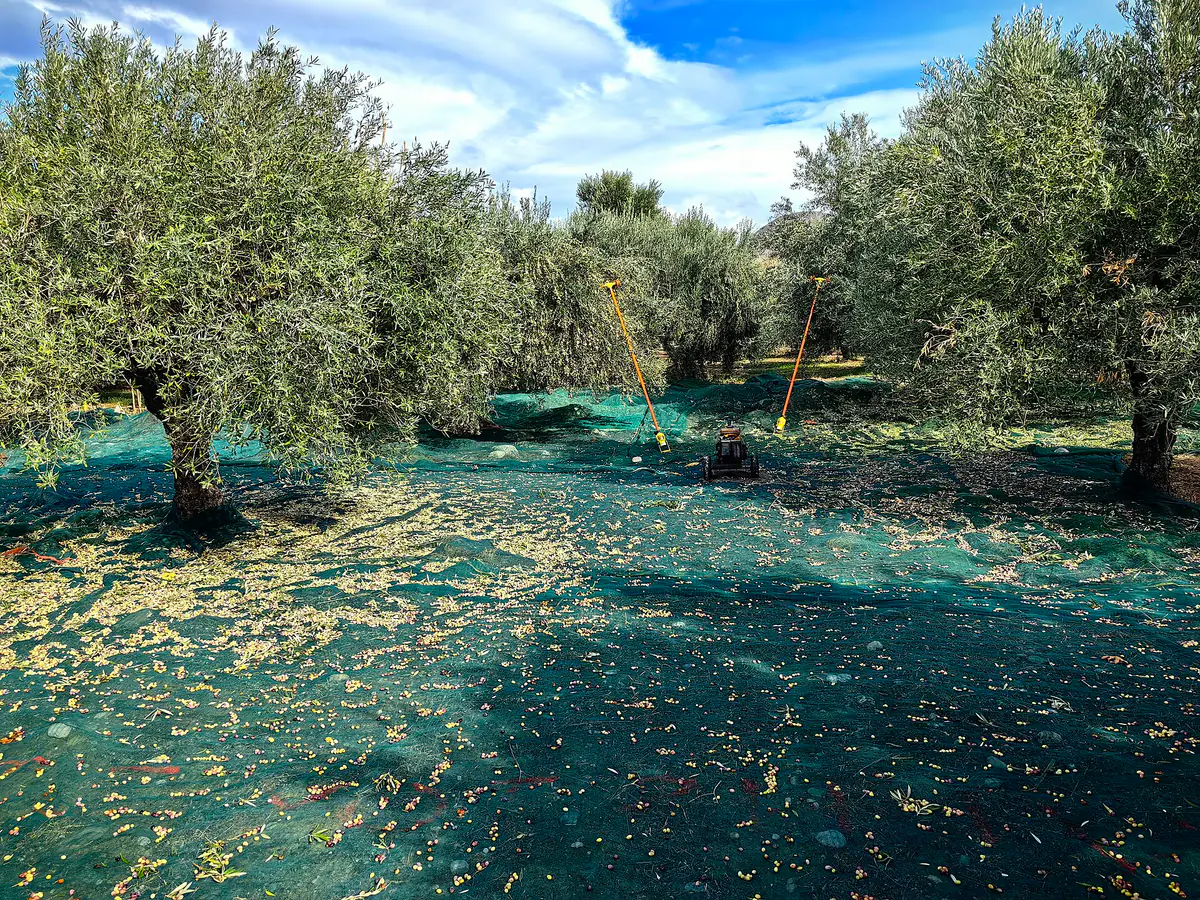
For me, the olive harvest is what makes November special. In most places it isn't a show for visitors, but it shapes the island: families out in the groves, trucks on country roads, presses running, new oil showing up on tables. In office life, the end of the year means deadlines; on Crete it means the harvest. If you want to see Crete at work rather than Crete on holiday, you may find November more honest than August. The food side of it belongs with food as system, not only restaurant lists.
What November is good for, and bad for
Good for
- Travelers who prefer open towns, museums, archaeology, food, and village life to sunbeds and beach bars.
- Repeat visitors who already know how big Crete is and don't need every day to look like a postcard.
- The olive harvest, inland drives, old-town stays, and quieter historic sites.
- Flexible itineraries that can swap a coastal day for a museum, long lunch, or town walk.
Bad for
- A guaranteed beach vacation.
- Travelers who want full resort service, daily excursions, beach clubs, or predictable boat trips.
- Tight car-free plans that go beyond the main towns.
- First-time visitors who will be disappointed by rain, closures, or quiet evenings.
How to spend a November week
I'd make a November week shorter, simpler, and more town-based than a summer trip. Start with three nights in Heraklion for Knossos, the archaeological museum, food, wine country, and short drives across the center of the island. Add three nights in Chania or Rethymno, depending on whether you want the romantic option or the easygoing one. Keep one spare night for Agios Nikolaos, an inland village, or staying put.
Give the settled days to beaches, coastal drives, wine country, and longer walks, and the unsettled ones to museums, old towns, archaeological sites, local restaurants, and villages close enough to give up on if the weather turns. In November, a plan with options beats a plan with hopes.
My position
November is not for everyone, and that's the good part. The island has stopped trying to please every visitor at once. What's left is quieter, less convenient, more dependent on the weather, and often more interesting.
Come for the island people live on, not the beach brochure. If that sounds like a compromise, pick another month. If it sounds like the whole point, book November.
Practical questions
Is November a good time to visit Crete?
Yes, for towns, archaeology, museums, food, villages, olive country, and relaxed off-season travel. It's not the month for a guaranteed beach vacation.
Can you swim in Crete in November?
Sometimes, especially early in the month after calm weather, but I'd treat a swim as a bonus. Wind, rain, swell, and shorter days make November unreliable for a beach-first plan.
Is Crete open in November?
Yes, ordinary life carries on in the main towns: Heraklion, Chania, Rethymno, and Agios Nikolaos, with their museums, sites, shops, bakeries, and many restaurants. Lake Voulismeni in the center of Agios Nikolaos is an open public place with no ticket and no fixed opening hours. Seasonal beach businesses, resorts, boat trips, and excursions may close or cut back.
Where should you stay in Crete in November?
Heraklion, Chania, or Rethymno; they're the safest bases. Agios Nikolaos can work for eastern Crete, but I'd check smaller resort areas carefully. A town people live in year-round beats an isolated beach strip.
Do you need a car in Crete in November?
Not always, but it's more useful than in summer: a car lets you work around the weather, what's open, village routes, and the reduced excursion options.
Editorial note
I combine firsthand observation with research from public and official sources. I check practical details against the sources listed on each guide where they are available, and my recommendations stay independent of paid promotion. For how I approach planning and selection, see my editorial manifesto.
Written by Leo Novak.
Related reads
The Guide 2026
My guide for this year: where to go, how to get around, and what’s worth knowing before you do.
Explore the guide