Rethymno Prefecture
Arkadi Monastery
What it is
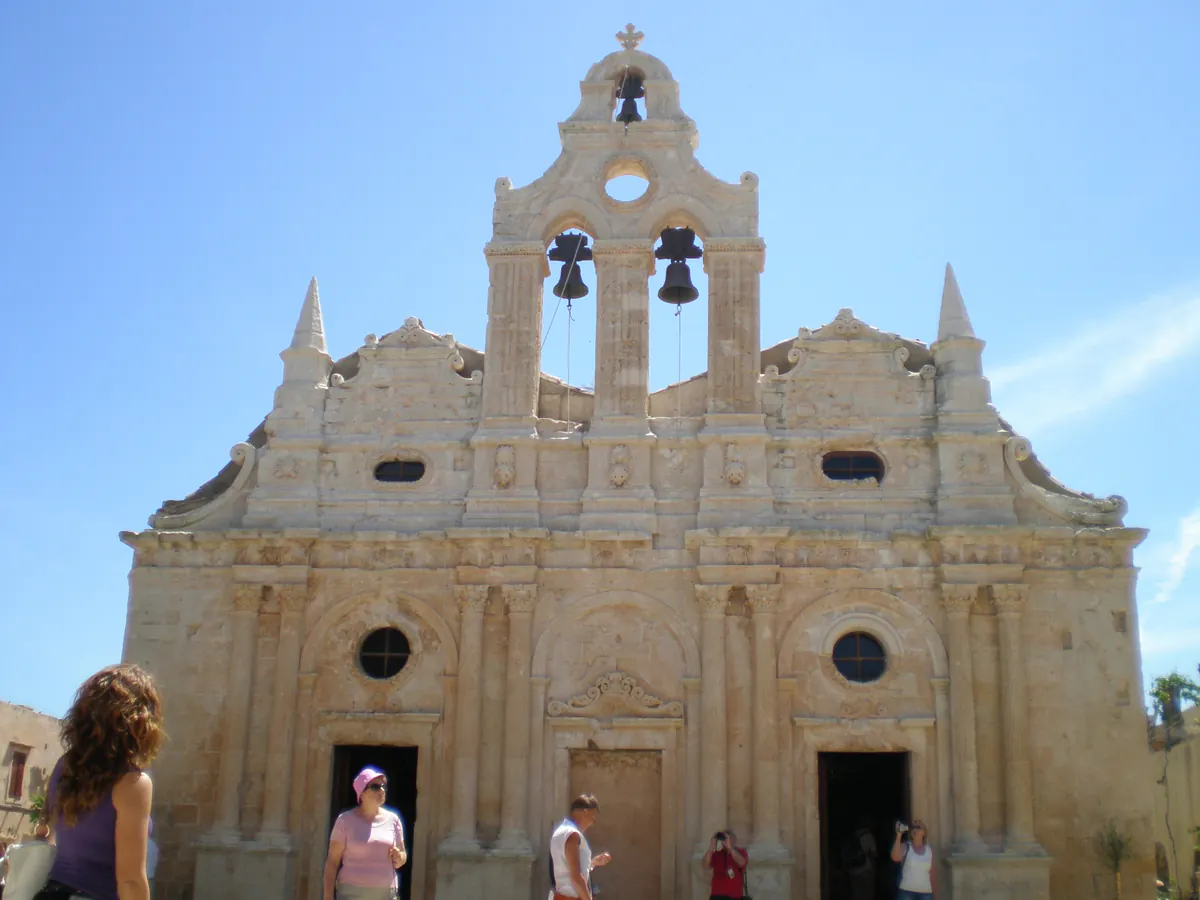
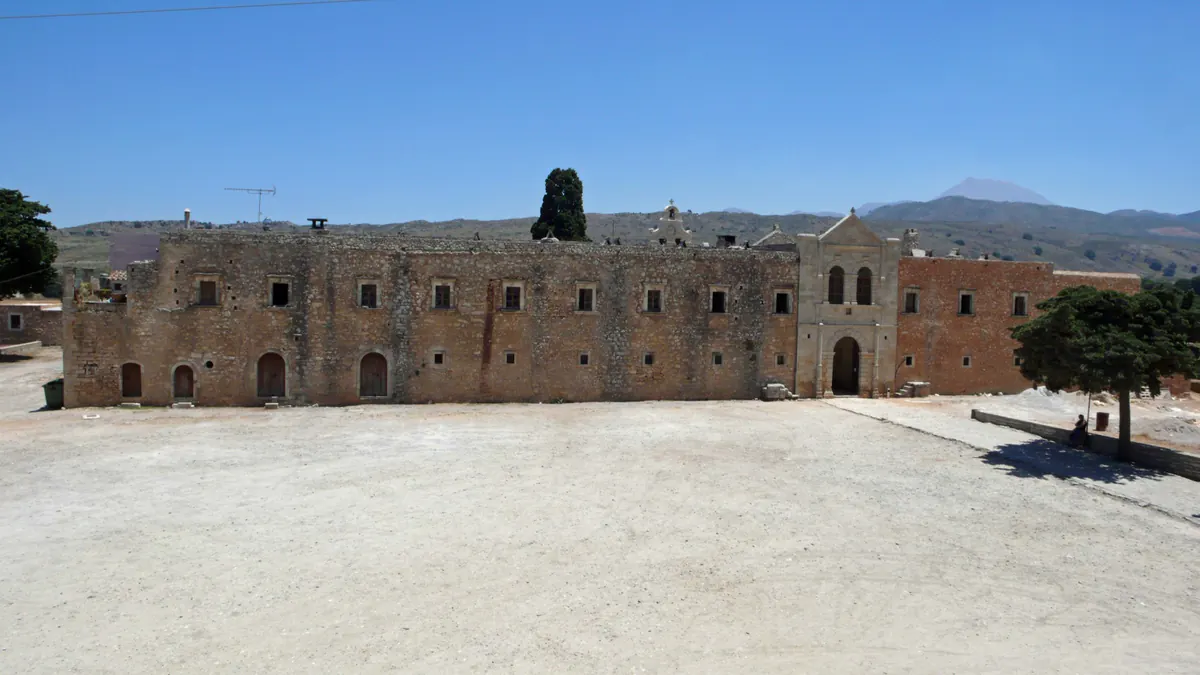
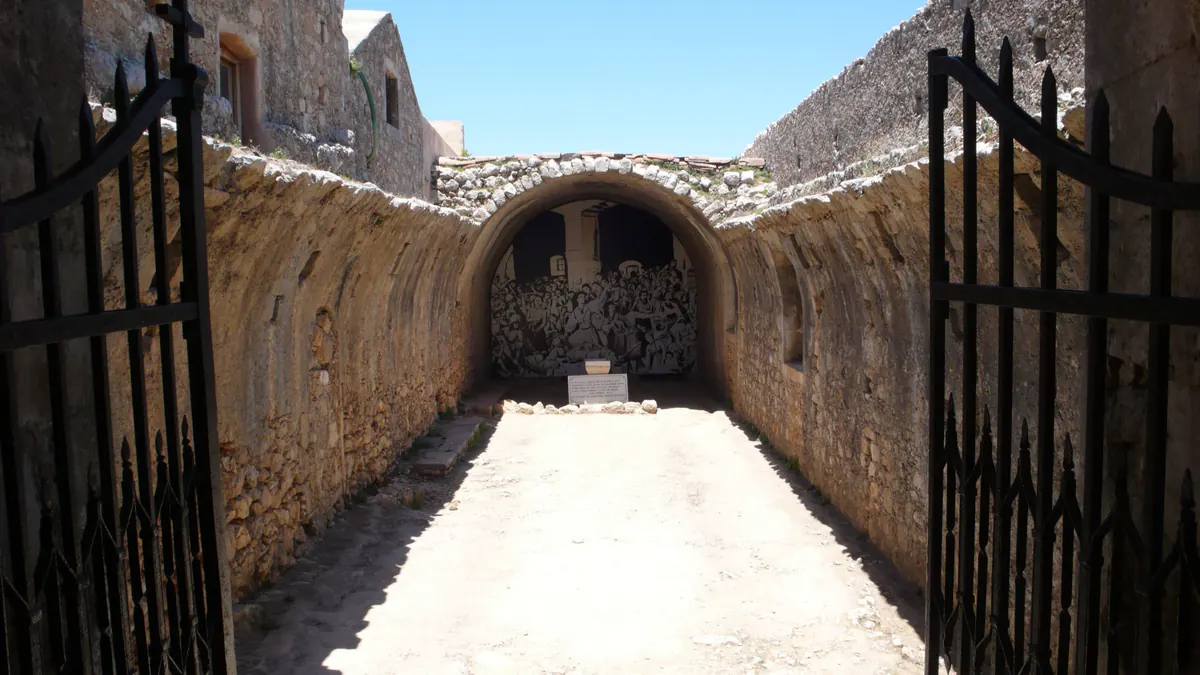
Arkadi is a living Orthodox monastery and public historic site inland from Rethymno, on the Arkadi plateau. What you come for is the enclosed monastery complex: the 1587 double-aisle church, the west gate, the historical dining room, the cellars, the powder keg, the museum, the art gallery, and monastic spaces that are still in religious use. Keep that last part in mind. This is a working monastery first and a sight second.
Why it matters
At Arkadi, the architecture and the history of the 1866 revolt share the same small patch of ground. The Ephorate of Antiquities of Rethymno describes the 16th-century rebuilding under Klimis Chortatzis and Matthaios Kallergis; the monastery's public memory turns on the powder-magazine explosion during the Cretan revolt against Ottoman rule. I'd hold both in your head as you walk: Renaissance-influenced monastic architecture, and a place where Crete keeps its political memory.
What to understand before going
The monastery's own visitor information, re-checked on 2026-10-10, lists daily visiting hours by month: March 09:00-18:00, April-May 09:00-19:00, June-August 09:00-20:00, September 09:00-19:00, October 09:00-18:00, and November 09:00-17:00, Monday to Sunday. December, January and February are not published at all, so a winter visit needs a phone call rather than a timetable. From April to October the museum and the entrance operate daily; on Sundays and feast days the museum opens after Divine Liturgy. Admission is EUR4, confirmed in the monastery's own e-ticketing system on 2026-10-10. That system states three concessions plainly, and most write-ups skip them: children under 16 enter free, Sunday entry is free before 10:00, and admission is free on four dated days in 2026 - 10 and 12 April (Good Friday and Easter Sunday), 18 May, and 25 December.
What stays with you
What stays with you is how much the place packs into so little ground: a church facade in pale stone, gates and cells around a courtyard that is still in religious use, the powder keg, and the way a quiet inland monastery became one of the places where Crete remembers most clearly.