Movement
Car Rental in Crete
A car is not always necessary. It is often the difference between seeing Crete and only visiting its edges.
Renting a car in Crete isn't a lifestyle choice. It's a trip-planning choice. Distances here are shaped by mountains, coast roads, parking, heat, and the fact that many good places sit just beyond the reach of a convenient bus.
The question I'd ask isn't whether confident travelers rent cars. It's whether the trip you're planning actually needs one, and for how many days.
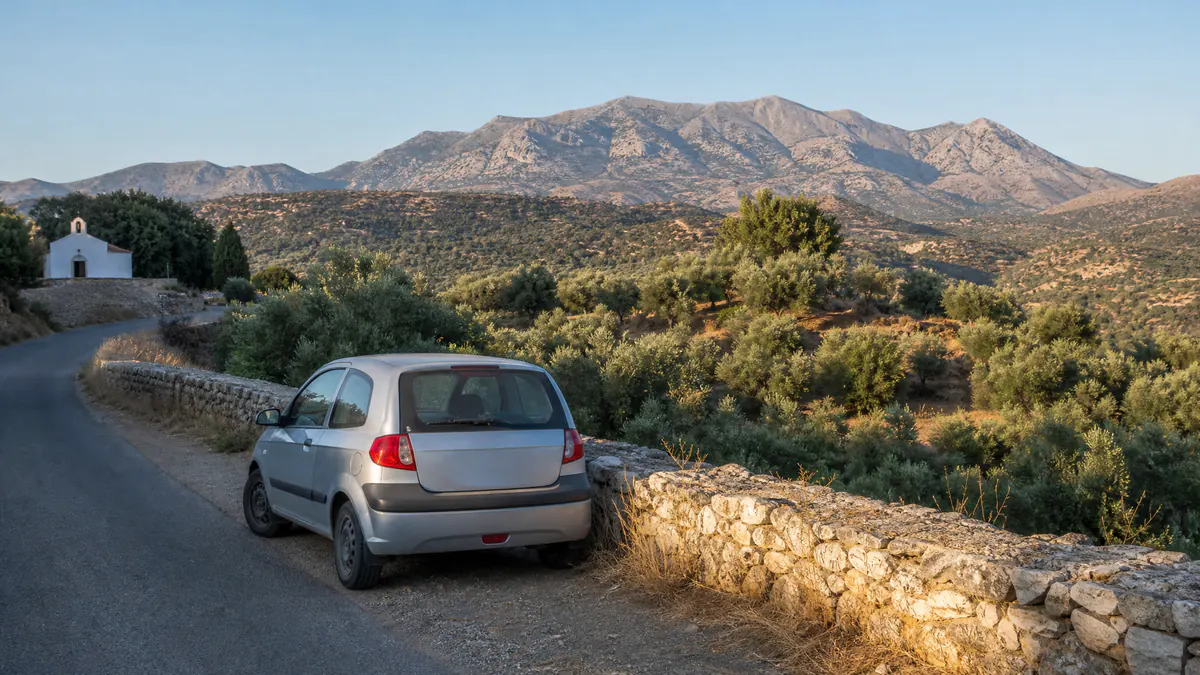
Car rental decision map
When a car is worth it
A car is worth it when your trip depends on reach: villages, monasteries, beaches away from town, wine country, plateaus, the south coast, or late dinners outside a walkable center. Crete rewards being able to stop between the places with names.
It's also worth it when the trip would otherwise run on someone else's timetable. Organized excursions can solve specific days. They don't replace the freedom to change the day because the wind, the heat, or your appetite changed first.
When not to rent
Don't rent a car just to park it badly in Chania's old town or Heraklion when the trip is mostly in town. If the plan is museums, old harbors, restaurants, and one or two standard excursions, a car can become an expensive object of guilt, like a gym membership with wheels.
Many first visits work better with a partial rental: no car for arrival and old-town days, then a car for the countryside or beach part. You don't need one answer for the whole week.
Airport, port, or town pickup
Airport pickup makes sense when your first base is outside the city or when the trip starts with a drive. Town pickup is often better when the first two nights are in Chania, Rethymno, or Heraklion and the car would spend them parked.
Port pickup can work, but only if your arrival time and the rental office location are clear. Late arrivals deserve less romance and more certainty. The tired first hour of a trip is a poor time to discover that the desk is elsewhere. If your route starts in Athens, use my Athens to Crete ferry or flight guide before deciding between a car on the ferry, airport pickup, or a later town rental. At Chania, use the airport arrival guide before driving west or south; at Heraklion, use the airport arrival guide to decide whether the car should begin at the terminal or after a city night.
Roads, parking, and scale
The main north-coast road is practical rather than beautiful. Rural roads can be narrow, steep, and slower than you expect. The south coast is especially good at making distances look short and feel long.
Parking is part of the plan. Old towns, famous beaches, and villages in August don't get easier because the map says the drive is short. I count parking, heat, and the drive back as real costs, not small print.
For places such as Balos Lagoon by road, rental terms and road condition matter as much as the map route. Check the contract's rules on dirt roads before a famous beach day depends on them.
A car also won't get you to the places with no road. Loutro and Agia Roumeli still depend on the south-coast boat network, so check Inter-Crete ferries and south-coast boats before assuming the coast can be driven through.
Zakros Palace teaches the same lesson at the eastern end of the island: from Sitia or Palaikastro, a car makes it a well-planned site day; from a western base, the drive swallows the visit.
My position
My rule: rent a car when it saves you time and nerves. Don't rent one just to feel free when the trip is really built around towns. The best rental decision is usually specific: which days, which base, which roads, and which plans are worth the hassle.
In Crete, a car opens up the island. Used badly, it's just an expensive way to look for parking.
Practical questions
Do you need a car in Crete?
Not always. A car is useful for villages, beaches, wine country, rural stays, and going where you like. It's less useful for old-town stays, museum days, and trips built around a few chosen excursions.
Is driving in Crete difficult?
It's manageable if you're a confident driver, but rural roads can be narrow, steep, and slower than the map suggests. I'd think about parking and the drive back as much as the drive out.
Should you rent a car for the whole trip?
Often not. Many Crete trips work better with a partial rental: no car for city or old-town days, then a car for beaches, villages, and the countryside.
Car rental
Crete rewards a car for the rural days, and prices swing widely between suppliers and dates. You can compare rates across Crete rental companies \u2014 most with free cancellation \u2014 through Discover Cars.
Compare Crete car rental →Some links here earn me a commission when you book through them, at no extra cost to you. They point only where I’d already send you. See my ethics page.
Editorial note
I combine firsthand observation with research from public and official sources. I check practical details against the sources listed on each guide where they are available, and my recommendations stay independent of paid promotion. For how I approach planning and selection, see my editorial manifesto.
Written by Leo Novak.
Related reads
The Guide 2026
My guide for this year: where to go, how to get around, and what’s worth knowing before you do.
Explore the guide