Lasithi–Heraklion Border
Agios Georgios Selinari Monastery
What it is
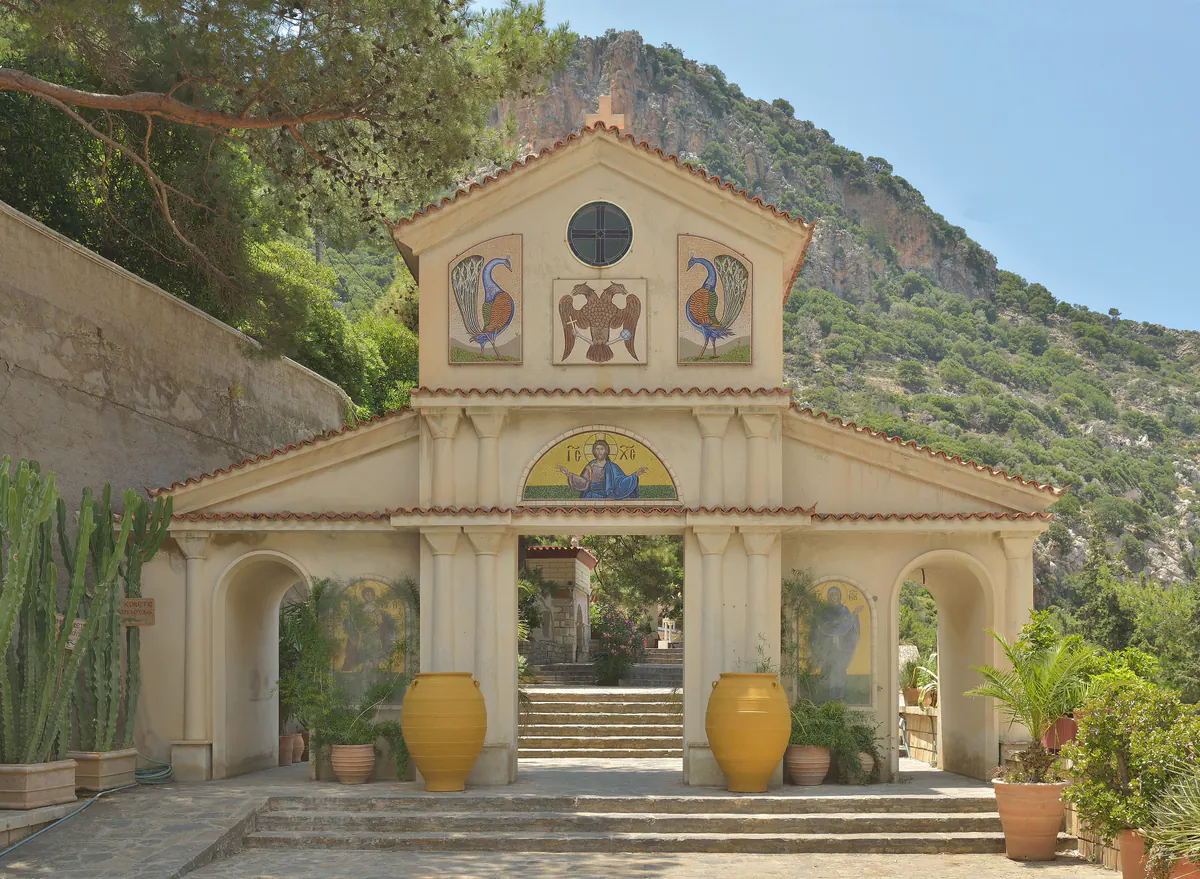
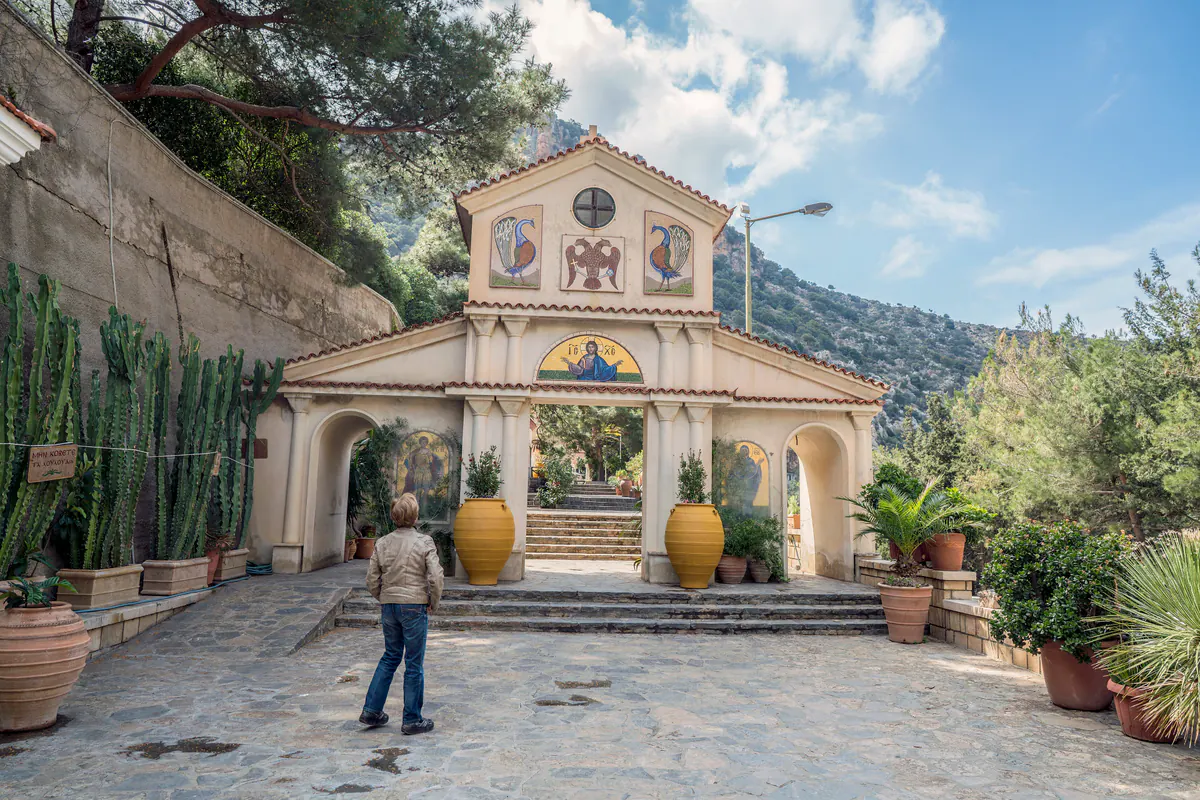
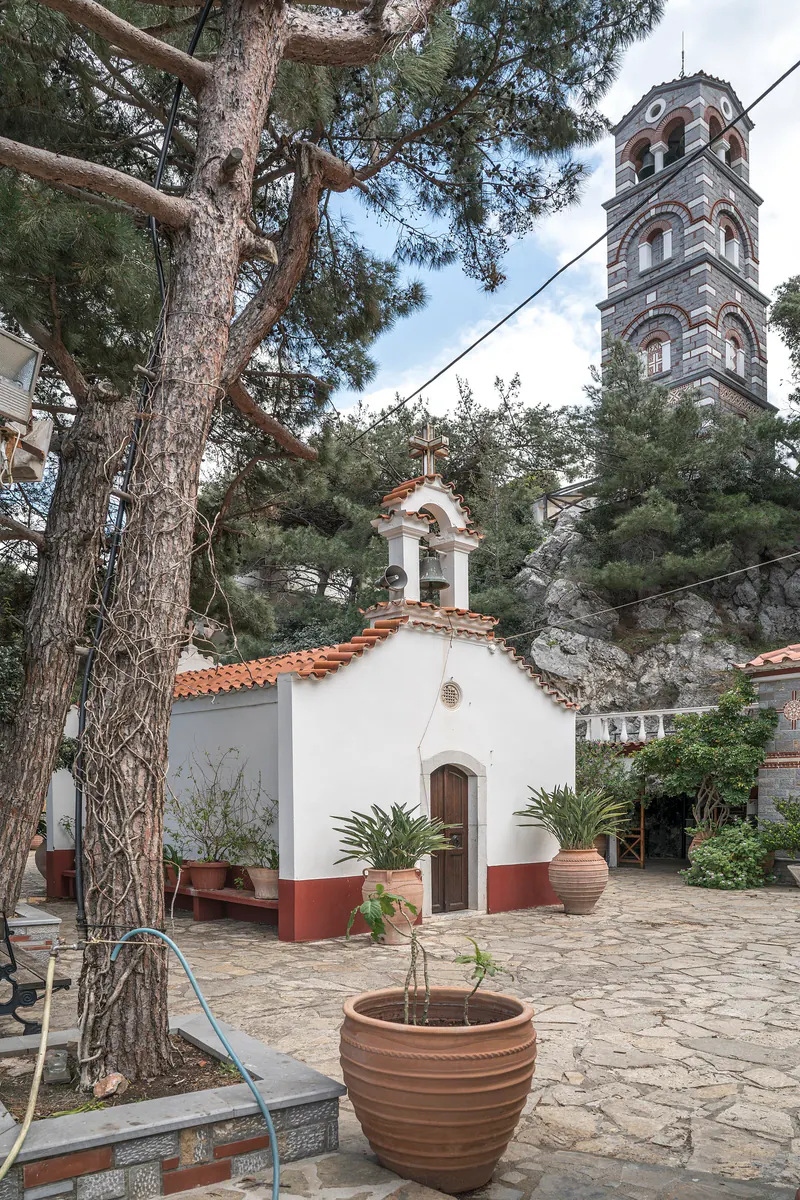
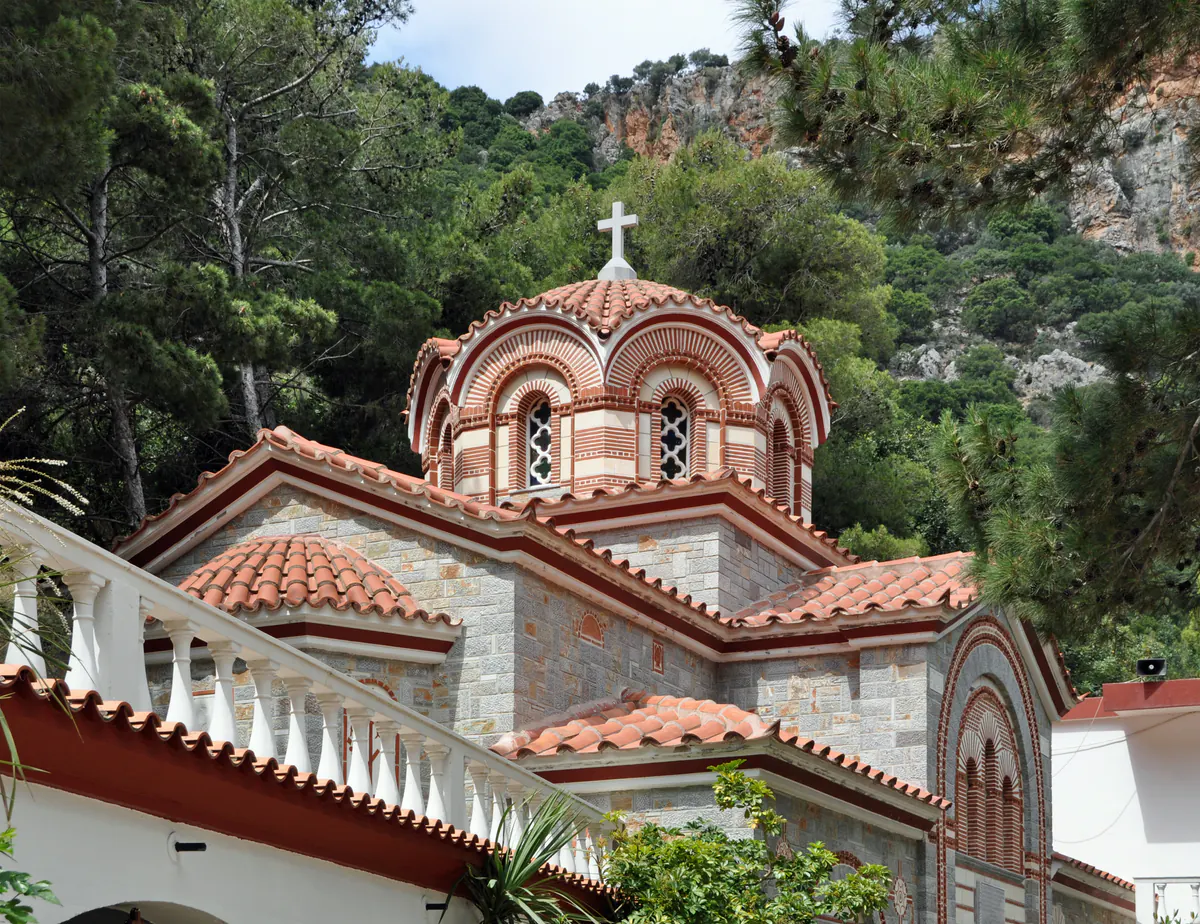
Agios Georgios Selinari Monastery sits inside Selinari Gorge, by the main road between Heraklion and Agios Nikolaos. It is an active Orthodox monastery and pilgrimage stop near Vrachasi, with the older church of Agios Georgios, newer monastery buildings, and two more churches dedicated to the Epiphany and the Resurrection.
Why it matters
I include Selinari because the road, the landscape, and the faith of the people who travel that road all meet in one spot. Travelers have long treated Saint George here as a protector on the road east. For most people the stop is brief: park, go in quietly, light a candle if it feels right, look at how the buildings sit against the rock, and drive on toward Neapoli, Agios Nikolaos, Elounda, or Heraklion.
The setting does a lot of the work. The gorge squeezes the road, the cliffs pull your eyes up, and the monastery marks the line between one part of Crete and the next. There is history behind the stop, too: public tourism sources place the monastery's origins in the second Byzantine period, record its later destruction in 1538, and identify the older church you see today as 16th century.
What to understand before going
Treat Selinari as a short daylight stop, not a day out. It works best when your route already runs between Heraklion/Malia/Sissi and Agios Nikolaos/Elounda. The published sources I checked on 2026-06-17 did not give reliable current opening hours or an entrance-fee statement, so don't build a plan around getting inside without checking locally.
What stays with you
What stays with you is the way the road changes: a fast east-west drive becomes, for a few minutes, a place of stone, candles, and lowered voices. You can see the monastery in minutes, but where it sits in the gorge gives the pause its weight. For most of my working life, a short stop on a drive meant answering email in a parking lot. This is a much better use of the time.