Skip to content

    South Rethymno

    Preveli Beach & Palm Forest

    What it is

    Preveli is the south Rethymno beach where the Kourtaliotis river reaches the Libyan Sea: a small beach, a corridor of palms, a view from the cliff, and a choice of access that decides your day.

    Why it matters

    I include Preveli because river, palms, sand, sea, and dry rock are packed into one landscape. It is beautiful, but it is also fragile, and it needs planning: the protected palm forest, the summer crowds, and the route back should shape your day as much as the first view does.
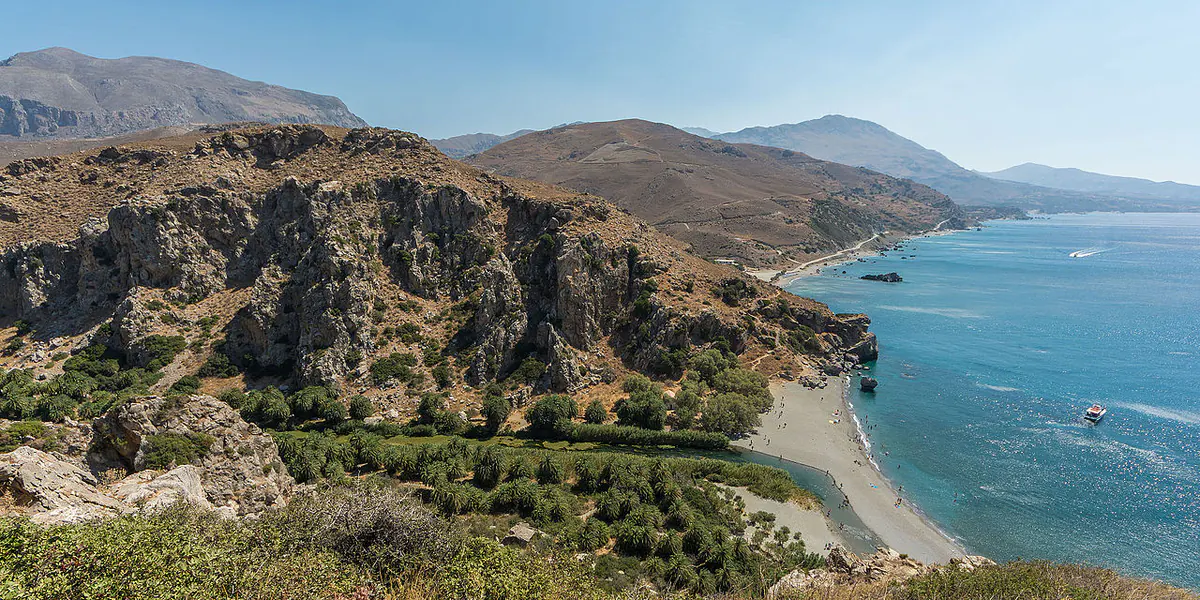
    Preveli Palm Beach with the Megalopotamos river mouth, palm grove, beach, and Libyan Sea
    Preveli Palm Beach and the Megalopotamos river mouth. Photo: Uoaei1, CC BY-SA 4.0, via Wikimedia Commons.

    What to understand before going

    Take the boat if you want the simplest swim day and can live with a fixed return time. Take the road-and-steps route if you want the cliff view and control over your timing, and you have the energy for the climb back.

    What stays with you

    What stays with you is the shape of the place, seen before it gets crowded underfoot: river mouth, palm grove, beach, sea, and cliffs, all held in one narrow south-coast amphitheater.

    What You See

    What you see is a beach, a river mouth, and a corridor of palms held together in one narrow landscape. At the shore, the river cuts through the sand, and that gives Preveli its unusual shape. Behind it, the palms follow the water inland, framed by dry rock and the lower end of the gorge system.

    The beach itself is compact and can feel crowded once the boats and tour buses have arrived. For me, the real visit is the protected landscape behind the sand: the palms, the river, the mouth of the gorge, and the fragile line between letting people in and loving the place to death.

    Boat Or Road

    The boat day is easier on the legs. Current operators publish departures from Plakias and Damnoni to Preveli and scheduled returns from the beach; treat prices and times as live operator information. It works well if you want a swim, a short walk in the palm forest, and a fixed ride back.

    The road day gives you more independence. Region of Crete material describes the approach from near Preveli Monastery to a parking area and then a downhill walk of about 15 minutes. The descent is the easy half: in the heat, the climb back to the car is what limits your day.

    Access And Bases

    Base the day in Plakias, Damnoni, or Rethymno. Plakias and Damnoni are the practical choices for the boat. Rethymno works as a day-trip start only if you have checked the bus, car, or boat timing before you set off.

    Without a car, start with KTEL Chania-Rethymno's current Rethymno, Plakias, and Preveli tables. If the buses don't line up with the boat or beach time you want, reshape the day around the timetable. The bus will not reshape itself around you.

    Kourtaliotiko Pairing

    Kourtaliotiko Gorge is the inland half of Preveli's story. Region of Crete material describes the gorge as carrying the Megalos / Kourtaliotis river toward the palm grove and the beach.

    Pairing gorge and beach can make sense by car or with a guided or private arrangement, but pace it carefully. Gorge access, river edges, steps, heat, and beach time can easily add up to too much for one August day.

    Season And Timing

    For Preveli, I'd pick late May, June, September, or early October: swimming weather, services running, and fewer crowds than in high summer. July and August need an early start, water, a plan for shade, and a clear route back.

    In high summer, the beach can feel smaller than it looks from above. Arrive early for the road path, or choose a boat time and accept that the day is no longer flexible. In winter and early spring, the landscape is still there, but bus service, boat service, beach facilities, and nearby monastery/museum hours all need live checks.

    What To Pair Nearby

    Plakias is the practical base for Preveli, Damnoni, Skinaria, Ammoudi, and Kotsifou/Kourtaliotiko gorge days. Read South Coast Crete Bases before you decide whether this is one south Rethymno day or part of a longer south-coast stay.

    Preveli Monastery belongs on your mental map of the area, but keep it separate in your planning: the monastery/museum has its own hours, conduct expectations, and possible admission; the beach and the palms work on different access rules.

    Practical Questions

    Is Preveli Beach worth visiting?

    Yes, if you want a distinctive south Rethymno landscape rather than a standard organized beach. The river mouth, palm grove, cliff view, and Libyan Sea make it memorable, but getting there and timing shape the day.

    Is it better to reach Preveli by boat or by car?

    The boat from Plakias or Damnoni is easier on the body and suits a swimming day. The car gives you more control and the cliff view, but the path down means a hot climb back up.

    Can you visit Preveli Beach without a car?

    Yes, but only when the current KTEL and boat schedules line up on your date. I'd check KTEL Chania-Rethymno's Rethymno/Plakias/Preveli pages and the boat operator's schedule before planning the day.

    Are there opening hours or an entrance fee for Preveli Beach?

    Not that I could find: the sources I checked show no single official opening-hours listing for the public beach and palm forest. Parking, boats, gorge access, and the nearby monastery/museum can have their own charges or hours.

    When is the best time to visit Preveli Beach?

    Late May, June, September, and early October usually give the best balance of swimming weather, open services, and manageable crowds. July and August need early starts and respect for the heat.

    Editorial note

    For this page I used Region of Crete / Incredible Crete, Natura 2000 Crete, KTEL Chania-Rethymno, LB Ferries, Preveli Monastery context, VisitCrete museum context, and a real CC BY-SA Commons photograph of Preveli. Verify exact transport, boat operation, and nearby site details again before you travel.

    Written by Leo Novak.

    Sources and Current Checks