Season
Crete in August
Peak summer on the island: the warmest sea, the hardest heat, the busiest roads, and no room for vague plans.
August is Crete's busiest month for visitors. The sea is at its most tempting, the evenings are long and spent outdoors, and every stretch of coast is wide awake. It is also the month when heat, demand, traffic, parking, full restaurants, and crowded famous beaches stop being small annoyances and become the things you plan around. This is when Crete's sense of time turns into practical advice.
A good August trip is usually not a grand tour of the island. It's a summer stay with a firm shape: one or two bases, protected mornings, simple afternoons, and enough humility to let the sea do more of the work than the map.
August decision map
What August is good for
August suits you if you want Crete in high summer: swimming, resort days, family routines, boat trips, late dinners, and a base you don't have to wrestle with every morning. Children often do best when the trip runs on water, shade, and the same good routine, rather than something new every day.
It can work for a first visit too, if you accept a smaller dose of sightseeing. Knossos at opening time, a short morning in an old town, one big beach day, maybe one lunch in a mountain village: all of these fit in August. Stack them into back-to-back days in the open sun, though, and you will pay for it.
What August is bad for
August is bad for improvisation in famous places. Balos, Elafonissi, Vai, Samaria, Knossos, Chania's old town, and the resort strips are not drop-in visits this month. The day starts with parking, tickets, road timing, shade, and the drive home.
It's especially poor for a trip that spends most of its time inland. Villages are still worth it, but the heat changes how you use them. A mountain lunch can be a relief; a string of inland stops on a hot afternoon becomes something to survive rather than enjoy.
The numbers, roughly
August is the hottest month, and the numbers say so plainly. Typical norms put north-coast daytime highs around 29–30°C, with Chania (near 30°C) usually a touch warmer by day than Heraklion (near 29°C), and overnight lows around 22°C that keep even the small hours warm. Inland basins and the exposed south coast run hotter still, and heatwave days can push far past these averages — Heraklion's records include days near 44°C. These are long-term means, not a forecast.
The sea is at its annual peak: average north-coast water temperature sits around 26°C in August, the warmest it gets all year. That makes the water the cool part of the day: I'd spend the midday hours in the shade or in the sea, not in the car or on foot, and a late swim feels like pure relief.
Climate norms are approximate and drawn from long-term station data for Heraklion and Chania (Wikipedia climate tables, citing WMO / Hellenic National Meteorological Service records; sea-temperature averages cross-checked against seatemperature.org). Treat them as typical, not guaranteed.
Heat, crowds, and morning discipline
In August an early alarm beats optimism. Do the sun-exposed things first: archaeology, old-town walks, a gorge, the drive to a famous beach, or any errand that needs easy parking. By midday, shrink the plan: shade, pool, sea, a nap, or a long lunch that asks nothing of anyone. The dry summer landscape is part of the reason; there's more on it in Landscape, Herbs & Biology.
Crowds don't mean you've done something wrong; in August they are the season. Mid-August adds Greek holiday travel on top: 15 August, the Dormition of the Virgin Mary, is a national holiday, village festivals often start the evening before, and some shops and restaurants close or keep short hours that day. The useful skill is choosing which crowds are worth it and which you can skip with a quieter beach, a less famous village, or a dinner reservation instead of a hopeful queue.
Beaches, wind, and the sea
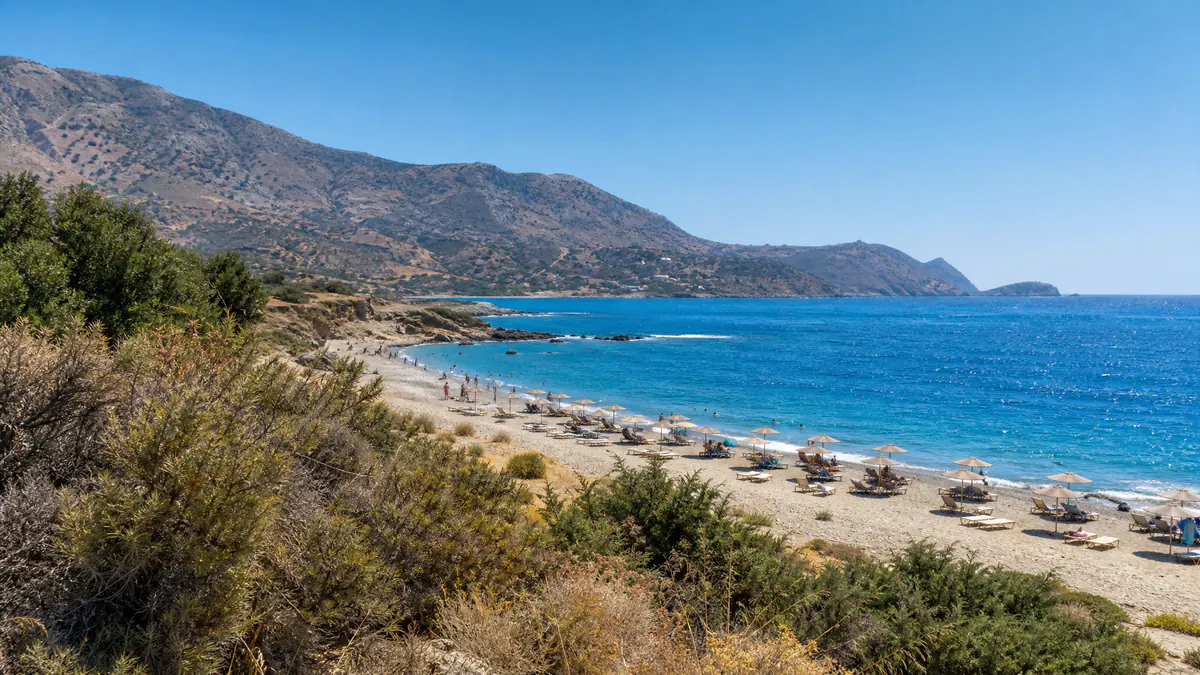
August gives you the warmest sea of the year. It also gives you crowded organized beaches, full parking lots, and days when the wind has the final say on your plan. The meltemi, the wind from the north, can turn an exposed beach into a sand-in-your-teeth afternoon while a sheltered cove or a south-facing beach saves the day.
The best August beach is often not the biggest name. It's the one that works from your base, with that day's wind, before it gets too hot to enjoy getting there and back. Treat a famous beach as a small project, not a whim. It's the one part of an August trip where my old habit of planning everything to the minute finally pays off.
Crete Beaches By Month compares August's stay-close approach with June and September.
Families, resorts, and base choice
August is the month when a resort makes the most sense. A good pool, a beach you can walk to, reliable shade, and easy dinners aren't lazy choices; they're what keeps the week running. If you're traveling as a family, be wary of charming but awkward old-town rooms when every day starts with a hot hunt for parking.
Chania still has the atmosphere, but take access and parking as seriously as the view. Rethymno is often the easier compromise. Heraklion is useful for Knossos, museums, arrivals, and good central food, not as a dreamy beach base. Elounda and Agios Nikolaos are strong when comfort, swimming, and eastern Crete matter more than ticking off the west.
Car rental and parking
If your August trip depends on a car, reserve early and check everything you would otherwise assume: automatic transmission, child seats, pickup hours, ferry or airport timing, what the insurance covers, and parking where you stay. In August, small gaps in the plan get expensive fast.
A car earns its keep on planned beach, village, and countryside days. It earns much less sitting outside an old town as a daily worry. Many August trips work better with a car for part of the stay, or with a base chosen because parking and road access are simple.
How to spend an August week
I'd plan an August week for comfort first and coverage second. Start with a base that makes ordinary days easy: water close by, shade, parking, and simple dinners. Chania can still be beautiful, but August is hard on pretty-but-impractical choices. Rethymno is easier. Elounda and Agios Nikolaos are strong when the week is about sea, pool, and short drives in the calmer east. Heraklion makes sense when archaeology, museums, and an easy arrival matter more than resort days.
Think of the week as a string of protected mornings. Put Knossos, old towns, the serious beach drive, or any long drive before the heat takes over. By midday the plan should shrink. A good August week often has fewer named places than you'd expect: two beach days, one early archaeology morning, one village or mountain lunch, one old-town evening, and enough empty space for weather, wind, and tiredness.
If you're traveling with children, older travelers, or anyone who struggles in the heat, skip the two-base plan unless each move makes life easier. In August a well-placed hotel or villa isn't an indulgence; the whole week stands on it. Rent the car early, use it with a purpose, and keep the rest of the week walkable, swimmable, and close to shade.
My position
August doesn't show you the most of Crete. It shows you Crete under the most summer pressure. That doesn't make it a wrong choice, just a particular one. It rewards travelers who pick comfort without apologizing, enjoy a beach without trying to collect them all, and do their sightseeing in the hours when they can still take it in.
If you want room to roam, I'd choose June or September. If August is your month, build a smaller, cooler, more deliberate trip. The island will give you summer. Don't ask it for spring as well.
Practical questions
Is August a good time to visit Crete?
Yes, if you plan it as a peak-summer trip: beaches, resort pace, early starts, shaded middays, and not too much driving. It's not the month I'd pick for quiet towns, famous beaches on a whim, or big inland tours.
How hot is Crete in August?
Very hot, especially inland, at archaeological sites, and on exposed drives or walks. I'd do anything strenuous early in the morning and keep midday short, shaded, and close to the water.
Is Crete crowded in August?
Yes. August is the busiest month, with international visitors plus Greek holiday travel around mid-August. Famous beaches, old towns, resort areas, and popular restaurants all need careful timing.
Where should you stay in Crete in August?
I'd pick a base for shade, water, parking, and easy evenings. Chania, Rethymno, Elounda, Agios Nikolaos, and some resort coasts can all work; the right one depends on whether your trip is western or eastern, built around family or around culture.
Do you need a car in Crete in August?
It helps for beaches and the countryside, but parking can be a headache. Book early, check that your lodging has parking, and consider renting only for the days when a car clearly makes the trip better.
Editorial note
I combine firsthand observation with research from public and official sources. I check practical details against the sources listed on each guide where they are available, and my recommendations stay independent of paid promotion. For how I approach planning and selection, see my editorial manifesto.
Written by Leo Novak.
Related reads
The Guide 2026
My guide for this year: where to go, how to get around, and what’s worth knowing before you do.
Explore the guide