Biology
Endemic species, olive ecology, wild food, and the living systems that sustain Crete.
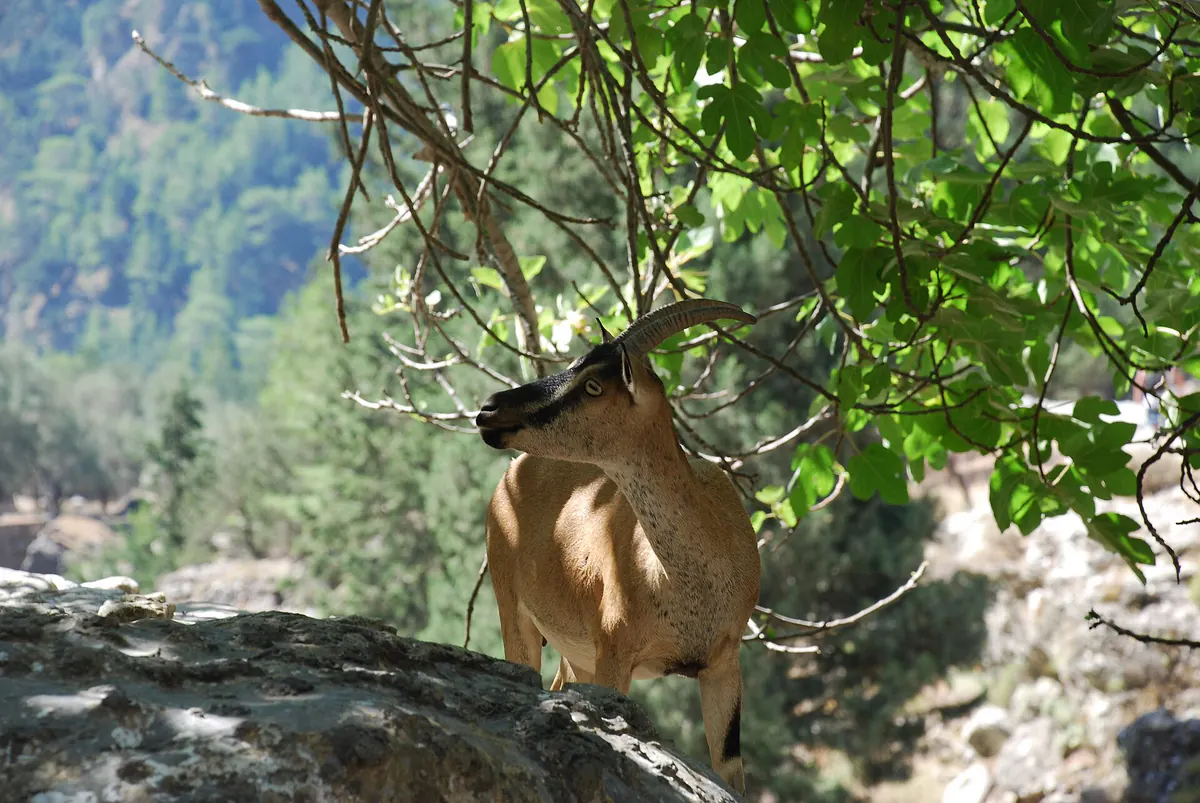
Isolation has made Crete a natural experiment in evolution. The island's endemic species, found nowhere else on Earth, include the Cretan wild goat (kri-kri), the Cretan spiny mouse, and, by most floristic counts, more than 150 endemic plant species. The mountains harbor relict forests of Cretan cypress and kermes oak, remnants of vegetation patterns that once covered the broader Mediterranean.
Herbs belong on this page too, but I have moved the plant-by-plant detail to the dedicated Cretan herbs guide. This overview sticks to the bigger picture: the species found only here, the olive groves, wild food, the gorges, and the habitats behind all those plant names.
Where to Actually See It
The kri-kri is real, but it is not a roadside attraction, and it does not take appointments. Its wild population—commonly cited at around 2,000 animals—clings to the cliffs of the White Mountains (Lefka Ori) in the west, above all the near-vertical faces at the head of the Samaria Gorge. Walkers who start the gorge early, before the crowd thickens, have the best odds of a sighting on the higher slopes; by midday the animals have usually withdrawn. Protected populations were also established on the islets of Dia (off Heraklion), Thodorou (off Chania), and Agioi Pantes (off Agios Nikolaos), which is why the goats appear on those coastal skylines and not on the main road. Numbers and access to the islets change; confirm boat trips on the official listing before you plan around one.
The wider living systems are easier to reach. Old olive groves cover the low and middle elevations across the whole island—the Messara plain, the hills behind Kolymvari, and the terraces of the Amari valley hold some of the oldest trees. Mountain tea (malotira) belongs to the high pastures, typically above ~1,500 m, so you find it on the plateaus and summit approaches of the Lefka Ori, Psiloritis, and the Lasithi (Dikti) massif rather than near the sea. Wild greens (horta) are a season, not a place: the gathering runs mainly from the first autumn rains through spring, and by high summer the hillsides have browned off.
The Olive Ecosystem
Olives shape the Cretan landscape and its culture. Millions of olive trees cover the island, many of them centuries old. Koroneiki, a variety widely grown on Crete, gives a green, peppery, slightly bitter oil. Under and between the trees, a busy understory feeds pollinators, soil life, and the wider food web.
An old olive tree is less a crop than an inheritance, with a to-do list handed down from every generation that tended it.
Traditionally, groves and flocks worked together: sheep and goats grazed under the trees, clearing the undergrowth and fertilizing the soil as they went. Modern pressures have broken many of those links, but many family groves still follow practices their Minoan predecessors would recognize.
Wild Food
Cretans have always been gatherers as well as farmers. From the autumn rains through spring, people gather horta, wild greens from the hillsides and olive groves. Snails come out after the autumn rains. Mountain tea (Sideritis syriaca), known locally as malotira, grows above the tree line and goes into household infusions that families brew out of inherited habit, not on a doctor's orders.
This habit of gathering grew out of hard, poor years, and what it left behind is knowledge: which hillside, which month, which leaf. It takes generations to build and very little time to forget. As a foreigner, I can admire it; I can't fake it. The essay on Landscape, Herbs & Biology puts that knowledge in its cultural context; the herb guide covers each plant's botanical status and what can honestly be claimed for it.
Editorial note
I combine firsthand observation with research from public and official sources. I check practical details against the sources listed on each guide where they are available, and my recommendations stay independent of paid promotion. For how I approach planning and selection, see my editorial manifesto.
Written by Leo Novak.