Geography
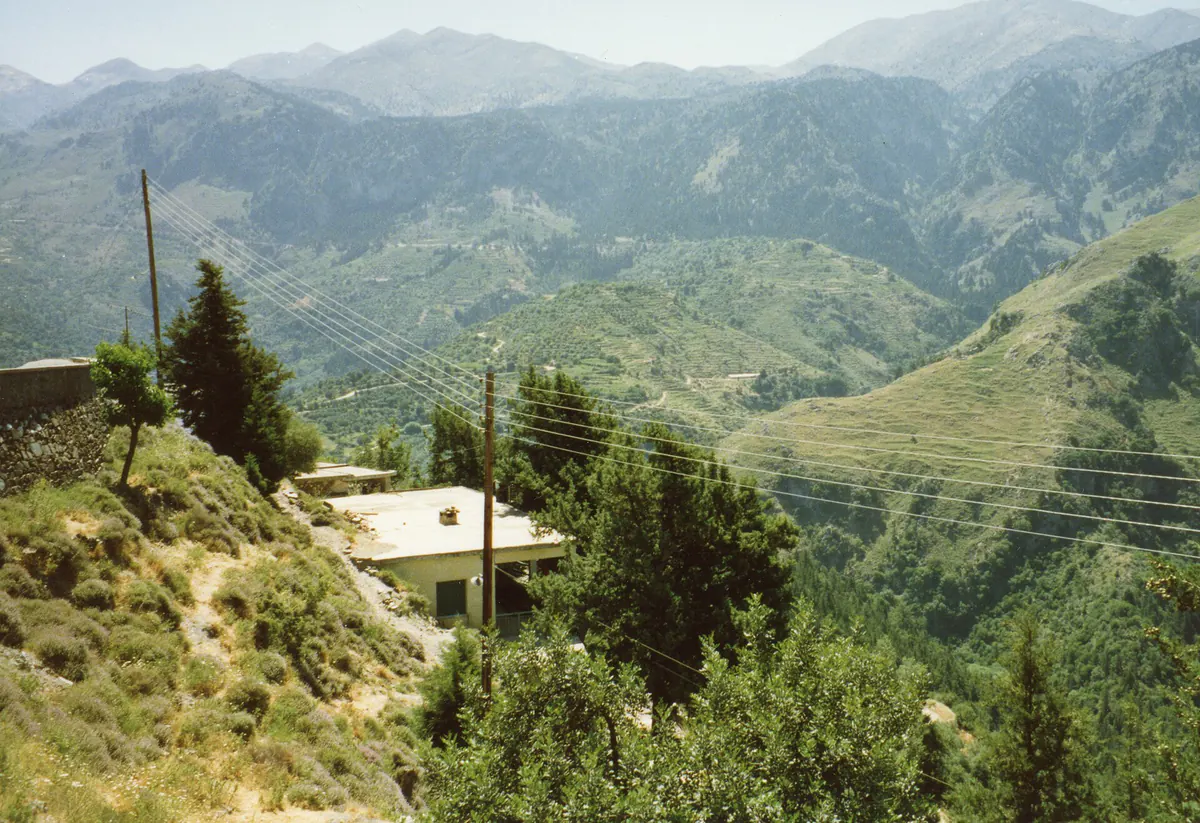
Mountains, gorges, and coastlines—the physical form of Crete's character.
Crete, the big island in the south of Greece, is the fifth largest island in the Mediterranean, and its geography does not sum up easily. A spine of mountains runs its length, reaching 2,456 meters at Mount Ida (Psiloritis), the mythological birthplace of Zeus. These peaks catch winter snow and feed the springs that keep villages going through summer's drought.
The island's long, narrow shape (260 kilometers from east to west, rarely more than 60 kilometers north to south) creates distinct microclimates and ecological zones. The north coast, facing the Aegean, is gentler and more developed. The south coast, dropping abruptly to the Libyan Sea, stays wild and harder to reach. The same landform is why the Chania base guide and Heraklion base guide read so differently.
The Gorges
Cut deep into the limestone, Crete's gorges are both geological wonders and old corridors for people and flocks. The Samaria Gorge, 16 kilometers long and narrowing to just 4 meters at its tightest point, is the most famous, and the most crowded in summer. But dozens of other gorges are far quieter: Imbros, Agia Irini, Aradena. I've walked enough office corridors to know these are the better kind.
The mountains of Crete have always been places of refuge—for bandits, for revolutionaries, for those who wished simply to be left alone.
These clefts in the earth were traditionally the paths between the coastal settlements and the upland pastures. Shepherds drove their flocks through them with the seasons; resistance fighters used them to slip past occupiers. Today they offer some of the finest walking in the Mediterranean, and the White Mountains behind Chania hold many of the best walking days in the west.
Coastal Forms
The coastline runs from the wide sandy beaches of the west (Elafonisi, Balos, Falasarna) to the pebbly coves and cliff-backed shores of the south. Stretches of the Libyan Sea coast near Sfakia, around Loutro, are still reachable only by boat or on foot, keeping a remoteness that has mostly vanished elsewhere.
The Messara Plain, Crete's farming heartland, stretches inland from the south-central coast. Sheltered by mountains, this broad valley has been farmed since Minoan times. Olive groves dominate now, as they have for centuries.
How The Terrain Shapes Your Days
The geography above is not just scenery; it decides how a trip actually works. Because the mountains run the length of the island and the settlements cling to the north, nearly all fast travel happens on one road: the north-coast national road (the E75, locally the VOAK). Along it, distances behave sensibly. Chania to Heraklion is roughly 145 km and about two hours; Heraklion to Agios Nikolaos is around 65 km and close to an hour (figures approximate; source: Casa Feliz Crete driving-times guide, checked 2026-07-06). Judged from that road alone, Crete looks small.
The deception starts the moment you turn south or inland. To reach the south coast you cross the spine, and a map's short line becomes a climb of switchbacks where an average of 40 km/h is optimistic. Crossing from Chania to Agios Nikolaos on the north road is about 210 km and close to three hours; a hop over the mountains to a southern village that looks comparable can swallow the same afternoon. The practical rule: measure journeys in hours on the actual roads, never in centimeters on the map, and treat any route that leaves the north coast as slower than it looks. The dedicated why distance is deceptive page carries this logic into itinerary planning.
The same terrain decides where a base belongs. Because the fast road is the north coast, a base on it (Chania, Rethymno, Heraklion) keeps most of the island within a comfortable day. A base off it, in the east around Elounda and Agios Nikolaos or on the southern shore, trades reach for calm: lovely to stay in, punishing to tour from. And the two great gorges of the west, Samaria and Imbros, are one-way south-to-sea walks, so the honest way to plan them is around boats and buses along the roadless Sfakia coast, not a simple there-and-back drive. On Crete, the geography is the itinerary. I have stopped arguing with the mountains; they do not negotiate.
Editorial note
I combine firsthand observation with research from public and official sources. I check practical details against the sources listed on each guide where they are available, and my recommendations stay independent of paid promotion. For how I approach planning and selection, see my editorial manifesto.
Written by Leo Novak.