Cretan Herbs
Dittany, malotira, Cretan marjoram, sage, thyme, oregano, and stamnagathi, separated by botanical status, table use, and sourcing caution.
Crete gets described through its herbs a lot, and usually loosely. Thyme, sage, rosemary, oregano, and chamomile all turn up in Cretan kitchens, on the hillsides, in the honey, and in household teas. That doesn't make each of them uniquely Cretan. If I'm going to write about them honestly, I have to keep that difference straight.
Some plants really are endemic to Crete. Some are local Cretan forms of plant families found all over the Mediterranean. Others matter enormously to island life without being botanically unique. Keeping them apart protects both you and the hillsides from pretty, careless labels.
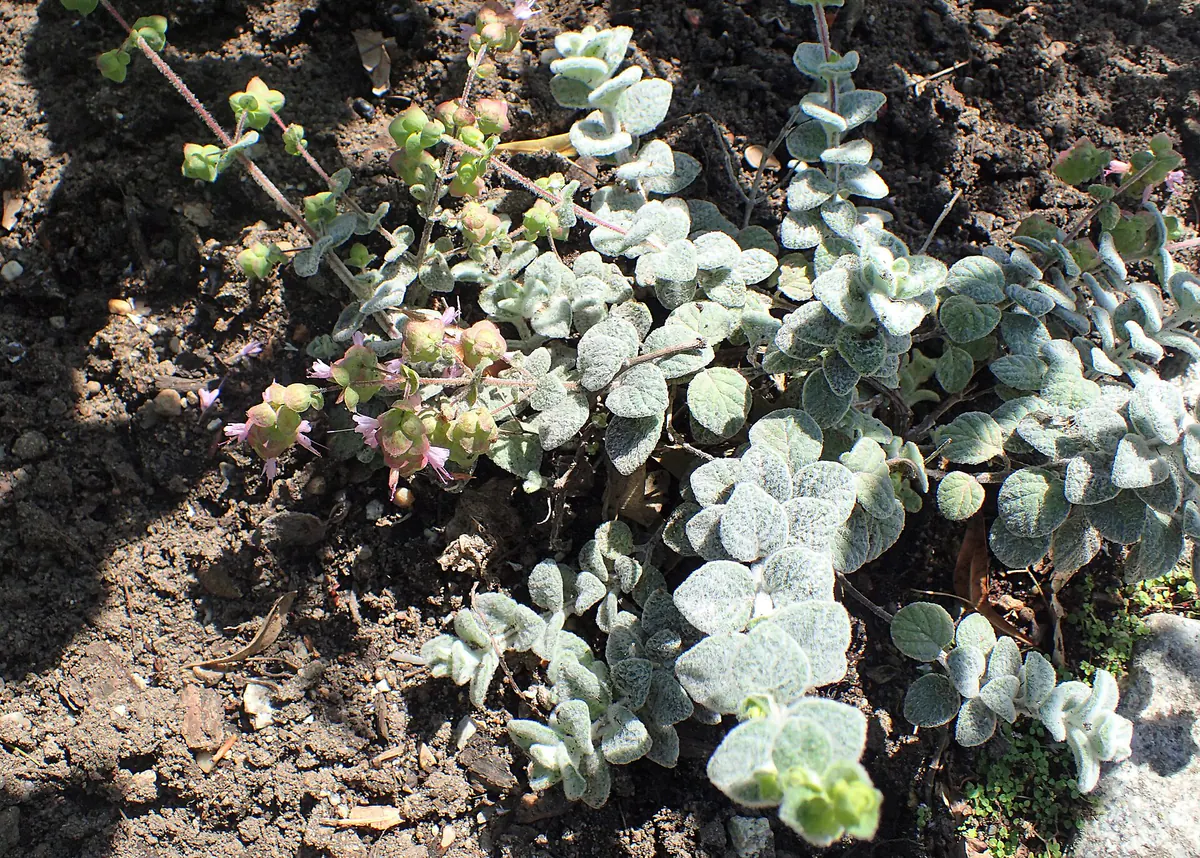
What belongs in a serious herb guide
Crete's herb vocabulary has three layers, and mixing them up is the most common mistake people make when they write about the island. The first is botanical: plants like dittany and Cretan marjoram whose natural range really does tie them to Crete. The second is ecological: aromatic shrubs, mountain tea, bitter greens, and olive-country plants that explain how the island smells, cooks, and changes through the year. The third is domestic: teas, kitchen herbs, honey, and household habits that matter to people even when the plant grows well beyond Crete. I keep the three apart. The lazy version mashes them into one pretty sentence.
Use this page as a sorting table, not a wellness catalog. The wellness industry would happily sell you every one of these plants as a miracle in a jar; I'd rather put them in the right boxes. Dittany goes in a different box from the thyme on your plate. Malotira needs more careful words than "mountain tea." Stamnagathi matters a great deal at the table without being endemic. If you arrived here from a search, that sorting is the whole point.
In practice, that means dittany and Cretan marjoram shouldn't be blurred into generic oregano, and sage and stamnagathi shouldn't be promoted to endemic just because they're important. I record traditional uses as inherited household habits, not medical advice. Buy conservation-sensitive plants from cultivated or verified sources; don't pick them from wild sites.
How to read the guide
I've organized the entries below by status, habitat, traditional use, and caution. "Traditional use" means what households and folk practice have handed down. It isn't medical advice, and it isn't a claim that any plant works as a medicine. For conservation-sensitive plants, especially dittany, go to cultivated or verified sources, not the wild.
For the bigger picture of where these plants grow and why, continue to Landscape, Herbs & Biology. For the kitchen side of the same knowledge, read the ingredients guide.
Herb status guide
Some plants are genuinely Cretan endemics. Others are not unique to the island but are central to Cretan kitchens, teas, honey, and folk practice. The distinction is part of the story, not a technicality. This is a status guide, not medical advice; traditional uses are recorded as cultural practice rather than treatment claims.
Dittany of Crete
Diktamos / erontas · Origanum dictamnus
Found naturally in Crete and not treated here as a general Mediterranean herb.
Habitat: Cliff faces, limestone gorges, and rocky mountain slopes; today better met as a cultivated plant than gathered from the wild.
Traditional use: Traditionally prepared as a digestive tea and associated since antiquity with wound care.
If Crete has one signature herb, this is it: local to the island, culturally old, and legally protected in Greece.
Malotira
Cretan mountain tea · Sideritis syriaca subsp. syriaca
A local Cretan taxon or subspecies within a wider plant group.
Habitat: High mountain ground, especially above the settled agricultural zone.
Traditional use: Usually drunk as a tea, especially in winter: a comfort drink, not medicine.
The label matters: "mountain tea" is a broad Mediterranean idea; this is the Cretan local form.
Cretan marjoram
Small-leaved oregano relative · Origanum microphyllum
Found naturally in Crete and not treated here as a general Mediterranean herb.
Habitat: Rocky mountain habitats where low aromatic shrubs survive heat, wind, and thin soil.
Traditional use: Used as an aromatic herb and a tea, closer to the island's oregano family than to a garden garnish.
A better candidate for uniqueness than generic oregano, which matters in the kitchen but isn't automatically endemic.
Cretan carline thistle
Carline thistle · Carlina diae
Found naturally in Crete and not treated here as a general Mediterranean herb.
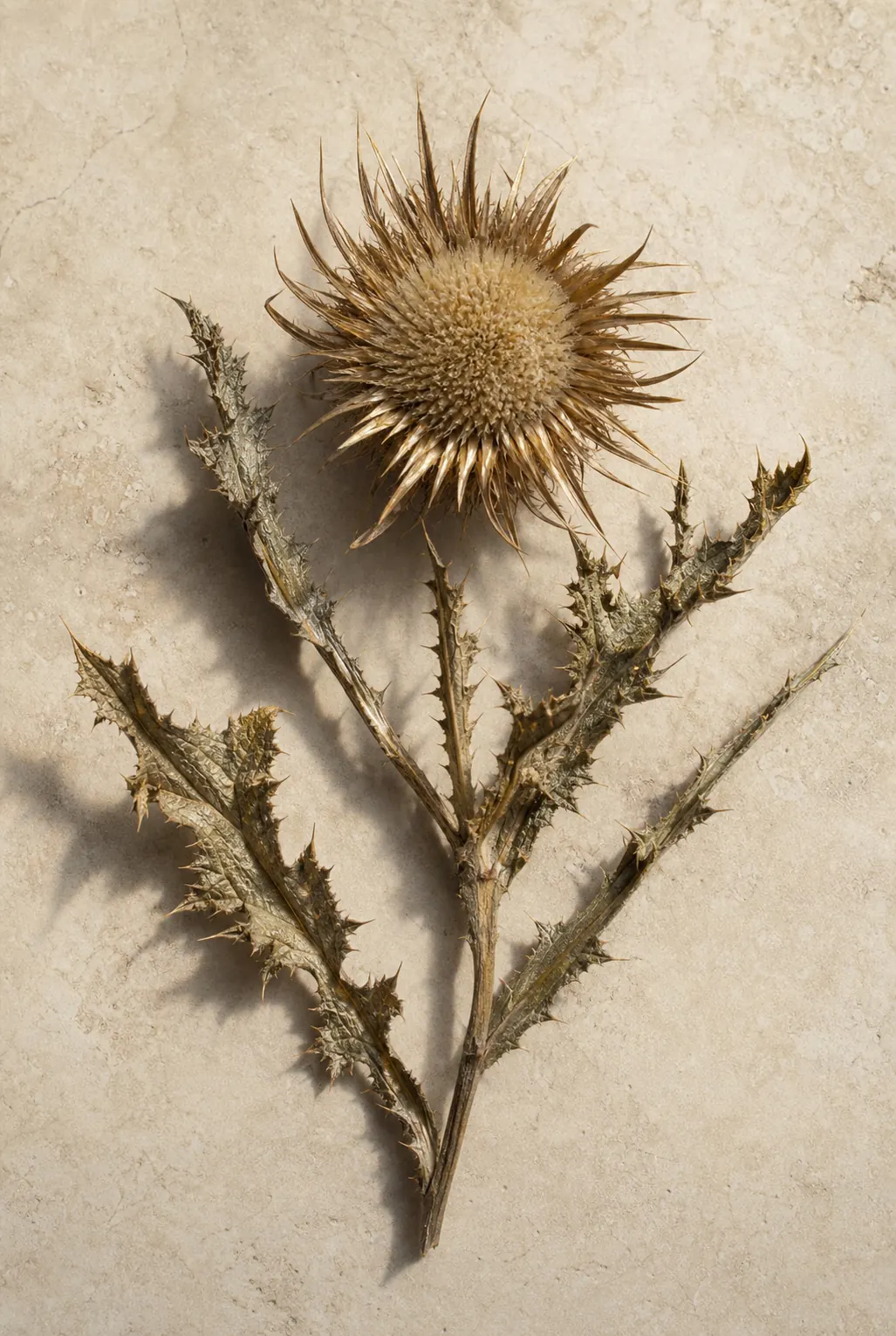
Habitat: Dry rocky places, including the Crete–Dia setting noted in the research sources.
Traditional use: Recorded in research on edible and medicinal plants; the literature discusses its traditional root use cautiously.
Interesting, but I won't take the wording past traditional use until the medicinal claims are properly checked against sources.
Cretan St John's wort relatives
Local Hypericum taxa · Hypericum empetrifolium subspecies recorded for Crete
A local Cretan taxon or subspecies within a wider plant group.
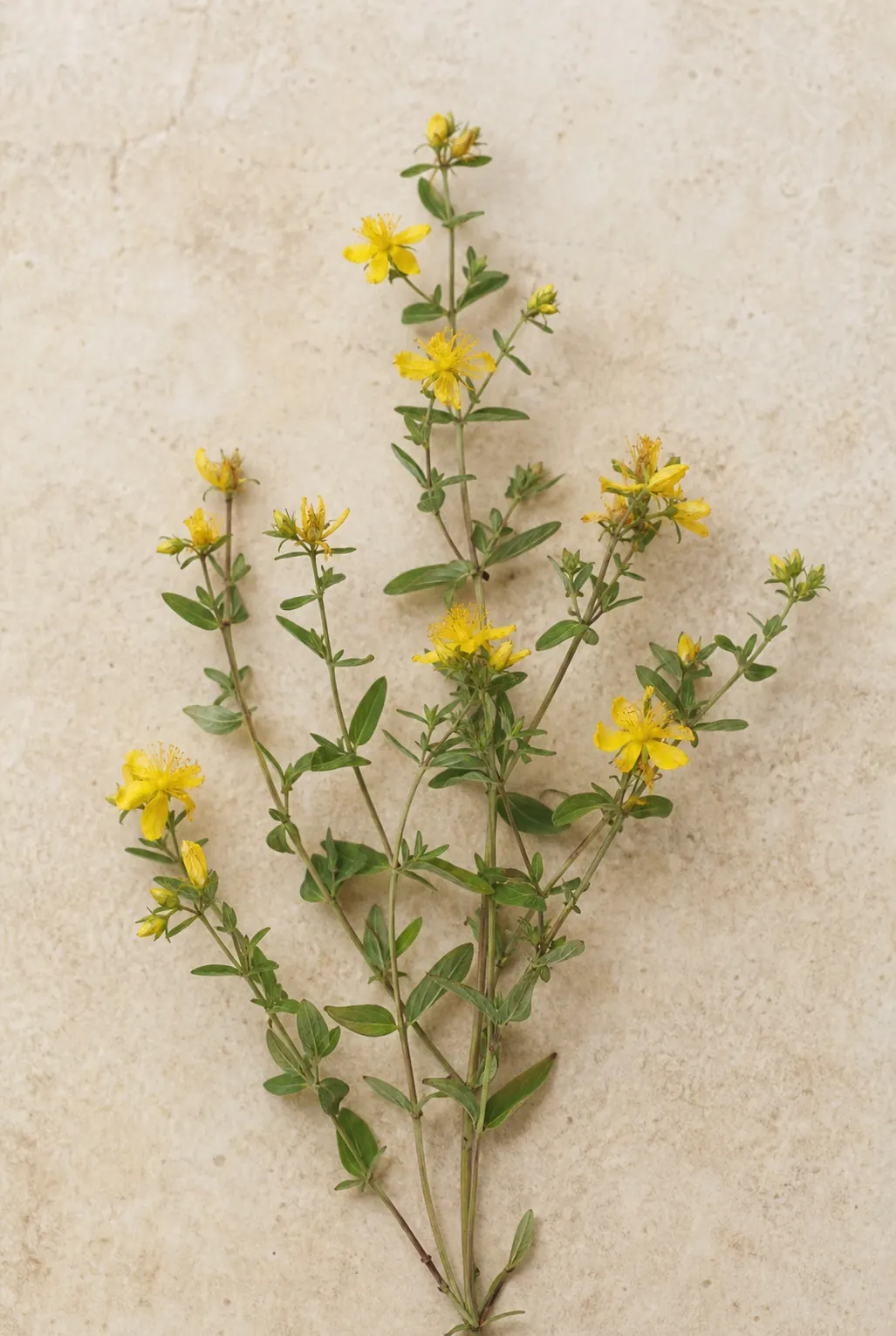
Habitat: Phrygana, rocky slopes, and dry open landscapes.
Traditional use: Related folk traditions put Hypericum oil on the skin; claims specific to Crete have to be kept carefully apart from those.
I include it because both the botany and the claims need careful handling.
Cretan hairy thyme
Local thyme taxon · Thymus leucotrichus var. creticus
A local Cretan taxon or subspecies within a wider plant group.
Habitat: Dry phrygana, rocky slopes, and exposed aromatic landscapes where thyme forms part of the island's summer scent.
Traditional use: Traditionally valued as a fragrant herb and as part of what the bees work on for Cretan thyme honey; anything medicinal stays at the level of studied properties and inherited practice.
This is where I separate generic thyme from a local Cretan form.
Cretan mullein
Local mullein · Verbascum arcturus
Found naturally in Crete and not treated here as a general Mediterranean herb.
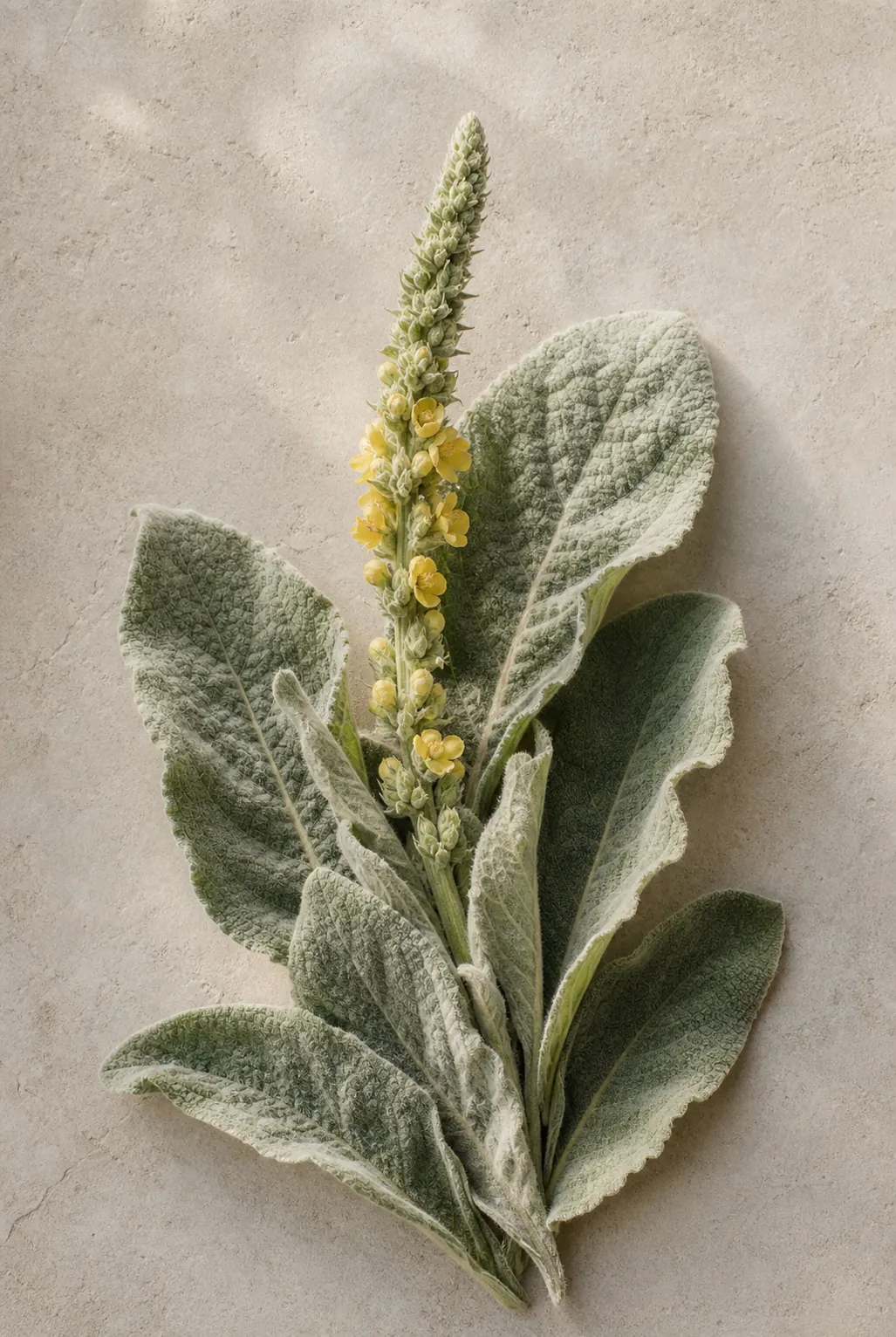
Habitat: Rocky places, stone walls built by people, and dry natural habitats.
Traditional use: Included as a botanical endemic; its traditional uses are less well documented than those of dittany, malotira, or marjoram.
Useful as a marker of what's endemic and worth protecting, not a plant to load down with folk-medicine claims.
Stamnagathi
Spiny chicory · Cichorium spinosum
Important in Cretan food or folk practice, but not unique to the island.
Habitat: Coastal and rocky Mediterranean ground, now also cultivated for the table.
Traditional use: Eaten raw or cooked as a bitter green; central to how Crete eats even though it isn't uniquely Cretan.
It belongs here, but under cultural importance, not endemism.
Sage
Faskomilo · Salvia fruticosa
Important in Cretan food or folk practice, but not unique to the island.
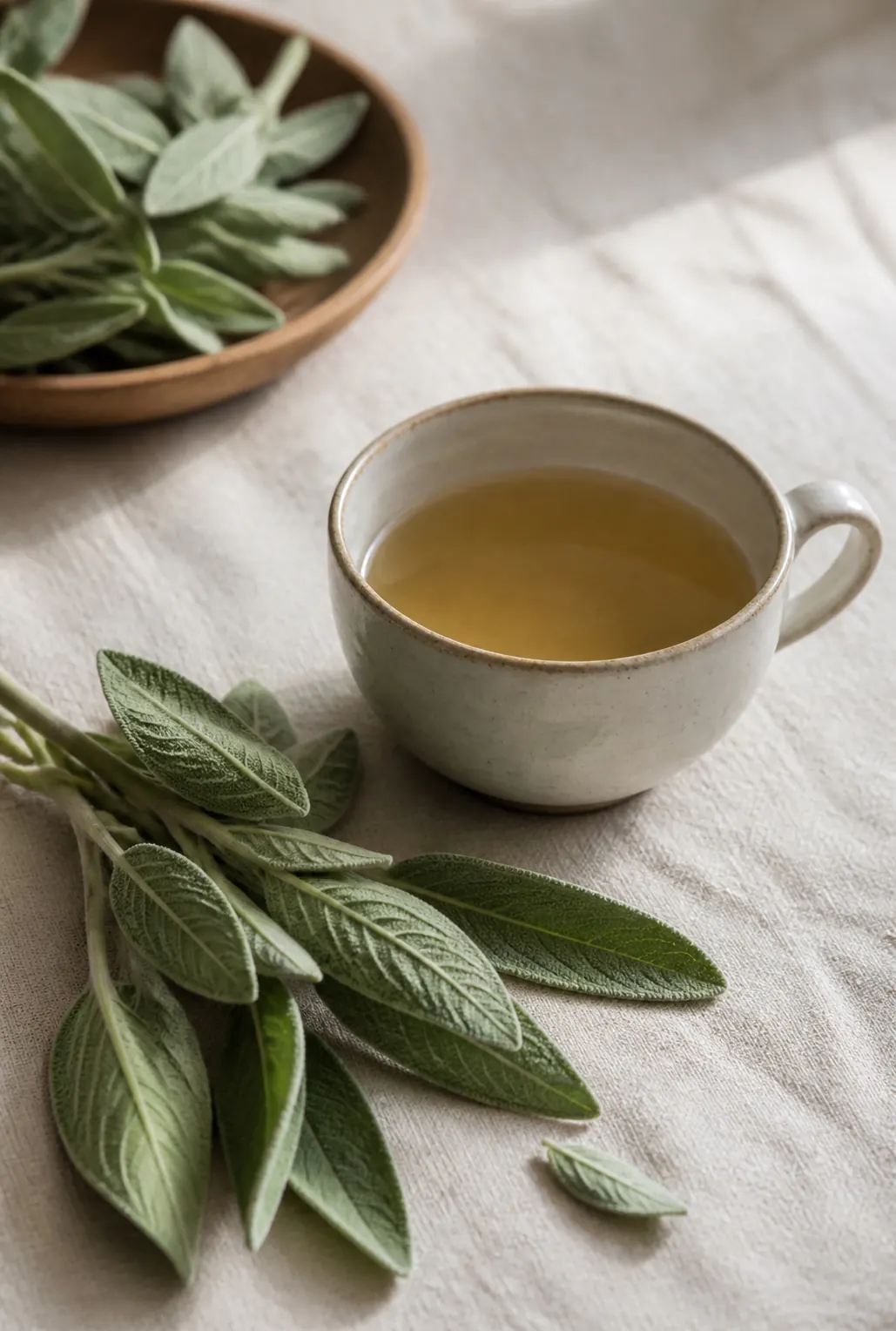
Habitat: Dry Mediterranean shrubland and cultivated/domestic herb settings around the island.
Traditional use: Made into an aromatic tea and used at home for comfort in cold weather or for a scratchy throat.
Important in Cretan homes and cafés, but I won't present it as uniquely Cretan. Go easy on it, and skip sage tea in pregnancy or while breastfeeding: the EU's herbal medicines committee doesn't recommend sage-leaf preparations then.
Seasonal planning note
Herbs are also one of the easiest ways to see why the season matters in Crete. Spring is when the hills are at their most aromatic, before the heat flattens the day; summer pushes you toward shade, kitchens, and honey country; autumn brings the island back to olive groves, darker greens, and quieter roads. If you're using this page to plan, keep it beside the Guide 2026, the best time to visit Crete guide, and the spring notes for April and May. Autumn planning belongs beside October and November, when the olive groves and the darker greens take over again. Don't chase plants like attractions; notice how the island changes before you lock in a route.
Applications without cure claims
The most useful way I've found to think about Cretan herbs is practical and modest: teas for comfort, aromatics for food, bitter greens for the table, honey, and plant knowledge carried by households instead of packaged as wellness mythology. Malotira in a winter cup, sage as a household tea, oregano and its relatives over food, stamnagathi on the plate, and dittany handled with conservation in mind: that's the old household way. It's a lot less exciting than the supplement shelf, and a lot more honest.
I'll keep adding to this page as verified photographs or carefully made illustrations become available. Captions stay generic unless the plant, place, season, and source have been independently checked.
Practical questions
Which herbs are actually endemic to Crete?
Dittany of Crete, Cretan marjoram, Cretan carline thistle, and Cretan mullein are the examples I treat as Cretan endemics here. Some other plants are local Cretan forms or culturally central herbs rather than full endemics.
Is malotira unique to Crete?
The careful answer: malotira is the Cretan mountain-tea subspecies, Sideritis syriaca subsp. syriaca. I keep that local status separate from the wider Mediterranean mountain-tea traditions.
Are Cretan herbs medicinal?
I record traditional household and folk uses, but I don't give medical advice or claim that herbs cure or treat disease. Buy conservation-sensitive plants from cultivated or verified suppliers rather than picking them wild.
Is stamnagathi endemic to Crete?
No. Stamnagathi is central to Cretan cooking and important at the table, but I don't present it as uniquely Cretan.
Editorial note
I combine firsthand observation with research from public and official sources. I check practical details against the sources listed on each guide where they are available, and my recommendations stay independent of paid promotion. For how I approach planning and selection, see my editorial manifesto.
Written by Leo Novak.