Eating
In Crete, a meal is less about what lands on the plate than about how it shapes the day and who you share it with.
I know the impulse well: make a list of dishes, photograph every plate, hunt down the "best" of everything. It is also the quickest way to miss how Crete eats. A meal here is not a box to tick. It is time: a long stretch of it, at one table, with people, at nobody's pace in particular.
This section sticks to the table itself, not the whole food system. To eat well in Crete, it helps to know a few things first: dishes arrive when they're ready, not in neat courses; everything is shared; olive oil and bread sit at the center of it all; and the best places often have no menu at all. For the bigger food picture, go back to Food.
What follows is not a directory; think of it as homework before the table. Use the practical guide for customs, the ingredients guide for materials and preparations, Wine And Beer In Crete for a first look at wine, raki, and beer, the dedicated indigenous wine, local wine, and local beer pages for the category detail, and the Cretan herbs guide for botanical status and what can honestly be claimed. When the question becomes where to sit down, start with my restaurant entries: Peskesi, Koula's Tastes, Avli Rustic Fine Dining, and Giovanni.
Dishes worth seeking, and when
I see the irony: naming dishes risks turning eating into exactly the checklist this page argues against. But preparation is not a checklist. Knowing what a place makes well, and in which month, is how you avoid ordering the one thing the kitchen resents. Here is a short list of things Crete does with conviction, tied to the season and the part of the island where they make sense. Dakos, horta, antikristo, and sfakianes pites are also among the more than sixty recipes in my cookbook, Out of Office, written for an ordinary city kitchen.
Dakos
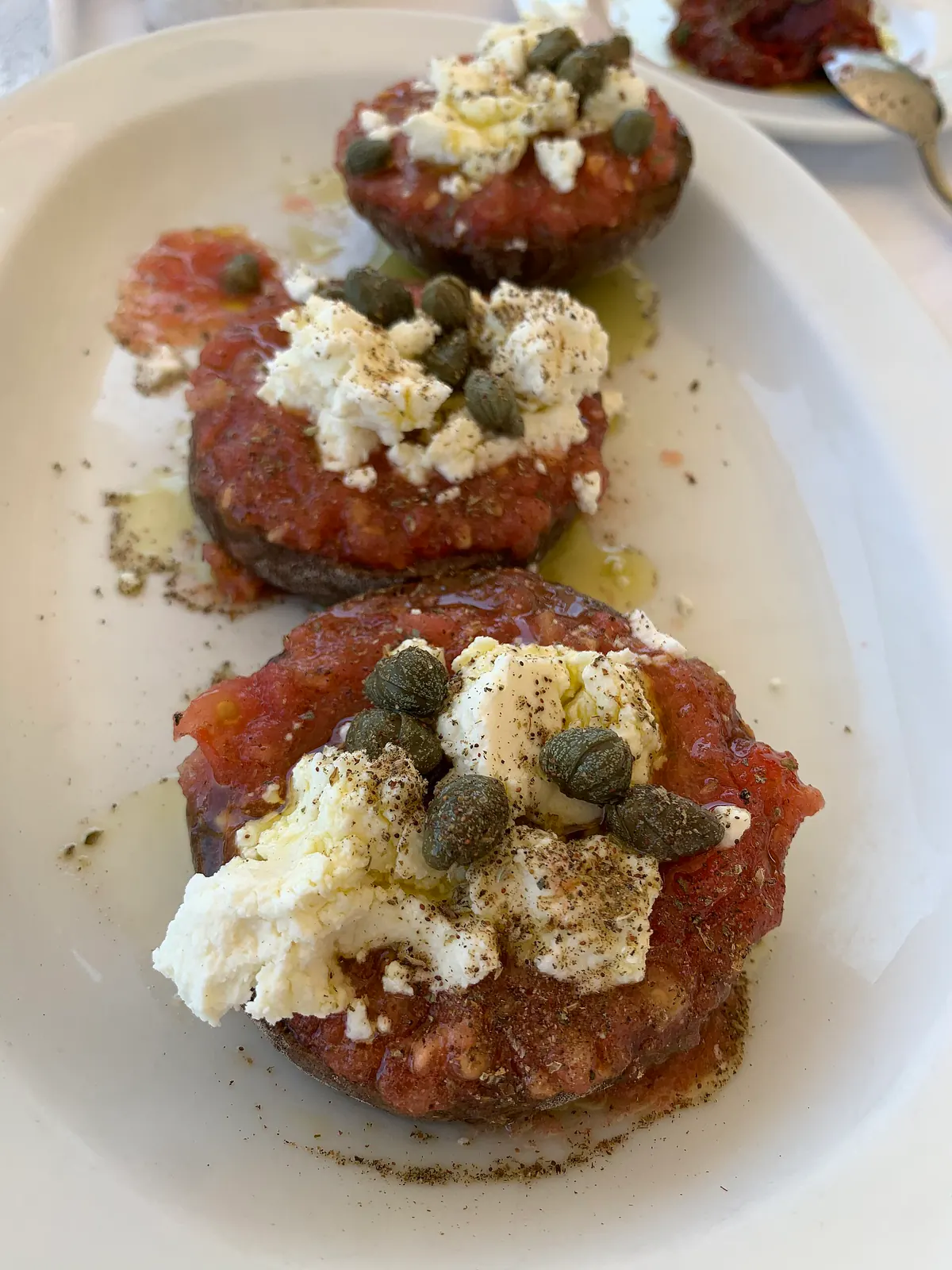
A hard barley rusk moistened with grated tomato and olive oil, topped with xinomizithra (a soft, tangy mizithra) or crumbled feta and a little oregano. It is a summer dish above all, because it depends on ripe tomato, and it is everywhere on the island, from mountain villages to town tavernas. Order it early in the meal, not as a curiosity but as the clearest single expression of the Cretan pantry.
Horta and boiled greens
Wild greens, boiled and dressed with oil and lemon. They change with the season: the prized stamnagathi (spiny chicory) is a cool-season green, and summer brings vlita (amaranth). Cultivated stamnagathi is now sold year-round, so ask, politely, what is actually in the kitchen that day.
Antikristo
Lamb in big pieces, skewered on stakes set in a ring around an open fire, facing the flames rather than over them, and cooked slowly, with salt the only seasoning. It belongs to the pastoral south and the mountains, the Sfakia region and the high shepherding villages, where meat, not the garden, is the wealth. Look for it inland and uphill, not on the tourist seafront.
Gamopilafo
“Wedding rice”: rice cooked in meat broth (goat or chicken) and finished with staka butter from sheep's or goat's milk. Traditionally a celebration dish, so it appears more often at festivals and family tables than on everyday menus. When a taverna does offer it, I take that as a signal worth trusting.
Sfakiani pita
A thin round pie (plural, sfakianes pites) filled with fresh mizithra, cooked in a hot pan and drizzled with honey. As the name says, it comes from Sfakia, in the mountainous south of the Chania region. Seek it in the southwest, not on a Heraklion menu that happens to list it.
Chochlioi boubouristi
Snails fried in olive oil with rosemary and finished with vinegar. A genuinely seasonal dish tied to the autumn rains, when snails emerge. A village kitchen that gathers its own will serve them then, and that timing is part of what makes them worth ordering.
Also in this guide