Regions & Character
Understanding the island through its four prefectures
For administration, Crete is divided into four regional units that correspond roughly to the historical prefectures: Chania in the west, Rethymno in the center-west, Heraklion in the center-east, and Lasithi in the east. Each has its own character, shaped by geography, history, and how far development has reached. I got to know them over years of travel around the island, often on roads that turned out longer than the map promised.
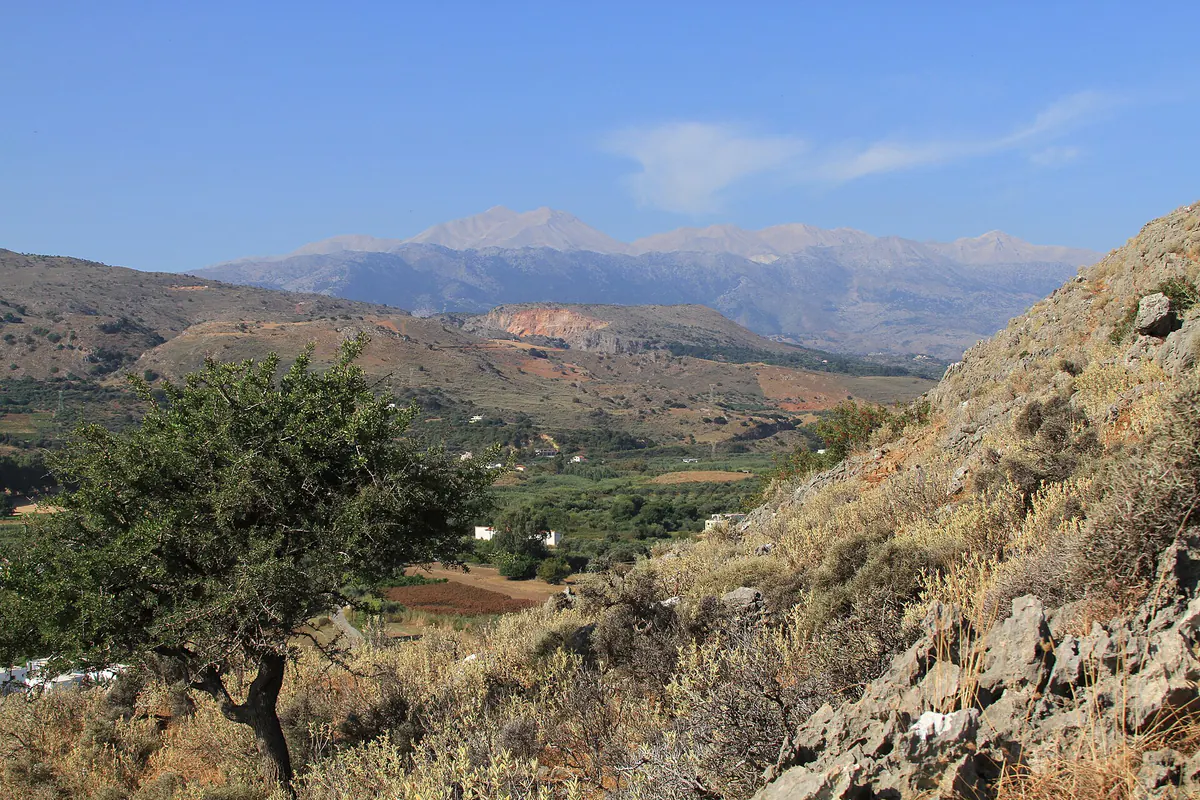
Chania
The westernmost region, Chania, is often called the most beautiful part of Crete, and I won't argue. The White Mountains dominate the landscape, rising to 2,453 meters at Pachnes and holding the famous Samaria Gorge, one of the island's great walks.
The city of Chania, with its well-preserved Venetian harbor and Ottoman quarter, is the region's cultural and administrative center. It has kept an elegance that Heraklion has largely lost: a walkable old town and development that has moved more slowly.
The south coast of Chania is the least developed part of the island, reached mainly by boat or by winding mountain roads. Villages like Loutro and Sfakia keep something of their old isolation, though tourism has brought real changes even there.
Who it suits, and where to base. Chania is for travelers who put landscape, atmosphere, and walking above archaeology: the gorges, the west-coast lagoons at Balos and Elafonissi, the wild south. Base in or near Chania town for the harbor and the west, and arrive through the region's own airport on the Akrotiri peninsula rather than driving over from Heraklion. The one thing Chania is not is a convenient base for the Minoan sites. Knossos and the central palaces are a long haul east, better paired with a second base than attempted as a day trip. That day trip looks fine in a spreadsheet. The spreadsheet doesn't have to drive it.
Rethymno
The smallest of the four regions, Rethymno sits in the middle of the island. Its capital, also called Rethymno, has perhaps the best-preserved old town in Crete: a Venetian fortress, narrow streets, and buildings that keep their historical character despite conversion to tourist use.
The interior of Rethymno takes in the slopes of Mount Ida (Psiloritis), the highest peak in Crete at 2,456 meters. The Amari Valley, south of Ida, is one of the most fertile and least touristed parts of the island, with traditional villages, Byzantine churches, and farmed landscapes that recall an earlier Crete.
Rethymno's south coast is marked by the Plakias area, where beach tourism has grown more modestly than on the north coast, and by the isolated settlements around Agia Galini and the Preveli beach and palm-forest landscape. Inland, Arkadi Monasterygives the region one of the island's best places to understand its history, while the Fortezza above Rethymno town holds the Venetian half of the same story.
Who it suits, and where to base. Rethymno is the middle-ground choice, and its great practical virtue is position: from a base in Rethymno town you can reach Chania's west and Heraklion's Minoan sites without fully committing to either end. It suits travelers who want a handsome, unhurried old town and a fertile, little-visited interior (the Amari Valley especially) more than resort energy or major archaeology. If you are set on seeing the whole island from one base, this is where I'd put you, though two bases still beat one.
Heraklion
The largest and most populous region, Heraklion is the economic heart of Crete. The capital is a working port and administrative center, with excellent museums (including the Archaeological Museum, essential for understanding Minoan civilization) but, to be honest, not much charm on the surface.
The Heraklion region holds the major Minoan sites: Knossos, Phaistos, and Malia. It also has the most intensively developed tourist areas, especially along the coast between Heraklion and Hersonissos, where large hotels and resorts cater mainly to package tourism.
The interior makes up for it. The Messara plain in the south is Crete's most important farming zone, producing olive oil, wine, and vegetables. The Zaros area, near Mount Ida, supplies much of the island's bottled water and keeps up a tradition of trout farming.
Who it suits, and where to base. Heraklion is the region you come to for the Minoan world and the island's busiest airport, not for the charm of its capital. It suits archaeology-minded travelers and anyone using the central airport to arrive or leave. Many visitors see Knossos and the Archaeological Museum without basing in the city at all, and choose a quieter spot on the coast or inland instead; the resort strip east toward Hersonissos is heavily built up and geared to package tourism. As a base it is central and well connected. The strongest argument for it is logistics, not atmosphere, and logistics is a perfectly respectable reason to choose a base.
Lasithi
The easternmost region is the driest and the most African in character. Lasithi includes the Lasithi Plateau, a high farming basin famous for its windmills (now largely disused) and its potatoes, as well as the resort town of Agios Nikolaos—gathered around Lake Voulismeni, the small deep lake at its center, joined to the harbor by a canal—and the historically significant island of Spinalonga.
The far east of Crete, around Sitia and Ierapetra, feels remote even by Cretan standards. Development is lighter, the landscapes barer, and connections to the rest of the island less convenient. This area produces excellent olive oil and wine but gets fewer visitors than the western regions. Ierapetra, on the south coast, is the largest town on the Libyan Sea and the center of Crete's greenhouse farming, its hinterland given over to the plastic-covered plots that supply much of Greece with winter vegetables.
Vai, at the northeastern tip, is known for its palm forest (often called Europe's largest) and its beach, which draws big summer crowds despite being relatively hard to reach.
Who it suits, and where to base. Lasithi splits into two moods. The Mirabello Bay coast around Agios Nikolaos and Elounda is the island's polished eastern resort belt (Elounda in particular is known for its high-end seaside hotels), and it suits travelers who want comfort and calm water, with Spinalonga and the Lasithi Plateau within a day's reach. Beyond it, the true far east around Sitia rewards anyone willing to drive for bare hills and quiet. Basing in the east means accepting that you have chosen one end of the island: the west and its gorges are a long way off, so treat Lasithi as its own trip rather than a hub for the whole.
Regional Character
Cretans themselves recognize regional distinctions. Western Cretans, particularly those from the Sfakia region, have a reputation for independence and loyalty to traditional values. Eastern Cretans are sometimes described as more open to outside influence. Like all generalizations, these are imprecise but not entirely without foundation. As the foreigner in the family, I pass them on carefully and take no sides.
For a visitor, the four regions come down to a short set of choices. Come for landscape, atmosphere, and the wild south, and you belong in the west, around Chania. Want a handsome base within reach of both ends, and Rethymno is the compromise that costs you least. Come for the Minoan world and the busiest airport, and Heraklion is unavoidable whether or not you find it lovely. Want the quietest, most austere Crete, and the east (Lasithi) asks for more driving and repays it with fewer crowds. Under all of them sits one decision: how many bases you are willing to keep. One base sees a quarter of the island well; two see most of it; three is usually a trip spent packing. The optimizer in me still wants a third base. He's wrong.
Editorial note
I combine firsthand observation with research from public and official sources. I check practical details against the sources listed on each guide where they are available, and my recommendations stay independent of paid promotion. For how I approach planning and selection, see my editorial manifesto.
Written by Leo Novak.