Chania Prefecture
Aptera
What it is
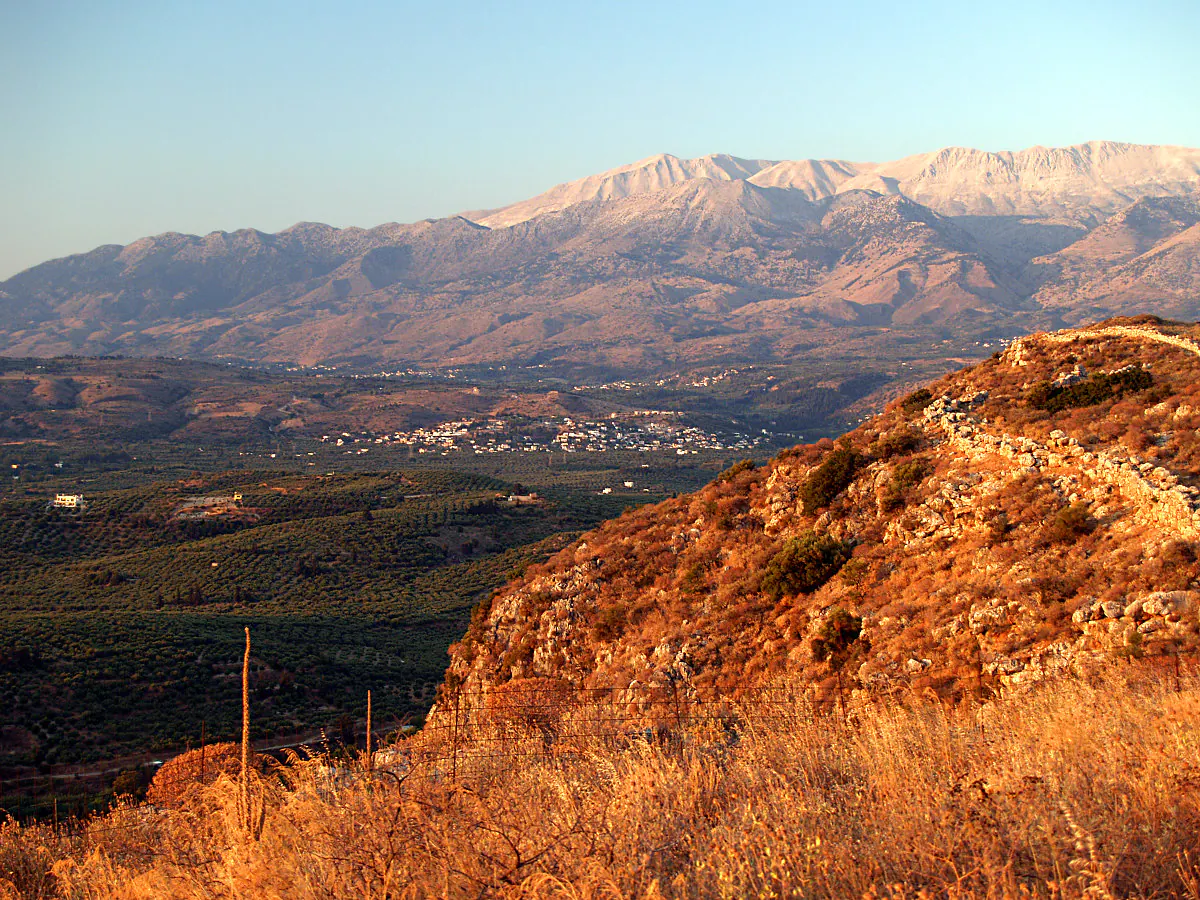
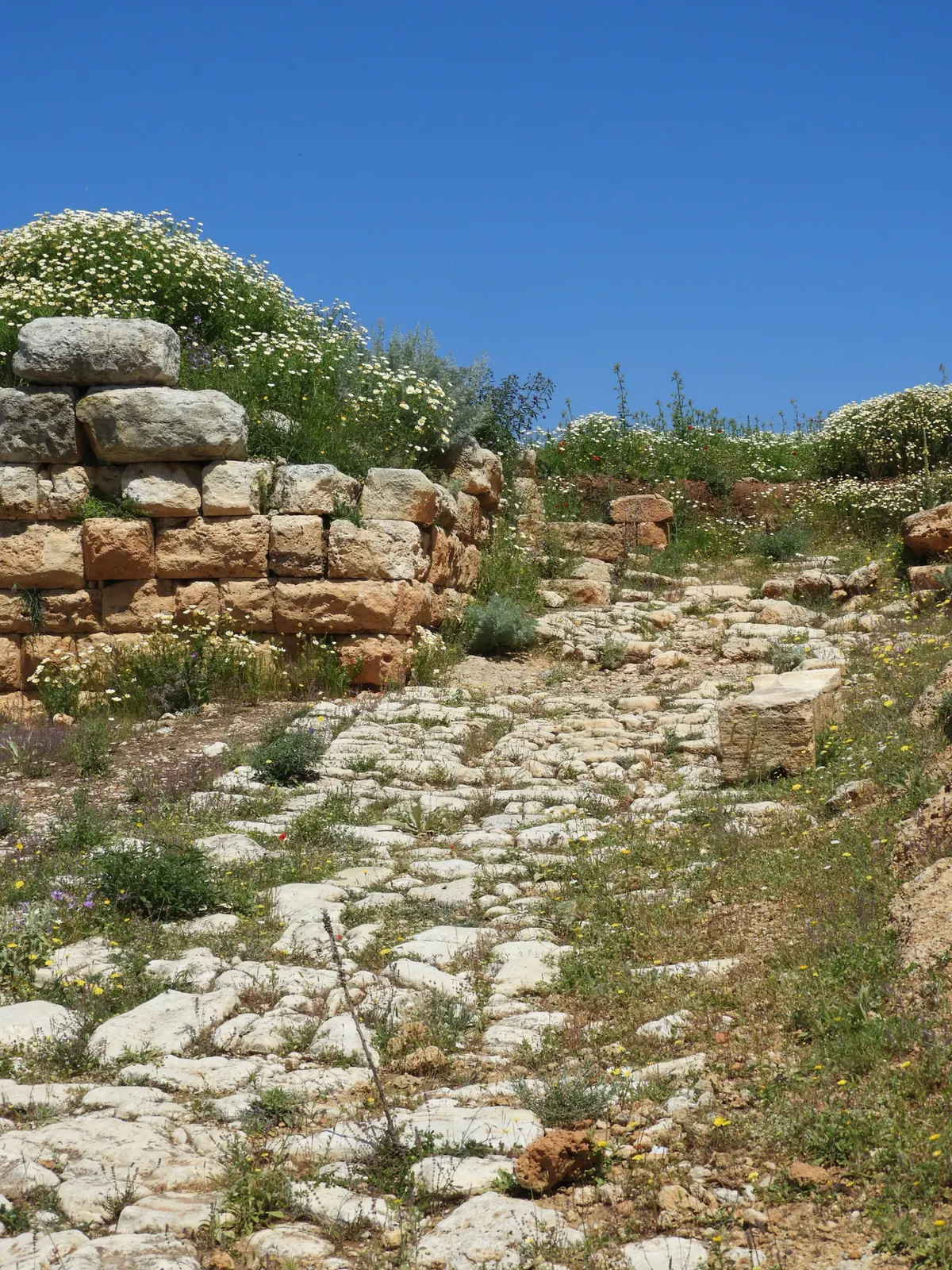
Aptera is an archaeological site at Megala Chorafia, southeast of Souda Bay, about 15 km from Chania on the road toward Rethymno. You walk it on a plateau above the bay, and there is more here than most people expect: the ancient theater, Roman baths, vaulted cisterns, fortification, main gate, Roman house, public buildings, funerary monuments, and the later Koules fortress above the same strategic ground.
Why it matters
Aptera makes the ancient map of western Crete easy to read. The city controlled movement between Souda Bay, the White Mountains, and its harbors at Minoa and Kisamo, today's Marathi and Kalyves. The official site records Hellenistic and Roman public works in enough detail that you can see what the city spent its power on: roads, water storage, a theater, baths, and walls.
What to understand before going
Admission is EUR10 full, EUR5 reduced, on which both official sources agree. Hours need more care, because the two disagree in scope. The Ephorate's own site gives a flat Monday 08:00-20:00, Tuesday closed, Wednesday-Sunday 08:00-20:00. The Ministry's Odysseus listing, read on 2026-08-15 and dated for this season, gives no weekly closure but does give the autumn step-down the Ephorate page omits: 08:00-20:00 to 30 August, then 08:00-19:30 from 1 September, 08:00-19:00 from 16 September, 08:00-18:30 from 1 October, and 08:00-18:00 from 16 October. My advice is to plan around both: avoid Tuesday, and from September treat the closing time as the earlier one. Neither source publishes a winter schedule, so check before traveling between November and mid-April.
What stays with you
What stays is the wide view and the engineering under it: the theater facing the White Mountains, the three-aisled and L-shaped cisterns built for a dry plateau, and the later fortress reusing ancient stone above Souda Bay. The cisterns are easy to walk past; I'd give them as much time as the theater. Aptera gives a Chania trip a deeper past than the harbor alone can offer.