Season
Crete in May
Spring at full strength: flowers, open roads, cool mornings at the sites, an unpredictable sea, and a season still opening up.
May is one of Crete's most rewarding months if you plan for variety rather than certainty. The island is green in a way summer visitors rarely see. Flowers are still out on hillsides and roadsides, archaeological sites are comfortable to walk around, villages aren't yet swamped by visitors, and the weather lets you get around. I'd read it alongside how time works in Crete, because the season is still finding its feet.
It is also not summer. The sea may be inviting on a calm afternoon and cold the next morning. Some beach businesses and seasonal excursions are still opening in stages. Gorges depend on official access and the weather. May offers more variety than June, but it asks you to stop treating every warm day as a promise, which is harder than it sounds.
May decision map
Weather, water, and the spring landscape
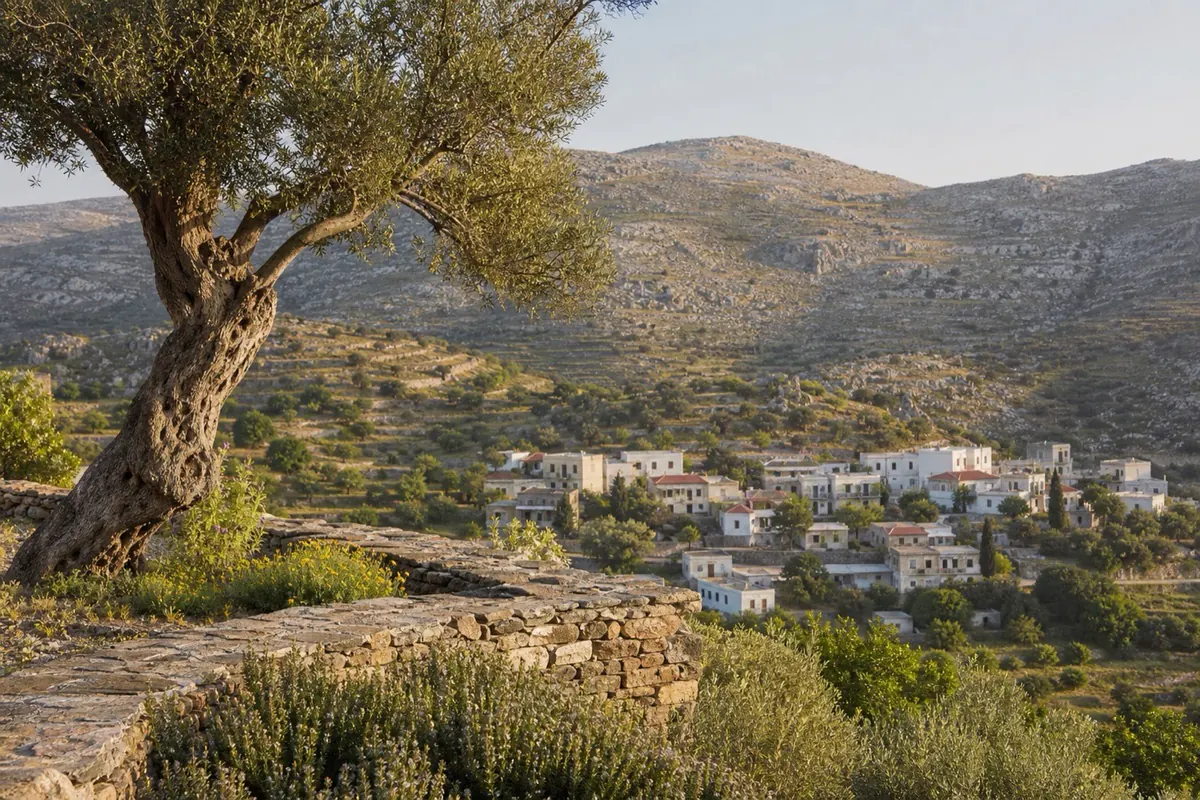
May weather is usually mild to warm, with longer days and enough sun to be outdoors. Evenings can still be cool, especially inland or when the wind is up. For me, the landscape is the reason to come: the hillsides are green, the herbs are out, and the drive between places becomes part of the day instead of dead time. For the plants and ecology behind all that spring growth, go on to Landscape, Herbs & Biology, then the Cretan herbs guide for the plants travel writers most often mix up.
Swimming is possible but hit-and-miss. Sheltered beaches can be lovely in calm weather, but the sea hasn't soaked up the summer heat yet. I'd leave room in a May plan for beach days without making them the measure of the trip. If warm water is the main thing you want, June or September is the safer bet.
To see why May means sheltered beaches, and when the more reliable swimming starts, use Crete Beaches By Month.
Walking, gorges, and archaeology
May is excellent for walking because the heat isn't in charge yet. Samaria Gorge's official season starts on 10 April, but the actual opening often lands in May, and that's not a promise; snowmelt, rockfall risk, rain, and official decisions all play a part. For a shorter walk near Rethymno, Mili Gorge follows a shaded stream past old watermills and the ruins of an old village; skip it, too, after heavy rain.
Archaeology is easier in May than in summer. Knossos, Phaistos, Gortyna, the monasteries, the Venetian towns, and the old villages are places you can actually take in rather than just endure. This is the month to give a site a whole morning, not squeeze it in between the beach and the heat.
Openings, Easter, and the shape of the season
In May the early season turns into the real season. Main towns, museums, archaeological sites, and many restaurants are open, but beach villages and resort areas may still be half-ready, especially early in the month. Boat trips, beach services, and seasonal tavernas can depend on demand, weather, and the exact week.
Greek Orthodox Easter sometimes falls in early May. When it does, the island changes: villages, churches, family tables, and travel within Greece matter more than ordinary tourism. It can be a moving time to visit, but book rooms and check restaurants earlier than usual. Treat Easter as the main event of the week, not a bit of local color added to a normal holiday.
Where to base in May
In May, I'd choose places where people live all year. Chania gives you atmosphere and the west. Rethymno is just the right size for a spring trip: walkable, practical, and less of a show. Heraklion is strong for Knossos, museums, food, wine country, and central routes when the weather turns.
Elounda and Agios Nikolaos can work for eastern Crete if the water and comfort matter, but beach strips that only come alive in summer make less sense before summer arrives. The south coast can be beautiful in May, though wind, road time, and half-open businesses make it better for flexible travelers than for first-timers who need everything easy.
Cars, buses, and practical movement
You don't need a car for every May trip, but it's often what makes May worth it. It gets you to flower-lined roads, village lunches, trailheads, and monasteries, and it lets you switch coasts at the last minute when the wind spoils one and leaves the other calm. It also means you don't depend on excursions that may not be on a full summer schedule yet.
Base a car-free May trip in Chania, Rethymno, or Heraklion, and use buses, taxis, and a few well-chosen excursions. Don't build it around remote beaches or spur-of-the-moment village trips unless you've confirmed the transport for that exact date.
What May is good for, and bad for
Good for
- Archaeology, museums, old towns, monasteries, and villages before the heat makes it hard to pay attention.
- Spring landscapes: flowers, green hillsides, herbs, and mountain roads before the island dries out.
- Walking, gorge days when routes are open, and inland lunches that aren't just an escape from the heat.
- Travelers who want Crete with beach chances, not a beach guarantee.
Bad for
- A pure swimming vacation that needs warm water every day.
- Travelers depending on every beach taverna, boat, excursion, or resort service being fully open.
- Rigid car-free plans that count on summer bus frequencies and easy access to remote places.
- Anyone who will resent a cool evening, windy coast, cloudy day, or revised gorge plan.
My position
May is not a budget version of summer. I think it's a better month for travelers who want the island before the heat boils every day down to beach and shade: greener, looser, easier to understand, and less crowded in the places where you want to take your time.
Come for spring on Crete, and treat swimming as a gift rather than a contract; I've signed enough contracts for one life. Plan it that way and May is generous.
Practical questions
Is May a good time to visit Crete?
Yes. May is excellent for spring landscapes, archaeology, towns, villages, walking, and quieter travel. For a beach-only trip, I'd pick June or September, which are more reliable.
Can you swim in Crete in May?
Sometimes, especially in settled weather and sheltered bays, but the sea is still cool and changeable. I'd treat a swim as possible, not guaranteed.
Is everything open in Crete in May?
Mostly. Main towns, museums, archaeological sites, and many restaurants are open. Seasonal beach businesses, boat trips, resort services, and some excursions may still run only partly, especially early in the month.
Do you need a car in Crete in May?
Not always, but in May a car is especially useful for villages, flowers, walking routes, monasteries, and working around wind, weather, and partial early-season schedules.
Editorial note
I combine firsthand observation with research from public and official sources. I check practical details against the sources listed on each guide where they are available, and my recommendations stay independent of paid promotion. For how I approach planning and selection, see my editorial manifesto.
Written by Leo Novak.
Related reads
The Guide 2026
My guide for this year: where to go, how to get around, and what’s worth knowing before you do.
Explore the guide