Season
Crete in July
High summer, plainly: bright water, crowded famous names, hard light, and very little patience for vague plans.
July is not a month you can outsmart; I learned that the slow way. Crete is fully open, the sea is warm, the beach days can be excellent, and summer life has moved outdoors. It is also hot, tiring, and crowded in exactly the places visitors picture as effortless. This is where Crete's seasonal rhythm stops being background and starts setting the shape of your day.
A good July trip isn't built by adding more. It's built by taking the hassle out: fewer bases, earlier mornings, fewer drives in the hot hours, and a clear decision about what the trip is for: the beach, the history, or simply a family summer with a few well-chosen outings.
July decision map
What July is good for
July suits you if you want a real summer trip and are honest about what that means. The sea is the main event. Once the heat lets go, the long evenings take over. Children, beach routines, boat days, and resort stays all make sense, because everything on the island is open and running.
First-timers can make July work, too, if they keep the plan tight. Knossos, Chania, Rethymno, a famous beach, and a village or mountain day can all fit in a July week, but not if every day is planned as if someone were handing out medals for distance.
What July is bad for
July is bad for improvising around famous places. Balos, Elafonissi, Vai, Knossos, Samaria, and the old towns all reward early starts and punish a late, confident one. Parking, queues, sun, and the drive back aren't side details; they are the day.
It's also a poor month for a plan that keeps you driving inland all day. Distances on Crete already look shorter on the map than they feel on the road, and July heat makes that very real. The map may say it's possible; the afternoon may disagree.
The numbers, roughly
Typical July norms put north-coast daytime highs around 29–31°C, with Chania usually a touch warmer by day than Heraklion, and overnight lows near 21–22°C, so even the nights stay warm. Inland basins and the exposed south coast run hotter, and heatwave days can push well past these averages. These are long-term means, not a forecast.
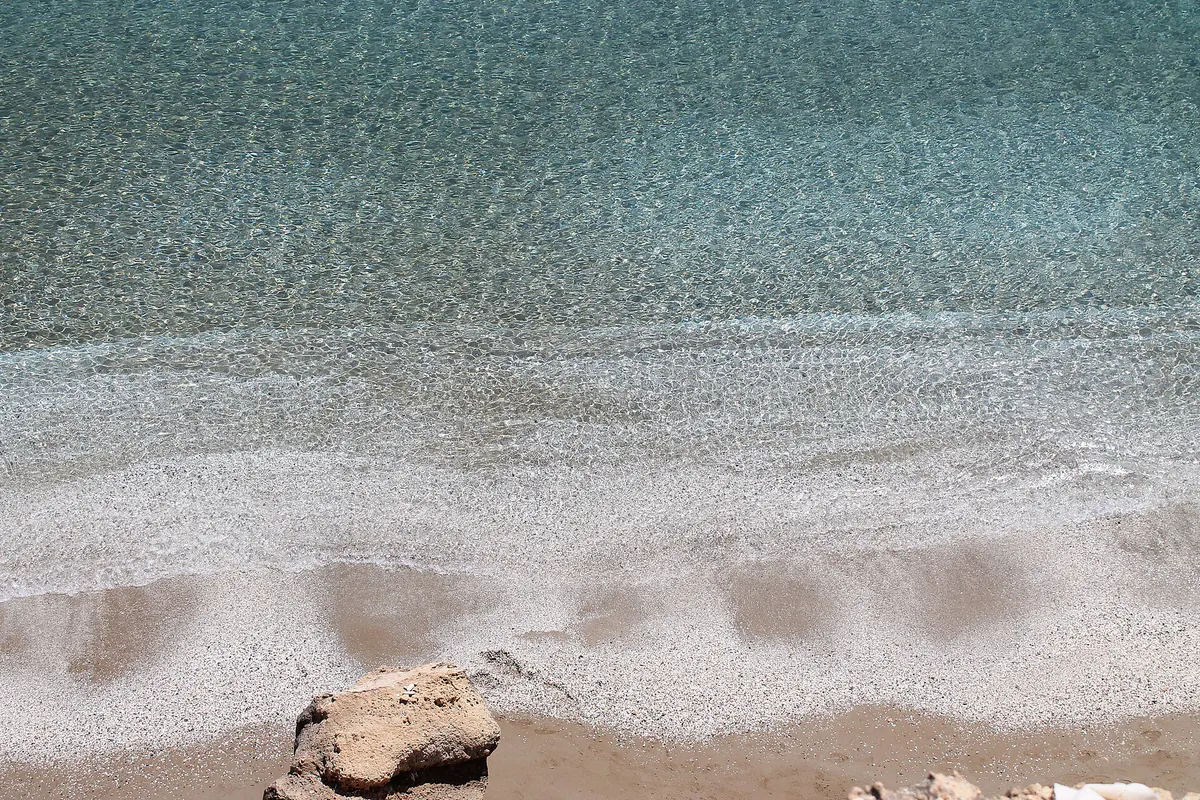
The sea is at its most inviting: average north-coast water temperature sits around 24–25°C through July, warm enough that you walk straight in instead of bracing yourself. The heat you plan around is on land, not in the water, which is why I'd hand the midday hours to shade or the sea rather than to driving and walking.
Climate norms are approximate and drawn from long-term station data for Heraklion and Chania (Wikipedia climate tables, citing WMO / Hellenic National Meteorological Service records; sea-temperature averages cross-checked against seatemperature.org). Treat them as typical, not guaranteed.
Heat, crowds, and morning discipline
July changes the shape of the day. Mornings are for anything out in the full sun: archaeological sites, gorges, old-town wandering, market errands, or the drive to a famous beach. Midday is for shade. Move again in the late afternoon, when the light softens. Why the island gets so dry and shade feels so precious is explained in Landscape, Herbs & Biology.
Crowds aren't spread evenly. You can have a quiet inland village and a jammed beach road in the same day. You won't avoid everyone, so pick your battles: put up with the crowd where the place is worth it, and take the simpler option where it isn't.
Beaches in July
July is a strong beach month, but not a casual one. The water is inviting, organized beaches are fully up and running, and late swims can be beautiful. Treat the famous beaches as commitments: start early, carry water, check the wind, and stop pretending the drive back will take care of itself.
Often the best July beach is the one closest to your base that is sheltered from that day's wind, so you still have energy left for dinner. A good local beach beats a famous one reached in a bad mood.
To see how July's heat, wind, and early starts compare with the rest of the swimming season, use Crete Beaches By Month.
Where to base in July
Chania is still the most atmospheric base in the west, and in July everyone knows it. Book with parking and access in mind, not just charm. Rethymno is the calm middle choice if you want atmosphere without driving west every day. Heraklion is practical for Knossos, museums, good central food, and an easy arrival.
Elounda and Agios Nikolaos make good July bases when the trip is about the water and comfort matters. The south coast can be rewarding, but plan the route and respect the heat, the wind, and the road time. Two bases are usually enough for a July week, and I'd take one good base over three restless ones.
Car rental in July
If your trip depends on beaches, villages, or getting around the countryside, book the car early. July is not the month to find out that availability, pickup times, automatic transmission, child seats, or accommodation parking were only assumptions.
You don't need the car every night. Old-town stays often work better with a shorter rental: arrive, settle in, walk, then pick up the car for the days that need it. The point isn't having a car; it's having one on the days it makes the trip better.
How to spend a July week
My rule for July: make the week smaller than the map suggests. Start with four nights in one western or central base, then add two or three nights only if a second base really changes the trip. Chania works for western beaches and old-town atmosphere once parking is solved. Rethymno is the easy middle. Heraklion is the practical answer for Knossos, museums, food, and an easy arrival. Elounda or Agios Nikolaos works when the trip is about the water and the east.
Use the first half of the week for the plans that put you in full sun: Knossos at opening time, one famous beach before the road heats up, an early old-town morning, or a village lunch up in the hills. Keep midday small: shade, sea, pool, a nap, or one simple meal. Save the late afternoon for short outings instead of pretending July allows full days of touring.
If you're traveling as a family or putting the beach first, a one-base week may beat a grand route. Choose a base with easy swimming, parking, and dinner nearby, then use the car for two planned outings: one western or eastern beach day, one history or village day. The point isn't to see less of Crete. It's to stop heat, traffic, and parking from eating the week.
My position
July isn't the quietest Crete, but it can be a very good one if you're honest about it. Accept the heat. Respect the crowds. Treat your base as the biggest decision of the trip, because it is. Protect the mornings and let your world get smaller at midday.
The mistake is expecting the freedom of a quieter month from the busiest stretch of summer. July gives you warmth, water, and energy. In return it asks you to do less, which, for a man who once scheduled his own lunch breaks, is the hard part.
Practical questions
Is July a good time to visit Crete?
Yes, if you plan it as a high-summer trip: beaches, early starts, shaded middays, and realistic distances. It's less good if you want quiet towns, famous beaches on your own schedule, or long days out in the sun.
How hot is Crete in July?
Hot, especially inland and at archaeological sites. Midday can be punishing, so I'd do serious walking, the drive to famous beaches, and site visits early whenever possible.
Is Crete crowded in July?
Yes. July is peak season, especially in old towns, resort strips, famous beaches, and popular restaurants. The crowds are manageable if you plan ahead and keep a backup close by.
Do you need a car in Crete in July?
A car is useful for beaches, villages, and the countryside, but it can be a burden in old towns. Many July trips work best if you rent for only part of the stay rather than keeping a car every night.
Editorial note
I combine firsthand observation with research from public and official sources. I check practical details against the sources listed on each guide where they are available, and my recommendations stay independent of paid promotion. For how I approach planning and selection, see my editorial manifesto.
Written by Leo Novak.
Related reads
The Guide 2026
My guide for this year: where to go, how to get around, and what’s worth knowing before you do.
Explore the guide