Season
Crete in December
Winter on the island: working towns, mountain weather, Christmas tables, quiet archaeology, and beaches for walking rather than sunbathing.
December is not a resort month on Crete. It's winter, even when the sky is bright and the air feels gentle by northern European standards. The beaches stay beautiful, but they stop being the reason for the trip. Life moves indoors and closer to home: towns, family tables, shops, museums, churches, mountain weather, olive oil, and everyday routines matter more than umbrellas and boat schedules.
I see December as the next step after Crete in November, not as autumn running late. November can still have late warmth and the olive harvest under way. December is plainly winter. The better guide is the winter advice in the best time to visit Crete: plan around towns first, then let good weather stretch the trip.
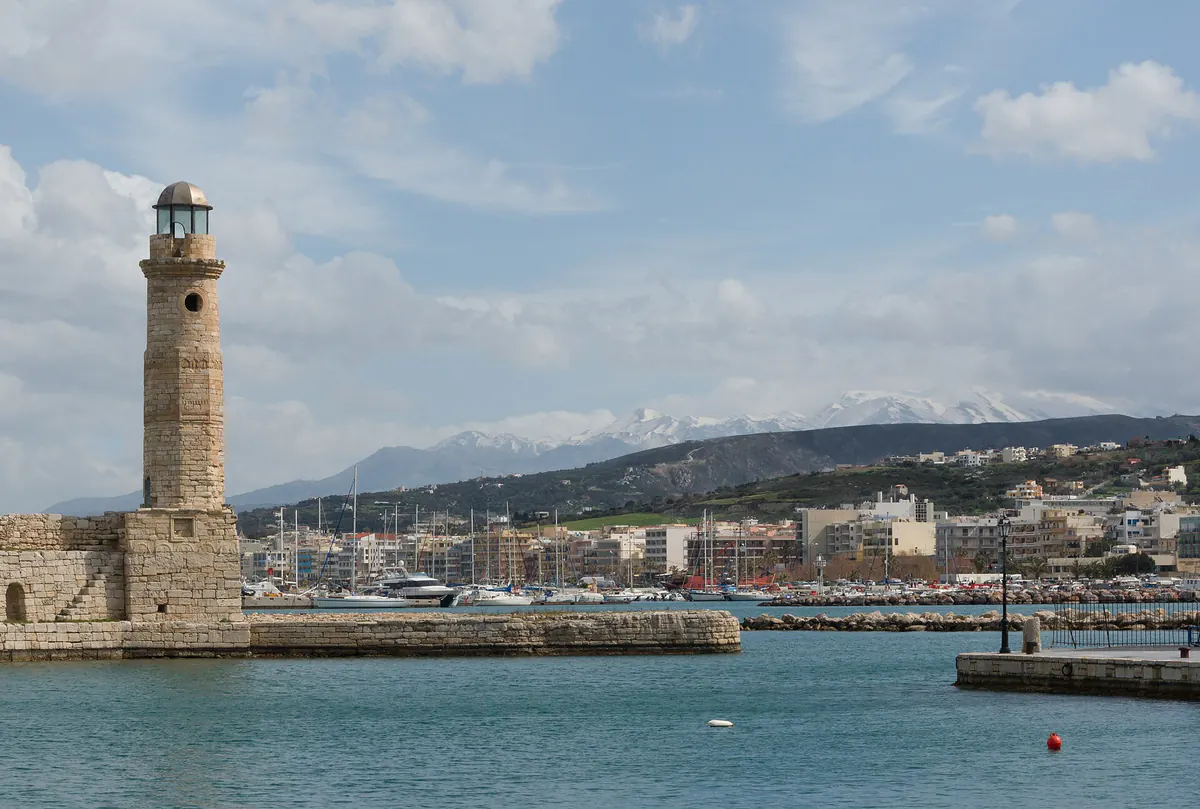
December decision map
Weather and daylight
December weather can go either way. One day is mild and bright; the next is wet, windy, or cool enough to rewrite your plans. The mountains keep their own weather, separate from the coast, and a calm morning can close in by the afternoon. Build that into the plan instead of fighting it.
The days are short. A route that feels easy in June gets cramped in December once you add rain, early darkness, and slow mountain roads. Give each day one main event: a museum and an old town, Knossos and a long lunch, a village drive, or a coastal walk if it's clear.
The mountains are December's big show. The White Mountains, Psiloritis, and the high plateaus can have snow or tricky roads. For most visitors, winter mountains are best enjoyed from below, as weather, distance, and landscape, not as an easy day trip.
The numbers, roughly
December is one of Crete's coolest, wettest months, but mild by northern European standards. Typical norms put north-coast daytime highs around 16–18°C, with Heraklion running a little warmer by day than Chania, and overnight lows near 10–13°C — cool rather than cold. Inland and at altitude it is markedly colder, and the mountains can hold snow. These are long-term means, not a forecast, and any single December day can sit well above or below them.
The sea holds on to its warmth longest: average north-coast water temperature still sits around 18°C through December, far warmer than the air on a wet day, but no longer swimming weather for most people. So a December beach is for wind, winter light, and a walk rather than a full beach day; the water is milder than it looks, but exposure, swell, and short days decide the visit.
Climate norms are approximate and drawn from long-term station data for Heraklion and Chania (Wikipedia climate tables, citing WMO / Hellenic National Meteorological Service records; sea-temperature averages cross-checked against seatemperature.org). Treat them as typical, not guaranteed.
Swimming and beaches
Swimming in December is possible for hardy swimmers on calm days, but it shouldn't be the reason you come. I admire those swimmers. From the shore. The sea cools slowly after summer, but wind, rain, swell, exposure, and closed beach facilities matter more than the average temperature.
Treat the famous beaches as a maybe. Elafonissi, Balos, Falasarna, and the south coast can be beautiful in winter light, but you can't count on them. A good December plan still works if the beach day gets rained out.
Where to base in December
Heraklion is the most practical December base: the airport, the Archaeological Museum, Knossos close by, shops, restaurants, buses, and enough everyday city life that a rainy day still has plenty in it. It isn't the prettiest choice, but it's the one that keeps working when the weather doesn't.
Chania is the winter base with the most atmosphere: walks around the old harbor, narrow lanes, food, cafes, and western Crete within reach when the weather allows. Rethymno sits in between: walkable, handsome, and well placed between Chania and Heraklion.
Be careful with isolated beach hotels, small resort villages, and anything that only looked perfect in summer photos. Before booking outside a proper town, check restaurants, heating, transport, parking, and what the area is like after dark in winter.
What is open, and what closes
Everyday Crete stays open. Main towns, supermarkets, bakeries, pharmacies, local restaurants, museums, and archaeological sites keep going because people live here all year. The holiday side of the island shrinks. Seasonal hotels, beach bars, boat trips, resort restaurants, and some excursions may close or run reduced schedules.
It helps to keep those two Cretes apart in your head. The island isn't closed; the summer vacation business is just smaller. That's why the base matters so much. In Heraklion, Chania, or Rethymno, a wet day is still a good day. In a quiet beach village, the same wet day may leave you with very little to do.
Christmas and New Year have their own rhythm. Town centers get livelier, families gather, restaurants can fill up around the holidays, and some businesses change their hours. Don't expect holiday dates to work like normal weekdays.
Food, Christmas, and winter rhythm
December is a strong food month if you aren't looking for beach-club dining. The winter table is built for cool weather, and it's the food my wife's Cretan family cooks, the same food I've been learning to cook in my own city kitchen for a few years: greens, beans, stews, pies, grilled meat, mountain cheeses, citrus, olive oil, wine, and raki. Nothing fancy, just what the season gives.
This is where how time works in Crete stops being theory. Meals follow family schedules, the weather, church days, and holiday gatherings; nobody sends a calendar invite. Some places close, others fill up with locals. Go along with it and you'll eat better than someone trying to recreate an August restaurant list.
In December, pick tavernas that belong to their town or village. Ask what's good today, accept shorter winter menus, and let the season's produce do the work. More on ordering and eating is in how to eat in Crete.
Archaeology, museums, and walking
December is excellent for archaeology when the weather plays along. Knossos is easier to understand without the summer heat. Phaistos, Gortyna, Aptera, and smaller sites can be wonderful in winter light. Check opening hours before you commit the day, especially around the holidays or in bad weather.
Museums are your rainy-day plan. The Heraklion Archaeological Museum is the obvious first choice, but smaller museums, old towns, churches, and historic quarters count too. The best December plan doesn't fight the weather; it keeps indoor and outdoor options close together.
Walking is possible, but keep it short and low-risk. Coastal walks, old-town wandering, lowland paths, and village loops make more sense than big gorge plans. Some gorges and mountain routes depend on the weather and shouldn't be taken lightly in winter.
Cars, buses, ferries, and movement
A car is useful in December, though not essential for every trip. If you stay in Heraklion, Chania, or Rethymno and spend most of your time in town, buses cover the main route between them. If you want villages, archaeological sites off the easy routes, winter beaches, the edges of the mountains, or the freedom to follow the weather, a car gives you room to change plans.
The rule I'd hold onto: drive for the conditions, not your ambitions. Winter roads can be wet, narrow, dark early, and harder going in the mountains. A car should make the trip calmer, not turn December into a forced lap of the island.
Ferries and flights run on thinner winter schedules. There may be fewer direct international flights, connections within Greece matter more, and ferry plans should be checked close to the date. For the basics of getting here and getting around, see Access and Crete car rental.
How to spend five December days
Day one: arrive in Heraklion or Chania, stay in town, walk slowly, eat well, and keep the first day weatherproof.
Day two: use the first clear day for Knossos, Aptera, Phaistos, or a coastal drive. If it turns wet, make it a museum and old-town day instead.
Day three: pick a village route with a backup plan. Around Heraklion, that could be Archanes or the edge of wine country; from Chania, the inland villages or a low-level drive west; from Rethymno, Arkadi and the country around it.
Day four: give the coast a chance if it's calm. Treat the beach as a winter view: walk, look, have lunch nearby if something is open, and head back before the light goes.
Day five: stay close to your base. December departures are easier when the last day doesn't involve a long drive on exposed roads.
What December is good for, and bad for
Good for
- Archaeology without heat, museums, old towns, and winter food.
- Christmas atmosphere, quieter lanes, village drives, and a better look at everyday island life.
- Travelers happy to treat beaches as a fine view rather than the point of the trip.
- Slow trips that leave room for rain, wind, short days, and mountain weather.
Bad for
- Guaranteed swimming, beach bars, boat trips, and full resort service.
- Remote beach stays chosen from summer photos without confirming winter services.
- High-mountain spontaneity, ambitious gorge plans, and long drives after dark.
- Visitors who need every restaurant, excursion, and coastal village to be open.
My position
December is a good month if you know what you're choosing. It isn't a consolation prize for people who missed summer. It's a different kind of trip: towns first, an eye on the weather, food at the center, beaches optional, and plans kept loose.
The island doesn't disappear in winter. It just stops rearranging itself for visitors, and that's exactly what makes December worth the trip.
Practical questions
Is December a good time to visit Crete?
Yes, if you want towns, food, archaeology, museums, villages, and a quieter island. Not if your trip depends on guaranteed beach weather or full summer services.
Can you swim in Crete in December?
Sometimes, if you're a hardy swimmer and the day is calm, but I'd treat it as a bonus. Wind, rain, swell, and exposure matter more than the average sea temperature.
Is Crete warm in December?
It can feel mild next to northern Europe, but it's still winter. Expect changeable weather, cool evenings, a chance of rain, wind, and shorter days.
What is open in Crete in December?
Everyday life: main towns, museums, archaeological sites, supermarkets, bakeries, pharmacies, and many local restaurants keep going. Seasonal beach businesses, resort hotels, boat trips, and excursions may close or cut back.
Where should you stay in Crete in December?
I'd start with Heraklion, Chania, or Rethymno, because they have ordinary life beyond tourism. I'd avoid isolated beach bases unless services and transport are confirmed.
Do you need a car in Crete in December?
Not always, but it's useful for villages, archaeology, winter beaches, and plans that follow the weather. If you stay in a main town and keep the trip urban, buses may be enough.
Editorial note
I combine firsthand observation with research from public and official sources. I check practical details against the sources listed on each guide where they are available, and my recommendations stay independent of paid promotion. For how I approach planning and selection, see my editorial manifesto.
Written by Leo Novak.
The Guide 2026
My guide for this year: where to go, how to get around, and what’s worth knowing before you do.
Explore the guide