Season
Crete in January
The quietest stretch of the year: working towns, archaeology in rain-washed light, winter food, mountain weather, and beaches to look at rather than plan around.
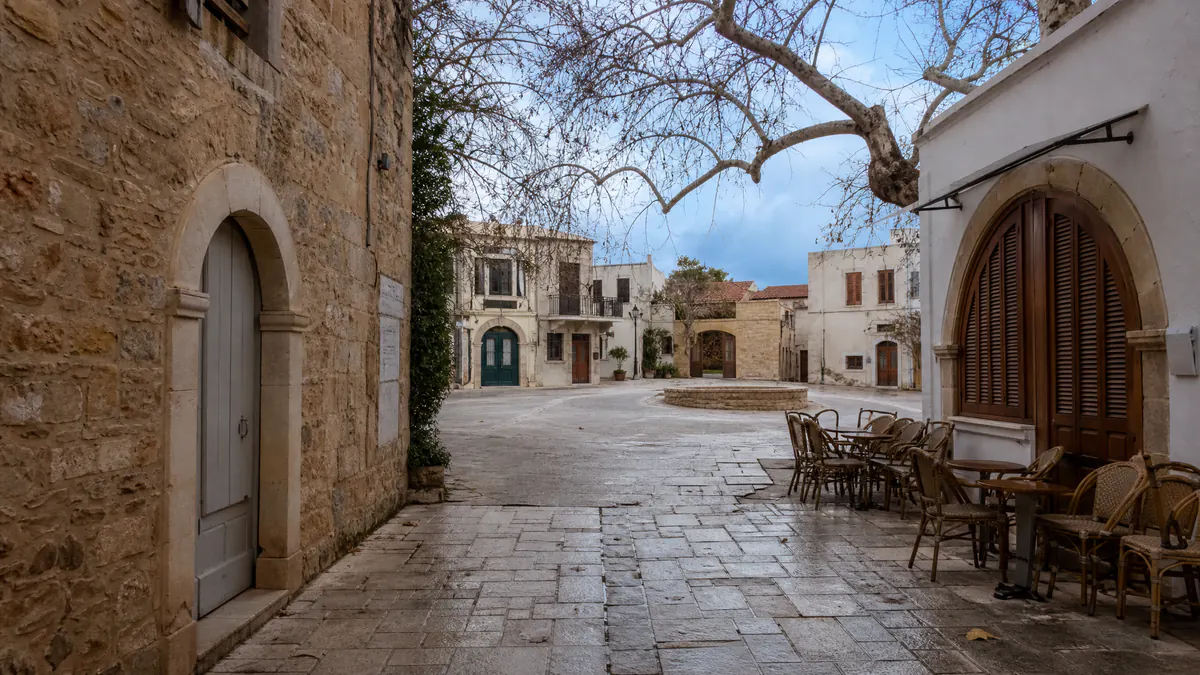
January is Crete with the tourist season switched off. That can be beautiful, but only if you plan for it honestly. The island isn't closed. It just runs on local life, winter weather, and short days. The main towns still work. The museums are still there. The food may get more interesting. The beaches still look wonderful, but they're no longer why you come.
I'd pair January with Crete in December, but it's a different month. December has Christmas and the slide from late autumn into winter. January is quieter, plainer, and more at the mercy of the weather. It works best if you pick Heraklion, Chania, or Rethymno first and let the clear days stretch the plan, instead of forcing a summer route onto a winter island. My work calendar rarely has an empty square. January is almost nothing but empty squares, and I mean that as a compliment.
January decision map
Weather and daylight
January is one of Crete's most wintry months. You can wake up to a bright, mild morning, or to rain and wind cold enough to scrap the whole plan. The north coast, the south coast, and the mountains can feel like three different islands on the same day.
Short days catch people out. A route that feels relaxed in May becomes too much in January once rain, early sunsets, and slower roads get involved. My rule is one big thing a day: a museum and an old town, Knossos and lunch, a drive to a lowland village, or a sheltered bit of coast if the sky clears.
Treat the mountains with respect. Snow, cloud, wet roads, and cold can affect the White Mountains, Psiloritis, and the high plateaus. For most visitors, I think January mountains are best admired from a cafe table in town, as weather and landscape, not as somewhere to drive on a whim.
Swimming and beaches
Swimming in January is for hardy swimmers on lucky days, not something to plan around. The sea can look inviting in winter light, but wind, swell, exposure, rain, and shuttered beach facilities count for more than the postcard idea of a Mediterranean island.
Famous beaches can be extraordinary in January, empty and wild-looking. I treat Elafonissi, Balos, Falasarna, and the south coast as a possible walk this month, not a must. A good January trip survives even if every beach plan falls through.
Where to base in January
Heraklion is the January base least likely to let you down. The airport, the Archaeological Museum, Knossos nearby, shops, restaurants, buses: there's enough everyday city life to soak up bad weather. It's my practical answer when a trip needs a backbone.
Chania is the one with the atmosphere: harbor walks, lanes, cafes, food, and the west of the island within reach when the weather allows. Rethymno sits between them, with a walkable old town and a handy position for slow drives. All three keep the trip safe because they're real towns in winter, not empty resorts waiting for summer.
I wouldn't book an isolated beach hotel or small resort village from summer photos without confirming what's open in winter. Ask about heating, restaurants, parking, transport, nearby shops, and what the area is like after dark in January. Summer photos are very good at not mentioning the heating.
What is open, and what closes
Daily life carries on. In the main towns, supermarkets, bakeries, pharmacies, cafes, many local restaurants, museums, and the major archaeological sites keep working. The tourist side shrinks: seasonal hotels, beach bars, resort restaurants, boat trips, and some excursions may close or cut back.
The gap between the two is wider in January than in December. The holiday buzz fades after New Year and the island goes quiet. That's fine if you've picked a real town. In Heraklion, Chania, or Rethymno, a rainy day can still be a museum, lunch, shopping, and old-town day. In a sleepy beach village, the same day can feel very long.
Check opening hours shortly before you go, especially for museums, archaeological sites, ferries, restaurants, and days near a holiday. I don't list current schedules here, because winter hours change.
Food and winter rhythm
January can be a great food month because nobody is rushing lunch to get to the beach. Greens, beans and lentils, pies, citrus, stews, grilled meat, mountain cheeses, olive oil, wine, and raki all make more sense in cold weather. It isn't a big spread for tourists; it's what the season gives. Most of what I know about Cretan food came from my wife's family, and very little of it from a menu.
The best meals are usually in places that feed locals all winter. Menus get shorter. Hours suit the neighbors, not the visitors. Some dining rooms will be quiet, others full of regulars. Ask what's good today; January food rewards patience more than a list of must-try places.
January is when how time works in Crete shows up at the table. Look for the taverna the neighborhood actually uses. For more on eating here, see how to eat in Crete, ingredients and preparations, and local wines and wineries.
Archaeology, museums, and walking
On a dry day, January is excellent for archaeology. Knossos is easier to make sense of without the heat. Phaistos, Gortyna, Aptera, and smaller sites look crisp in winter light, but check opening hours and the forecast before you build a day around them.
Museums carry a January trip. The Heraklion Archaeological Museum is the obvious one, but smaller museums, churches, old towns, and historic quarters are worth your time too. I'd keep indoor and outdoor plans within a short walk of each other, so a change in the weather costs you nothing.
Keep the walking modest: old towns, seafront promenades, lowland loops, village lanes, and sheltered paths. January is not a gorge month, however ambitious your boots feel. Routes that depend on the weather need caution and a check with local sources.
Cars, buses, ferries, and movement
A car is useful in January, but you don't automatically need one. A town-based trip in Heraklion, Chania, or Rethymno works with buses, taxis, and short walks. A car comes into its own for villages, archaeological sites off the easy routes, winter beaches, and changing plans when the weather does.
A car should make things easier, not make the plan bigger. January roads can be wet, dark early, narrow, and tougher in the mountains. Keep drives shorter than the map tempts you to make them. The map has never had to drive them in the rain.
Flights and ferries run on leaner winter schedules. Connections through the rest of Greece matter more, there may be fewer direct international flights, and ferries are worth checking just before you travel. For arrivals and transport, start with Access and Crete car rental.
How to spend five January days
Day one: land in Heraklion or Chania and stay in town. Wander, eat well, and don't hang anything on the weather.
Day two: if it's clear, go to Knossos, Aptera, Phaistos, or take a low coastal drive. If it's wet, switch to a museum and lunch in the old town.
Day three: one village or countryside route, with a fallback. From Heraklion, try Archanes or the fringes of wine country; from Chania, villages inland or a gentle drive west; from Rethymno, Arkadi and the country nearby.
Day four: if the sea is calm, try the coast. Walk, look, eat nearby if anything's open, and start back before dark makes the drive feel twice as long.
Day five: stay near your base. I wouldn't let a January departure depend on a long drive over exposed roads, a ferry that might not sail, or one last remote beach.
What January is good for, and bad for
Good for
- Archaeology in winter light, museums with space to linger, old towns at their quietest, and food made for cold weather.
- Travelers who want everyday island life rather than resort service.
- Village drives, lowland walks, and quiet days in town when the weather allows.
- Flexible itineraries that can swap a coast day for a museum or long lunch.
Bad for
- Guaranteed swimming, beach bars, boat trips, and full resort service.
- Assuming a January resort area will feel alive after dark.
- High-mountain spontaneity, gorge ambition, and long drives after dark.
- Visitors who need every restaurant, excursion, and coastal village to be open.
My position
I think January is worth it if you take it for what it is. It's not a secret summer month, and I won't sell it as one. It's a low-season trip: start in a town, check the forecast, plan around meals, enjoy the beaches from the shore, and drive less than you think.
The reward is Crete without the show. The price is that nothing on the island runs on your schedule. I'd take that trade every time.
Practical questions
Is January a good time to visit Crete?
Yes, if you want working towns, food, archaeology, museums, village drives, and the island quiet in winter. Not if your trip depends on beach weather, boat trips, nightlife, or full resort service.
Can you swim in Crete in January?
Only as a bonus, for hardy swimmers on calm days. I wouldn't let swimming shape a January trip; wind, swell, rain, exposure, and beach facilities matter more than averages.
Is Crete warm in January?
Mild next to northern Europe, perhaps, but January is winter. Expect cool evenings, a chance of rain, wind, short days, and colder conditions in the mountains.
What is open in Crete in January?
The everyday island stays open: main towns, supermarkets, bakeries, pharmacies, many local restaurants, museums, and major archaeological sites, though hours can change. Seasonal hotels, beach bars, boat trips, resort restaurants, and excursions may close or cut back.
Where should you stay in Crete in January?
Heraklion, Chania, or Rethymno first, because they have ordinary life beyond tourism. I'd only pick an isolated base after confirming heating, restaurants, transport, parking, and what the place feels like in winter.
Do you need a car in Crete in January?
Not for a town-first trip, but it helps for villages, archaeological sites, winter beaches, and days planned around the weather. I'd skip big mountain plans and drive for the conditions, not to cover ground.
Editorial note
I combine firsthand observation with research from public and official sources. I check practical details against the sources listed on each guide where they are available, and my recommendations stay independent of paid promotion. For how I approach planning and selection, see my editorial manifesto.
Written by Leo Novak.
The Guide 2026
My guide for this year: where to go, how to get around, and what’s worth knowing before you do.
Explore the guide