Season
Crete in March
Spring arriving in fits and starts: green hills, changeable weather, the first flowers, quiet archaeology, working towns, and beaches still better for walking than swimming.
March is when Crete starts to open up again, but unevenly and on its own schedule. The hills are greener. The flowers start to show. Old towns feel more awake. Archaeological sites are still blissfully free of heat. Yet the island can still be wet, windy, cool, and half-closed in places built mainly for summer.
March sits between Crete in February and Crete in April. February is the tail end of winter; April is the surer bet for spring, especially in years when Easter falls in April. March is the wobbly bit in the middle. It rewards travelers who want countryside, towns, food, and archaeology before the season gets busy. It frustrates anyone who arrives expecting guaranteed beach days or everything open.
March decision map
Weather and daylight
March can't make up its mind. Some days are unmistakably spring: soft light, greener hills, and enough warmth to make old-town wandering easy. Others are wet, windy, cool, or unsettled. Pack for both and keep the plan loose. March doesn't take requests.
The days are noticeably longer than in January and February, but not long enough for summer-sized plans. Go easy on long drives, remote beaches, and the mountains. I'd plan one proper outing a day: a museum and an old town, Knossos and lunch, a monastery and a village drive, a lowland walk, or a sheltered coast if the weather is kind.
Don't underestimate the mountains. Snow, cloud, wet roads, and cold can still affect higher ground. In March they're beautiful from below and still serious once you're up there.
Spring landscape
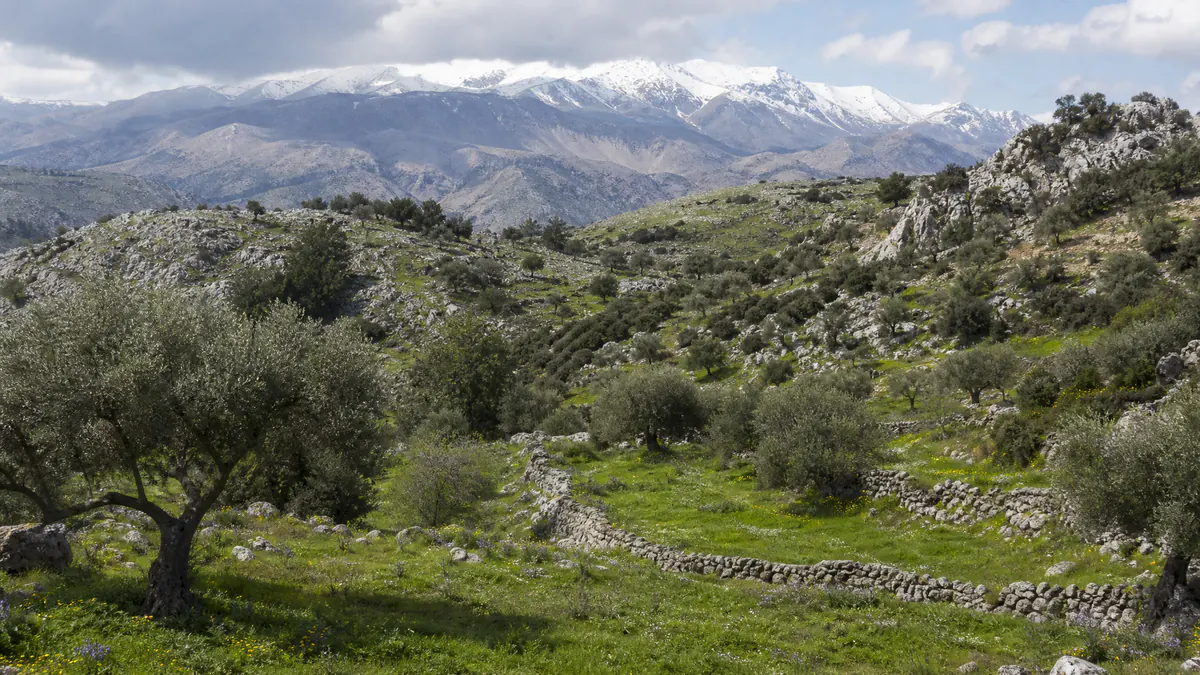
For me, the countryside is the best reason to come in March. The hillsides turn green, herbs and flowers start to show, and inland Crete feels alive before the heat flattens the day. Olive groves, low stone terraces, village roads, and archaeological sites all look better in early spring.
Don't treat that as a promise. March isn't the full spring of April or May. Think of it as more options, not a sure thing. If the flowers, the weather, and the light all line up, enjoy it. If they don't, the trip should still work through towns, museums, food, and a loose plan.
For what grows here and why, see Landscape, Herbs & Biology and Cretan Herbs. For later spring, see Crete in April and Crete in May.
Swimming and beaches
Swimming in March is possible only in the loosest sense. Hardy swimmers may go in on calm, warm days, especially in sheltered spots, but the sea is still cool and the wind can make a beautiful beach feel bleak.
I'd treat beaches as places to walk on a fine day. Elafonissi, Balos, Falasarna, the town beaches, and the south coast can be dramatic in March light, but they can't hold up a whole trip, so build one that doesn't need them.
Where to base in March
Heraklion remains the practical choice: the airport, the museum, Knossos, food, shops, buses, and easy reach of the middle of the island. It's the best choice for short trips, unsettled weather, and a trip built around archaeology.
Chania is the romantic pick: the harbor, the lanes, cafes, food, and the west within reach when the weather allows. Rethymno is the sensible middle option, especially if you want a walkable town and short drives rather than being on the move all the time.
A coastal or country base works better in March than in January, but only if you've confirmed what's open. Ask about heating, restaurants, nearby shops, parking, transport, and whether the area around it has started to reopen. A beach strip that looks lovely in summer photos can still be half-shuttered in March.
What is open, and what closes
Everyday Crete runs normally in March. Main towns, local shops, bakeries, pharmacies, cafes, many restaurants, museums, and the major archaeological sites carry on as usual. The tourist side is starting to stir but isn't fully awake.
Some seasonal hotels, beach businesses, excursions, boat trips, and resort restaurants may still be closed, partly open, or running only in good weather. That's no problem if you build the trip around real towns and flexible days. It is a problem if your plan assumes May or June.
Confirm opening hours just before you travel, especially for archaeological sites, museums, ferries, restaurants, excursions, and anything remote. I'm not listing times here; in the early season they move around too much.
Food and early-spring rhythm
March food sits between winter and spring. Greens, beans, pies, citrus, stews, grilled meat, mountain cheeses, olive oil, wine, and raki are all still on the table, and the green season makes everything taste a little fresher.
You'll eat best in towns and villages that cook for locals, not in places waiting for the visitors to come back. Menus may still be shorter than in summer. Ask what's good today and let the table set the pace. It took me years to stop ordering like I was clearing an inbox.
If you want to see how time works in Crete up close, sit down to lunch in a taverna that belongs to its town or village, and leave your watch alone. For the wider picture, see how to eat in Crete, ingredients and preparations, and local wines and wineries.
Archaeology, museums, monasteries, and walking
March can be excellent for archaeology. Knossos, Phaistos, Gortyna, Aptera, and smaller sites are far more pleasant before the heat and the peak crowds arrive. The light can be clear, the land around them green, and nobody is rushing you.
Museums still matter, especially when the weather turns. The Heraklion Archaeological Museum is the big one, but smaller museums, old towns, churches, monasteries, and historic quarters are worth a look too. In March, keep the indoor options near the outdoor ones and a passing shower costs you nothing.
Walking gets more appealing in March, but I'd stay low and keep an eye on the weather. Old towns, seafront promenades, village lanes, lowland loops, and short nature walks make sense. Gorges, high routes, and mountain plans need caution; ask locally before you set out.
Cars, buses, ferries, and movement
A car is useful in March because it lets you follow the weather, the light, and the spring countryside. Villages, monasteries, lowland walks, archaeological sites, and sheltered coasts are all easier when you can change your mind.
Car-free travel can still work from Heraklion, Chania, or Rethymno, especially if the trip is mostly about towns. But don't expect summer bus frequencies, plenty of excursions, or easy access to remote beaches unless you've confirmed them for your exact dates.
Ferries and flights are better than in deep winter but still need checking. Connections within Greece matter, direct international flights may still be limited, and ferries don't yet run as reliably as in summer. For the basics, see Access and Crete car rental.
How to spend five March days
Day one: get to Heraklion or Chania, stay in town, and keep it easy: a slow walk and a good meal.
Day two: when the sky is clear, head for Knossos, Aptera, Phaistos, or a monastery with lunch in a village. If rain moves in, swap in a museum and the old town.
Day three: take a lowland drive and watch spring arrive: Archanes or the edge of wine country from Heraklion, the lower western villages from Chania, or Arkadi and the country around it from Rethymno. Keep it short enough to turn back if you need to.
Day four: on a calm day, go to the coast. This month the beaches are for walking and looking, not sunbathing. Be back before dusk.
Day five: stay near your base. I wouldn't let a March departure day depend on a remote beach, a mountain road, or a ferry that may not run.
What March is good for, and bad for
Good for
- Archaeology before the crowds, monasteries in spring light, old towns waking up, and food halfway between winter and the first spring greens.
- Green hills, the first flowers, lowland walks, and village roads.
- Travelers who want spring before the visitors arrive in force.
- Flexible itineraries that can swap a coast day for a museum, monastery, or long lunch.
Bad for
- Guaranteed swimming, beach bars, boat trips, and full resort service.
- Visitors who need spring to be reliable and warm every day.
- Booking a seaside village in March from a summer listing and expecting it to carry the trip.
- High-mountain spontaneity, gorge ambition, and overfilled driving days.
My position
I think March is worth a trip if you see it as early spring with winter still hanging on. It can be one of the better months to get to know Crete before the heat and the crowds take over, but only if your plan doesn't need guarantees.
Come for the green countryside, archaeology, towns, food, and the island waking up for the year. Don't come looking for summer in disguise.
Practical questions
Is March a good time to visit Crete?
Yes, if you want early spring landscapes, archaeology, museums, towns, villages, food, and quiet pre-season travel. Not if your trip depends on warm sea, full beach services, boat trips, nightlife, or resorts being reliably open.
Can you swim in Crete in March?
Sometimes, for hardy swimmers on calm, warm days, but I wouldn't plan March around swimming. The sea is still cool, and wind, swell, rain, and beach facilities all matter.
Is Crete warm in March?
On good days it can feel mild and springlike, but March is changeable. Expect cool evenings, a chance of rain, wind, and colder conditions in the mountains.
What is open in Crete in March?
Ordinary life is open: main towns, local shops, bakeries, pharmacies, many local restaurants, museums, and major archaeological sites, though hours can vary. Beach businesses, boat trips, resort hotels, and excursions may still be running partly or closed.
Where should you stay in Crete in March?
Heraklion, Chania, or Rethymno, because they work as towns, not just as tourist stops. A smaller coastal or rural base can work, but only after you confirm heating, restaurants, transport, parking, nearby shops, and seasonal opening.
Do you need a car in Crete in March?
Not for a town-first trip, but a car is useful for villages, spring landscapes, monasteries, archaeology, lowland walks, and days that follow the weather. I'd stay cautious with mountain and remote-coast plans.
Editorial note
I combine firsthand observation with research from public and official sources. I check practical details against the sources listed on each guide where they are available, and my recommendations stay independent of paid promotion. For how I approach planning and selection, see my editorial manifesto.
Written by Leo Novak.
The Guide 2026
My guide for this year: where to go, how to get around, and what’s worth knowing before you do.
Explore the guide